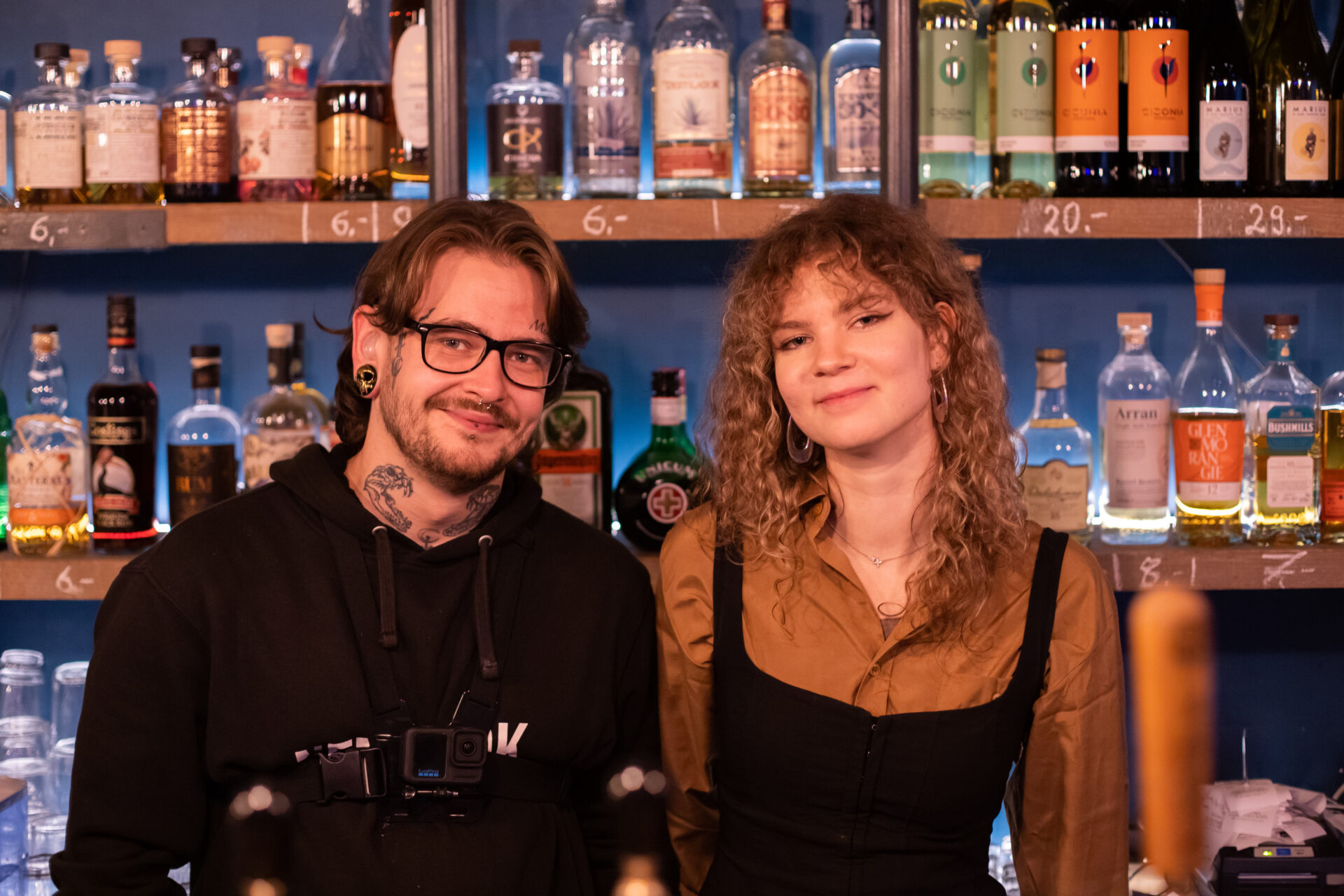
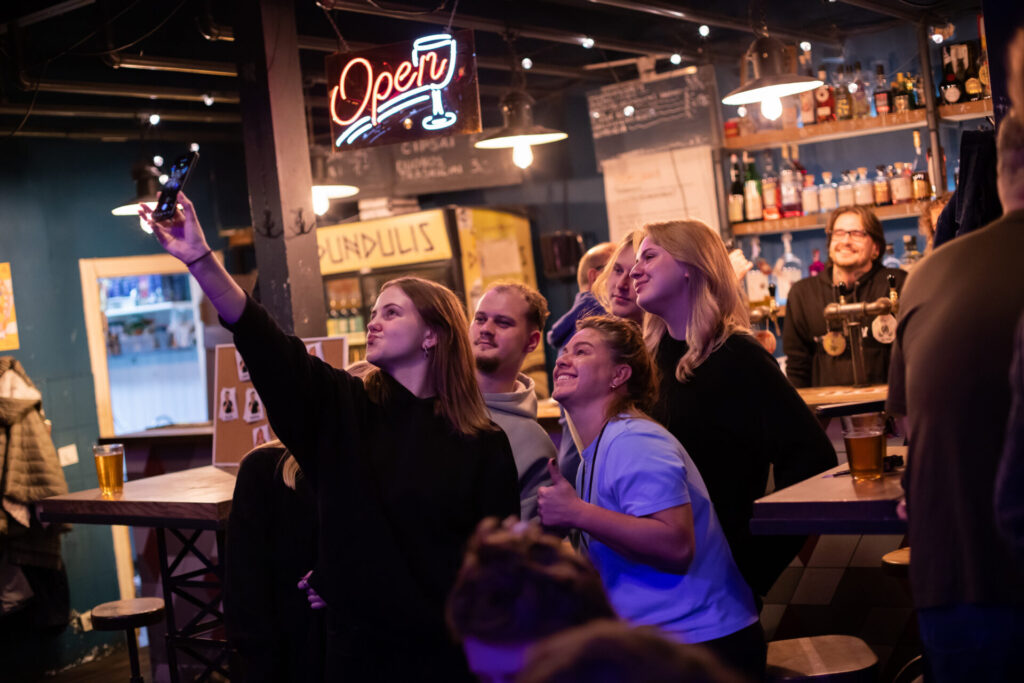
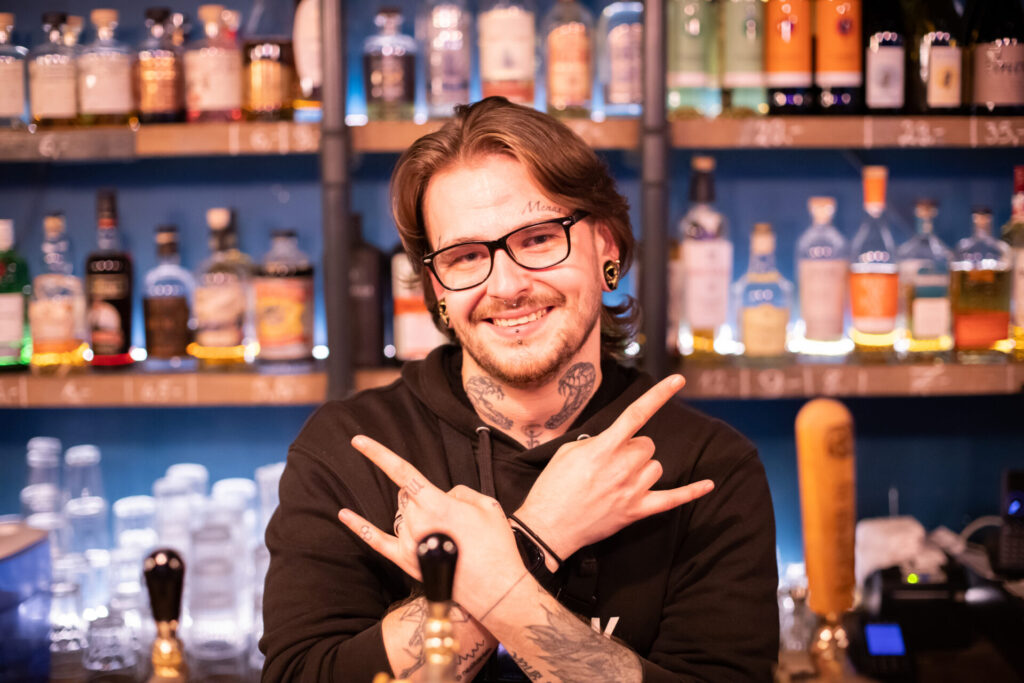
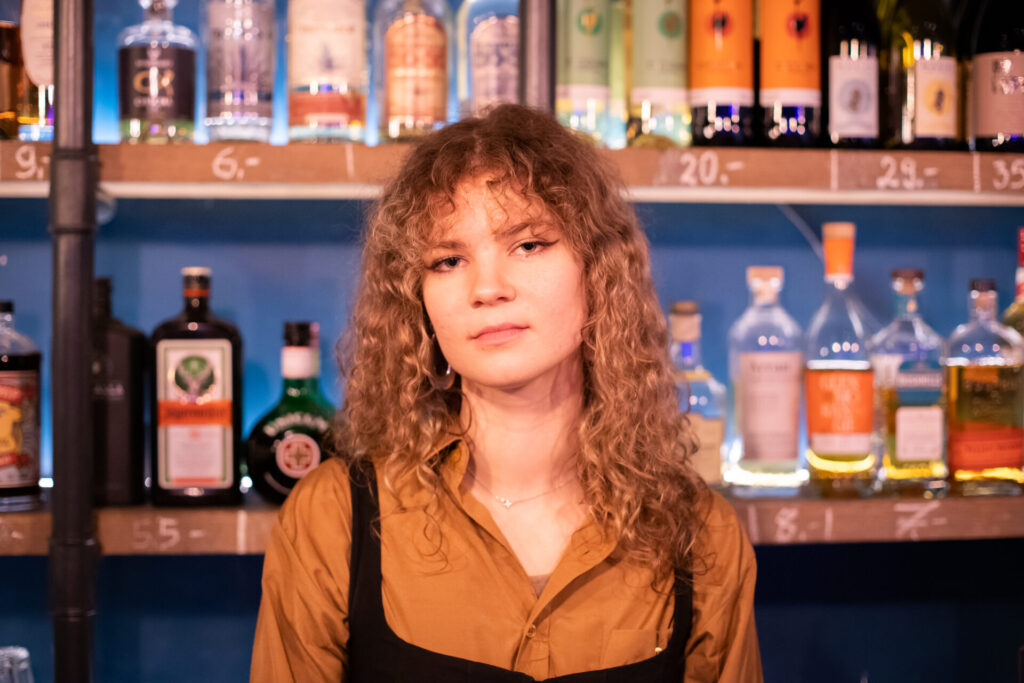
Every Monday at ELEKTRIT bar in Vilnius, visitors can not only order a drink but also learn their first signs in Lithuanian Sign Language. Behind the bar are Arnas Dambrauskas, who is hard of hearing, and Justina Čiplytė, who is Deaf – two protagonists of the upcoming documentary See What I Say. Cameras capturing their everyday lives and interactions with visitors reveal how people who use different languages find ways to understand one another and how important mutual effort is in building connections.
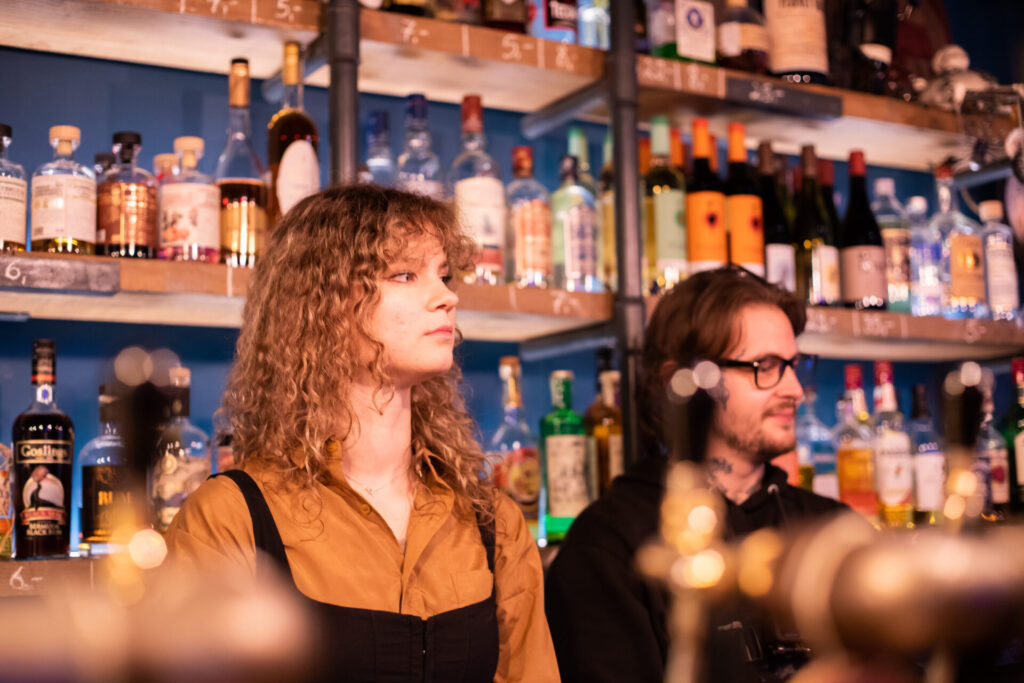
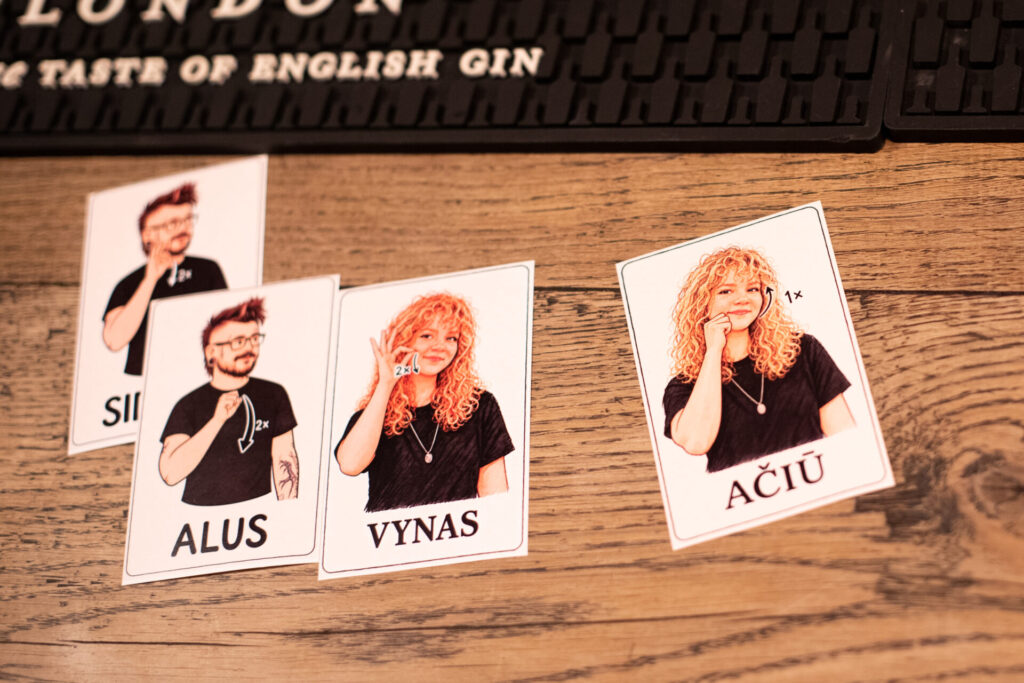
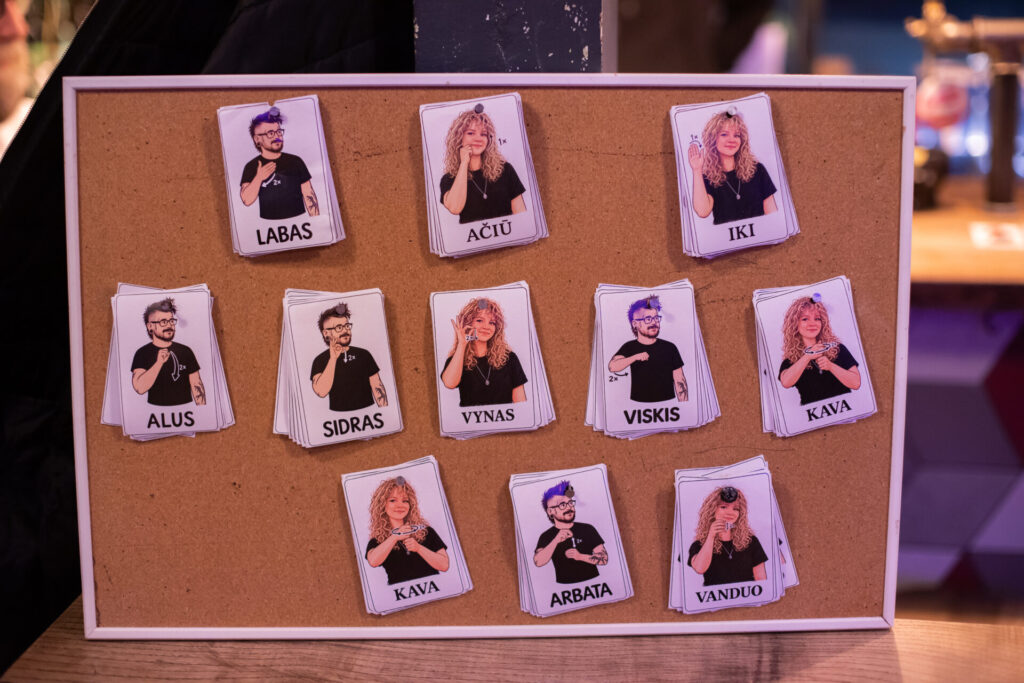
Cards featuring sign language signs are placed on the tables to help visitors order drinks, while videos projected onto the wall introduce them to Lithuanian Sign Language. The bar becomes not only part of the documentary but also a meeting place for Deaf, hard-of-hearing and hearing people. Some visitors try sign language for the first time, while others discover new ways of communicating.
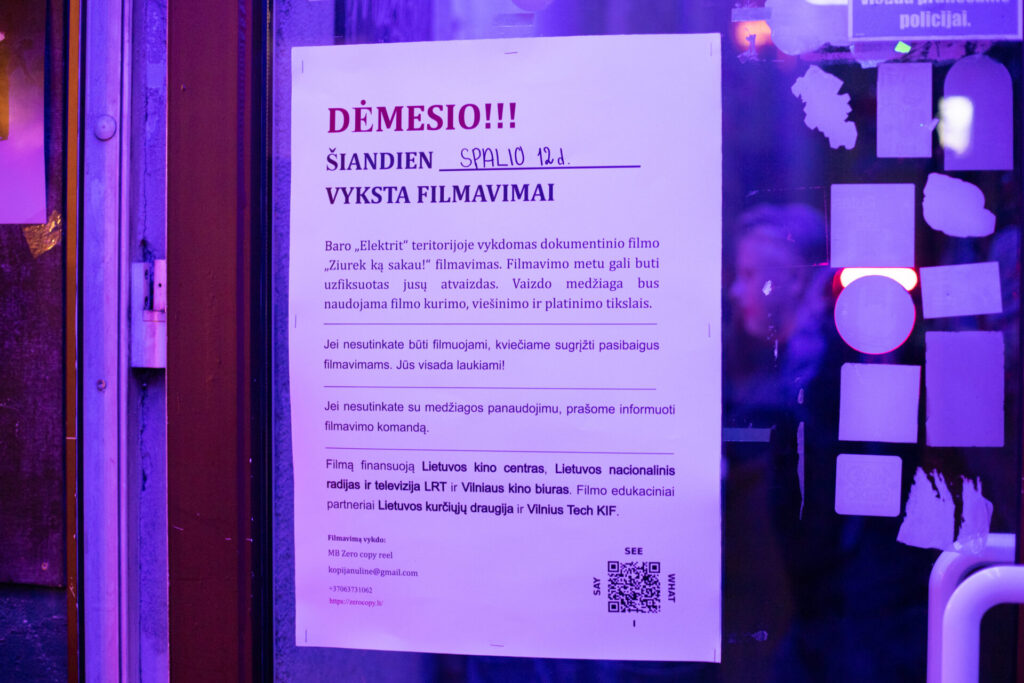
Directed by Artūras Jevdokimovas, the documentary See What I Say has been in production for two years. It explores human communication, different forms of language and the ability to connect with others. The international project, bringing together Lithuania, Italy and Ukraine, is being developed in Vilnius, Bologna and Kyiv. Rather than simply being observed, the film’s protagonists actively contribute to its creation by filming their own daily lives, surroundings and the people they meet.
An interactive XR experience titled Sign is also being developed alongside the documentary, allowing audiences to explore different ways of communicating firsthand. The project is produced by Lithuanian production company Zero Copy Reel and production services company Line Production, in collaboration with partners from Italy and Ukraine. The film’s producer is Ringailė Leščinskienė. In 2026, the project also received funding from the Vilnius Film Fund.
We spoke with documentary protagonists Arnas Dambrauskas and Justina Čiplytė about growing up and living between different languages, the stereotypes that still exist in society, creative freedom and their experiences in front of the camera.
– How did the documentary See What I Say become part of your lives, and what made you decide to take part in it?
A. Dambrauskas: It all started quite unexpectedly. I was taking part in a creative project called We Didn’t Agree on This. During our workshops and rehearsals, the documentary’s director and producer came to observe and film our creative process.
Some time later, they invited me to meet and discuss the idea for the documentary. They offered me the opportunity to become one of its main protagonists. I was delighted and immediately said yes!
What fascinated me most was the concept itself – Deaf people in this film are not simply observed from the outside. We film our own daily lives, surroundings and the people we meet, becoming not only the film’s protagonists but also active participants in its creation. As a photographer and a creative person, I felt particularly connected to this idea.
I was also interested in the VR/XR educational experience Sign, which is being developed alongside the documentary. It will allow audiences to interactively explore Deaf experiences and choose which city’s bar environment they would like to enter – Vilnius, Kyiv or Bologna.
It is important to me that Deaf people have the opportunity to tell their own stories rather than simply becoming the subjects of other people’s narratives. For me, this project is not only a new creative experience but also an opportunity to contribute to greater visibility for the Deaf community.
J. Čiplytė: I took part in the creative project We Didn’t Agree on This together with Arnas. It was during this project that our paths crossed with the documentary’s director and producer. A few months later, they invited me to meet and discuss their idea for the film.
I immediately found the idea beautiful and meaningful. I genuinely supported their vision because I believe stories like these are important and deserve to be heard. Later, they invited me to become one of the protagonists of See What I Say. I said yes! I was happy and grateful for the opportunity to become part of this project and contribute to bringing such a meaningful idea to life.
– The film focuses on communication and the different ways people understand one another. What does it mean to you personally to feel truly understood?
A. Dambrauskas: I grew up in a bilingual environment where both Lithuanian Sign Language and spoken Lithuanian were used. My parents are Deaf, while some of my relatives are hearing, so from an early age I often found myself acting as a kind of intermediary between them.
It felt completely natural to me because both languages were part of my everyday life. Of course, there were times when I felt responsible for whether the adults around me could understand one another. But I noticed something interesting – when a hearing person genuinely wanted to communicate with my parents and made an effort to find common ground, my help was often not needed at all.
That experience taught me that knowing a language and being able to understand another person are not the same thing.
For me, good communication begins with a mutual willingness to understand and be understood. It doesn’t matter whether we communicate through sign language, spoken language, writing or other means. What matters most is respect, patience and openness.
Sometimes people can speak the same language and still fail to understand each other completely. At other times, people who don’t know each other’s languages can establish a genuine connection.
I feel truly understood when someone not only understands my words or signs but also makes an effort to understand my thoughts, feelings and worldview.
After all, communication is not simply an exchange of information. It is a connection between people, and that connection does not necessarily require sound.
J. Čiplytė: For me personally, being heard and understood means that someone accepts me as I am and makes an effort to communicate with me. Even if we don’t speak the same language, there is always a way to understand one another.
Sign language is my way of communicating, allowing me to express myself, my thoughts and my feelings. It is very important to me that hearing people are not afraid to take the first step, show an interest in sign language and make an effort to connect with Deaf people.
I believe communication is not just about voice or words – what matters most is the willingness to understand one another.
– Every Monday, you work at ELEKTRIT bar, where visitors are encouraged to try communicating in sign language. How do people respond to this experience?
J. Čiplytė: There are cards with sign language signs on the tables, while videos shown on the wall help visitors become familiar with sign language. Some people are curious, make an effort to learn and communicate, while others show less initiative.
All kinds of situations arise when communicating with hearing people. Sometimes they don’t know how to communicate with Deaf people and assume that speaking louder is enough, or that all Deaf people can lip-read. But every person is different. I enjoy it when hearing people make an effort to understand us, take an interest in sign language and look for ways to communicate.
One experience that particularly stayed with me was when a man wrote a message on his phone: “This bar has become an educational space. I’ve learned so much! Thank you for being here.”
It was really lovely to read that because it made me realise that this space brings different people together and gives them an opportunity to get to know one another better, learn and discover new things. I think it is very important to have a place where everyone feels welcome and can make connections.
– In everyday life, do you often encounter situations where hearing people don’t know how to communicate with you? How do you find common ground in those situations?
A. Dambrauskas: Oh, absolutely! These situations happen quite often, and sometimes they can even be comical.
Some people, when they find out I’m Deaf, start speaking much louder, even though that’s completely unnecessary. Others begin exaggerating the pronunciation of every single word, and from the outside it can look like some kind of pantomime. There are also people who, after failing to communicate on the first attempt, simply wave their hand, say “never mind” and walk away. And sometimes people even start speaking English to me because they assume I’m a foreigner!
In situations like these, I try to keep my sense of humour and avoid wasting my energy on people who simply don’t want to make an effort to find common ground.
However, I really appreciate those who genuinely try to communicate. If someone patiently repeats a sentence, rephrases it when necessary and doesn’t get irritated when I ask them to repeat something again, communication becomes much easier and more pleasant.
I don’t need everyone I meet to know sign language or understand every detail of communicating with Deaf people. What matters most is the willingness to communicate and mutual respect.
I wish hearing people were less afraid of making mistakes and more willing to simply try. Sometimes all it takes is speaking naturally and clearly, looking at the person you’re talking to and, when necessary, using writing or other means of communication.
After all, communication is a two-way process. If both sides want to understand each other, a solution can usually be found.
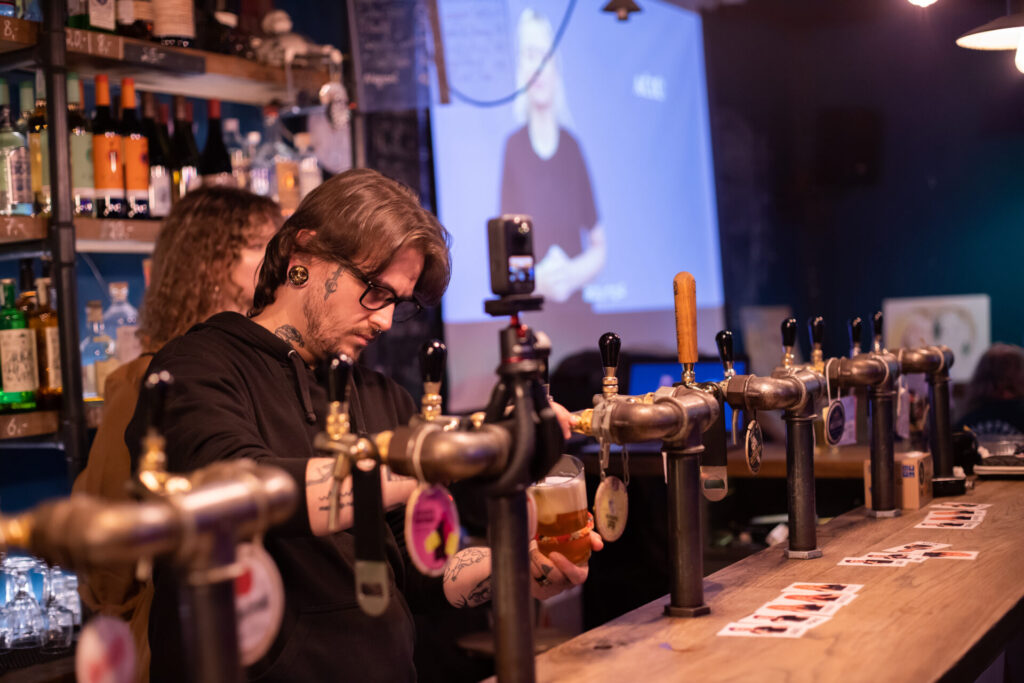
– Arnas, you’re a photographer and currently work at STASYS MUSEUM. How did your interest in photography begin, and what does being able to tell stories through images mean to you?
A. Dambrauskas: My introduction to photography began in childhood. As far as I can remember, during my First Communion, I was given a simple film camera to take photographs of my celebration after church. I remember really enjoying it, and that was when my interest in photography first began.
Later, as a teenager, I discovered that my cousin photographed nature and insects up close. Her photographs strengthened my desire to take pictures myself. I started asking my parents to buy me my first camera, and after getting one, I eventually organised my first photography exhibition at Šepeta Alma Adamkienė Basic School.
Photography continued to be part of my life. In 2022, I graduated with a qualification in photography from Kaunas School of Applied Arts.
I’m particularly drawn to things that are strange, unusual, mysterious or even slightly unsettling. I enjoy experimenting with light, shadows and photo editing to create a distinctive atmosphere. I don’t feel that photography has to reproduce reality exactly – sometimes interpreting it is much more interesting.
At the same time, I don’t try to impose a single meaning on my work. I usually leave viewers free to interpret what they see for themselves. I find it fascinating that the same artwork can evoke completely different emotions, associations or memories in different people.
I’m glad that photography has become not only a means of self-expression but also an opportunity to share knowledge with others. I have led photography workshops for Deaf communities in Vilnius and Kaunas. In Vilnius, together with members of the Deaf community, we organised photography exhibitions for two consecutive years to mark the International Week of Deaf People. This year, I also led a photography workshop for the Deaf community in Marijampolė, followed by an exhibition.
I currently work at STASYS MUSEUM, where art is part of my everyday life. I also lead museum tours in sign language for the Deaf community. This environment gives me even more opportunities to explore different art forms and people’s relationships with them.
For me, photography is a kind of visual language. Sometimes a single image can say more than hundreds of words. But I believe one of the most beautiful things about art is that a work doesn’t necessarily have to provide an answer. Sometimes it’s enough for it to raise a question.
– In the documentary, you’re not only being filmed but also recording your own everyday life. How does this experience differ from photography?
A. Dambrauskas: I have to admit that filming my own life sometimes feels a little strange. Although photography has been close to me since childhood, filming my everyday life is an entirely new experience.
I tend to overthink things and strive for the best possible result. Sometimes I catch myself wondering how to film something as perfectly as possible, even though the directors don’t expect that at all. On the contrary, they give us complete creative freedom to choose what we want to film and share.
Sometimes my own perfectionism becomes an obstacle – while I’m thinking about how best to capture a particular moment, it simply passes by.
In photography, I’m used to controlling the composition, atmosphere and final result. But documentary filmmaking requires me to learn to accept everyday life as it is – spontaneous, unpredictable and not always perfect.
On the other hand, I don’t necessarily want to show every part of my personal life to the world. It’s important for me to maintain a boundary between what I want to share with viewers and what I prefer to keep to myself.
I really value the directors’ trust and the freedom they give us because it allows me to be not only someone being filmed but also an active storyteller of my own life.
I think this experience is teaching me something important – sometimes the most valuable moments are not the ones we carefully plan, but the ones that happen naturally.
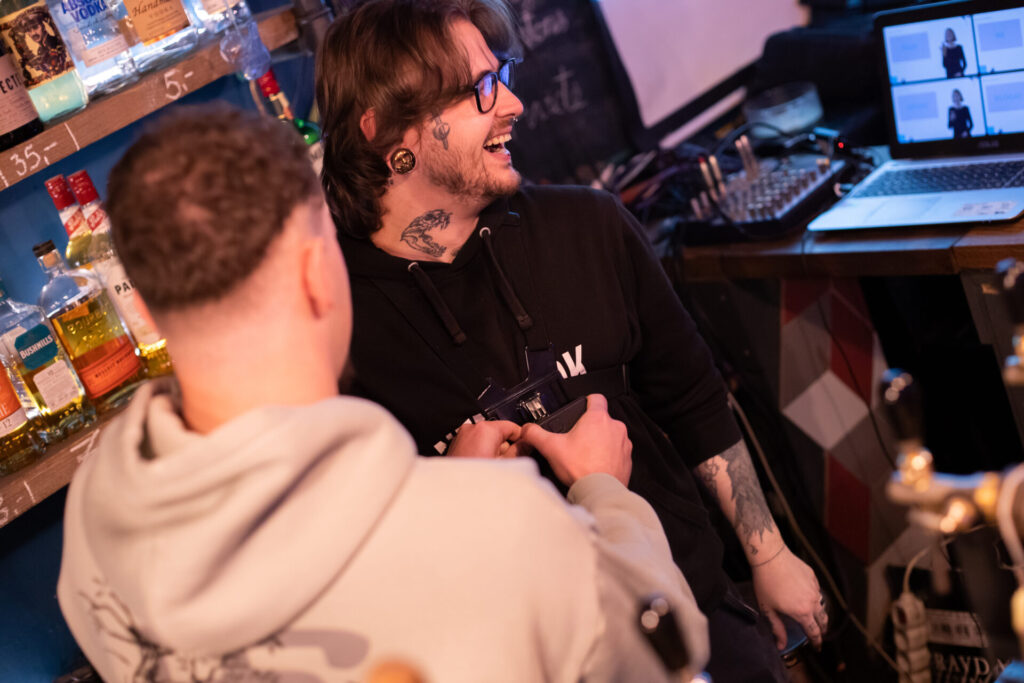
– Justina, you previously appeared in Marija Kavtaradzė’s film Slow. How does working on a documentary differ from acting in a feature film?
J. Čiplytė: I previously appeared in Marija Kavtaradzė’s film Slow. However, this filming experience was new and interesting for me. When acting in a film, you have to immerse yourself in a character and play a particular role, whereas in a documentary I can simply be myself – reveal my real emotions, thoughts and feelings. It has been an interesting experience.
– What misconceptions about Deaf people do you think are still common in society? What would you like to change?
J. Čiplytė: I think there is still a lack of understanding about Deaf people in society. Sometimes people mistakenly believe that being Deaf means we are unable to do many things, but that simply isn’t true. We can study, work, create and pursue our goals. I would like people to rely less on stereotypes and take a greater interest in the Deaf world.
A. Dambrauskas: There is still a stereotype that Deaf people are less intelligent than hearing people simply because they cannot hear. But that is a complete MYTH! Hearing ability says absolutely nothing about a person’s intelligence, capabilities or value in society.
We are people just like everyone else. We have our own dreams, goals, talents, interests, relationships, experiences and ambitions. We can create, work, travel, love, build careers and make our dreams come true. Of course, we sometimes face certain challenges, but these are often caused not by deafness itself, but by inaccessible environments and stereotypes that still exist in society.
Personally, deafness doesn’t hold me back. On the contrary, I sometimes even call being hard of hearing my superpower! When I want to hear, I switch my hearing on, and when I don’t, I turn off my hearing aids and enjoy the world of silence. And I like it!
I don’t want people to pity us or see us as less capable. I want us to be accepted as equal members of society, with respect for our language, culture, identity and individuality.
– Arnas, has participating in the documentary helped you discover anything new about yourself or see your experiences from a different perspective?
A. Dambrauskas: I think participating in this documentary gives me an opportunity not only to look at my life from the outside but also to discover new forms of creative self-expression.
Although photography has been part of my life for many years, filmmaking is a somewhat different experience. I’m learning to notice and capture not just individual moments but also everyday stories, movement, emotions and surroundings.
I’ve noticed that I’ve started appreciating simple everyday moments more – things I might not have paid much attention to before. I’m also gradually getting used to the camera and learning to put less pressure on myself to achieve a perfect result.
I have to admit that at the moment I don’t film my everyday life very often, but there’s still a constant idea generator running in my head! Sometimes I have more ideas than I can possibly bring to life. So I try not to put too much pressure on myself – I film, capture and tell as much as I can.
For me, this experience is a kind of creative experiment. I can learn by filming my own life, try new things and get to know myself better in the process.
I wouldn’t say I’ve discovered a completely new side of my personality yet, but I feel that this project gives me room to grow, experiment and perhaps discover even more in the future.
Sometimes the most important thing isn’t the final result but the creative process itself and what we learn along the way.
– Do you think cinema can help hearing people better understand the everyday lives of Deaf people? What would you most like audiences to understand after seeing your stories?
J. Čiplytė: I hope cinema can do more than simply show the everyday lives of Deaf people – I hope it can force hearing people to really think.
I would like to see more real, powerful stories on screen that show how difficult it can sometimes be to live in a society where understanding is lacking and Deaf people often remain unheard.
I want audiences not only to watch the film but also to feel what it means to face indifference, to be misunderstood and to constantly have to search for ways to communicate.
A. Dambrauskas: Above all, I hope that after watching the film, people will become more empathetic, open-minded and confident about communicating with Deaf people, even if they don’t know sign language. I want them to understand that communication isn’t about speaking a language perfectly – it’s about genuinely wanting to understand another person.
I hope this film will help viewers understand that Deaf people are not some separate, unreachable world. We live in the same world as everyone else; we simply experience it a little differently sometimes.
I wish that after watching the film, people would stop seeing only what we cannot hear and start seeing who we are.
– Justina, if you could tell both hearing and Deaf people one thing about communicating with one another, what would it be?
J. Čiplytė: I would like to tell both hearing and Deaf people that the most important things are tolerance, respect and understanding. Respect and empathy must go both ways – it’s important not only to expect understanding from others but also to make an effort to understand one another ourselves. We are different, but we all want to be accepted and respected. I believe empathy should bring us all together – the ability to see the world through another person’s eyes.
– Thank you for speaking with us!
Photos by Federico Proietta