The Vilnius Film Office presents Films That Changed Lithuanian Cinema, a documentary series exploring the films that have shaped Lithuania’s cinematic history.
Through conversations with directors, actors and those who witnessed the industry’s evolution firsthand, the series reveals not only the events of the past but also the growth of Lithuanian cinema over 35 years of independence. Major awards, the first international productions filmed in Lithuania, bold themes, historical turning points and the courage to embrace new cinematic languages – this is the story of a film industry that has grown alongside Lithuania.
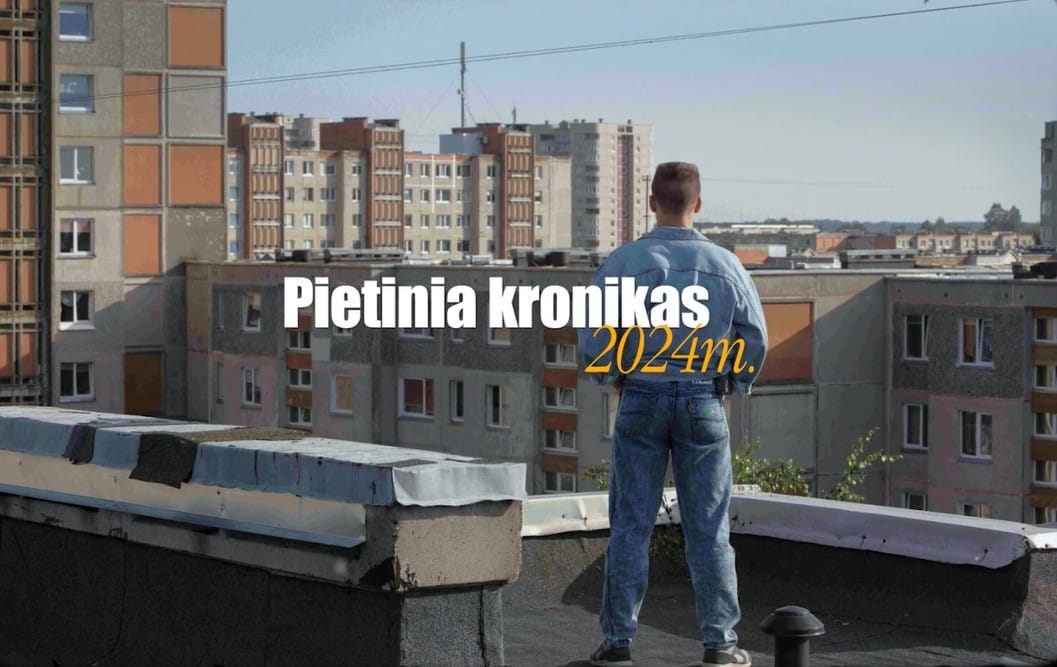
Director Ignas Miškinis’ The Southern Chronicles, based on the novel of the same name by Rimantas Kmita, became one of the most remarkable events in Lithuanian cinema in recent years. Set in 1990s Šiauliai, the story of youth, first love, friendship and the search for one’s place in the world attracted 412,000 viewers to cinemas. The film received not only an extraordinary response from audiences but also recognition from film professionals, winning awards in both the Audience Favourite and Best Film categories.
As director Ignas Miškinis recalls, the scale of the film’s success surprised even its creators. Although they had expected the story to appeal primarily to the generation that experienced the 1990s firsthand, the film resonated unexpectedly strongly with younger audiences. According to producer Lukas Trimonis, its ability to engage viewers of different ages was one of the key reasons behind its success. Some young people even returned to cinemas to watch the film several times.
The story behind the film began long before its theatrical release. Screenwriter Eglė Vertelytė recalls that in 2017, writer Rimantas Kmita suggested she read his novel. Both had grown up in Šiauliai during a similar period, making the world described in the book particularly familiar to her. The first version of the screenplay followed soon afterwards, but the film only took its final shape after a lengthy creative process. When Ignas Miškinis joined the screenwriting process, the story was developed further, with the team searching for ways to transform the literary narrative into a compelling cinematic experience.
According to Eglė Vertelytė, the central idea of the story was clear from the very beginning: a young man who gradually begins to change after falling in love with a girl. What initially appears to be a simple love story develops into a much broader exploration of growing up, social differences and the possibility of choosing a different path in life.
For director Ignas Miškinis, it was important not only to recreate the atmosphere of the 1990s but also to understand the young people who lived through that period. Although Lithuania in the early years of independence was chaotic, often brutal and filled with uncertainty, the filmmakers deliberately chose not to make these circumstances the central focus of the story. Instead, they wanted to portray a young man standing on the threshold of adulthood, trying to understand who he really is.
Producer Lukas Trimonis emphasises that one of the film’s most important themes is a young person’s attempt to escape the role imposed on them by their environment. Regardless of the neighbourhood or circumstances in which someone grows up, they still have the opportunity to change and choose their own path. It is precisely this universal idea that makes a story set in 1990s Šiauliai relevant to audiences today.
Friendship also plays an essential role in the film. According to Eglė Vertelytė, as the screenplay developed, the relationship between Rimantas and Mindė became increasingly important. Their friendship reflects the way young men can talk about almost anything while avoiding the subjects that matter most to them. This relationship brought additional emotional depth to the film, revealing the vulnerability hidden beneath the characters’ tough exteriors.
The filmmakers also paid particular attention to the film’s visual world. Ignas Miškinis explains that recreating the 1990s proved unexpectedly challenging. Unlike distant historical periods, the decade remains vivid in the memories of many viewers, meaning that even the smallest detail could appear unconvincing. The director noticed that placing too much emphasis on authentic objects from the period sometimes had the opposite effect, making the images feel artificial.
As a result, the team chose a different approach. Rather than constantly reminding viewers which decade the story takes place in, they sought to create the impression that the film itself had been shot during that period. To achieve this, they drew on the visual aesthetics and filmmaking techniques of the 1990s, incorporating VHS footage and archival material.
Writer Rimantas Kmita recalls the powerful emotional experience of seeing the apartment blocks and courtyards of Šiauliai’s Pietinis district on the big screen for the first time. Places where he had spent his youth, and which had long existed only as part of his personal memories, suddenly became part of a cinematic story. According to the writer, this experience allowed him to see his own past from an entirely new perspective.
Nevertheless, the filmmakers did not want to turn the 1990s into an idealised object of nostalgia. Eglė Vertelytė points out that while longing for one’s youth and the freedom associated with it is natural, it would be dishonest to forget how difficult that period truly was. For this reason, the film balances humour, love and friendship with the social realities in which its characters grew up.
The Southern Chronicles became a significant milestone in Lithuanian cinema not simply because of its impressive audience numbers. The film demonstrated that a story rooted in a very specific place and historical period can explore universal themes and reach an exceptionally broad audience. As Rimantas Kmita observes, everyday life that once seemed chaotic and unremarkable takes on new meaning when transformed into literature and cinema. It serves as a reminder that ordinary people’s lives and experiences are also worthy of being told.
Ultimately, The Southern Chronicles is not only about Šiauliai or the 1990s, but also about a person’s relationship with their surroundings. According to Ignas Miškinis, finding one’s path does not necessarily require leaving home or searching for a better place elsewhere. Sometimes, what matters most is understanding and accepting the world you come from. It is this idea that transforms The Southern Chronicles from a story about the past into a timeless exploration of self-discovery, one that resonates with different generations of Lithuanian audiences.