A bottle covered in condensation, a dumpling lifted on a fork or a glass filled with ice may look like an ordinary everyday detail on screen. On set, however, food stylists help create these images: they take care of how a product looks, find ways to maintain its appearance through multiple takes and anticipate how food or drink will appear on camera.
Working together under the name “Schaschky”, Rokas Šaški and Jelena Volgina found their way into the profession through hands-on experience. Rokas began by preparing products for photography, and Jelena joined him as the workload on set grew. Today, she mainly works with food and he with drinks, but both emphasise that the final image depends on the work of the entire team.
We speak to food stylists Rokas Šaški and Jelena Volgina about using real food and substitutes, the differences between photography and filming, creative solutions and the preparation that keeps a shoot running smoothly.
– How did you get into food styling, and how did your creative partnership, “Schaschky”, come about?
R. Šaški: It all started when I filled in for a friend who worked in the field. Later, I took over his work. At first, I prepared products for photography: applying labels to bottles and coating the bottles with lacquer. These were beers, juices and other drinks that would be photographed or filmed in a photography studio, without people in the shots.
After a while, a producer I knew invited me to work on a film set. When I started, I did not yet understand how a shoot was organised or how responsibilities were divided. Sometimes I would arrive on my own and have to take care of not just the products, but also the glasses, plates and all the table props. Keeping up with everything became difficult, so I looked for help. That is how Jelena joined me, and we have worked together ever since.
J. Volgina: Rokas started working on sets before we established the company. I joined because he needed help at every stage: preparation, making the food and the shoots themselves. Over time, working together naturally grew into “Schaschky”.
R. Šaški: It is my grandfather’s original German surname. He came from the Königsberg region. It is not the easiest name to spell, and people sometimes mix up the letters, but those who need our services find us.
– There are plenty of myths about food advertising. How much of the food we see on screen is real, and when do you need to use substitutes?
J. Volgina: In our work, around 90 per cent of the food you see in a shot is real. Only about 10 per cent of our projects involve substitutes. It depends on the director’s idea and how complex the commercial is, but if you see a dish on screen, it will usually be real.
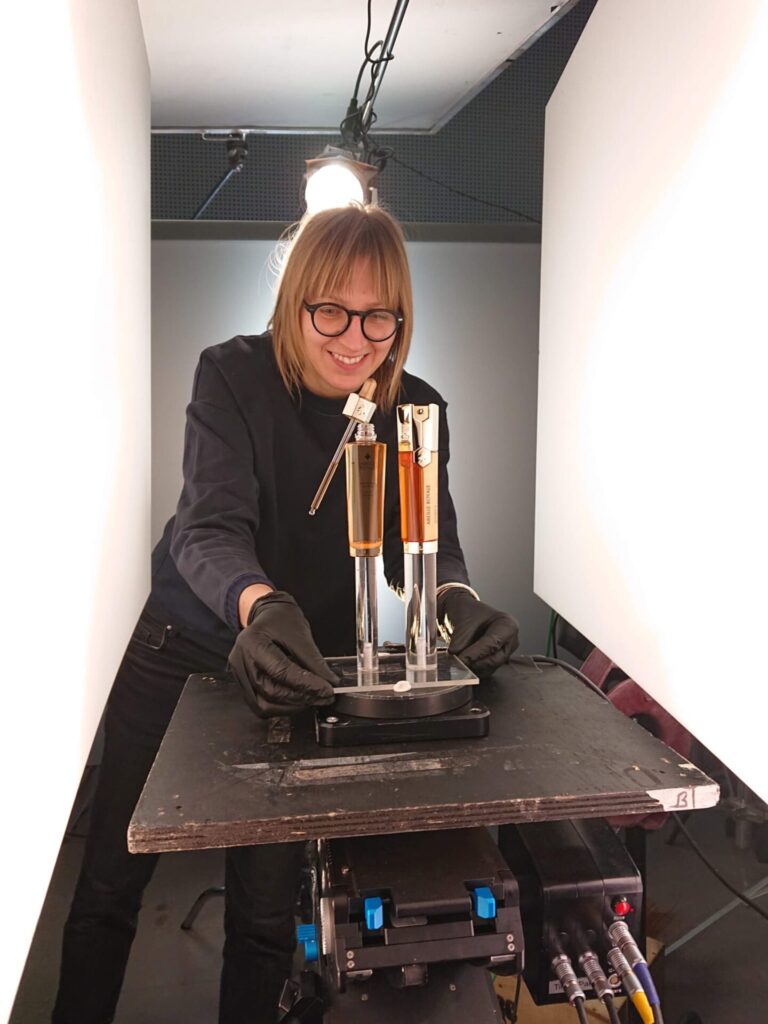
R. Šaški: The decision comes down to the client’s needs and the specific brief. Still, we always try to use the client’s actual products first.
– You work with both food and drinks. How does their presentation on screen differ, and how are advertising trends changing it?
R. Šaški: Drinks advertising has an established visual language. We used to spend longer watching a wave of liquid in slow motion; now similar shots move more quickly. The imagery often remains familiar, but the pace changes.
Food is increasingly shown in natural settings, in scenes involving actors. Commercials feature actors, influencers and social media creators. More attention is paid to what someone says about a product, rather than just how it looks. Retail chains often choose this approach too.
J. Volgina: It is a trend, but the script always determines the specific approach. We also divide the work to some extent: I mainly prepare food, while Rokas works more with liquids.
– You work on both photo shoots and film shoots. How do preparation and responsibility differ between the two?R
R. Šaški: We work on photographs for magazines and digital platforms, commercials and films. Filming is a fast-moving process, and time is directly tied to the budget. If you take too long, the whole team is waiting: camera operators, lighting crew, actors and the director. That is why you have to prepare so much in advance.
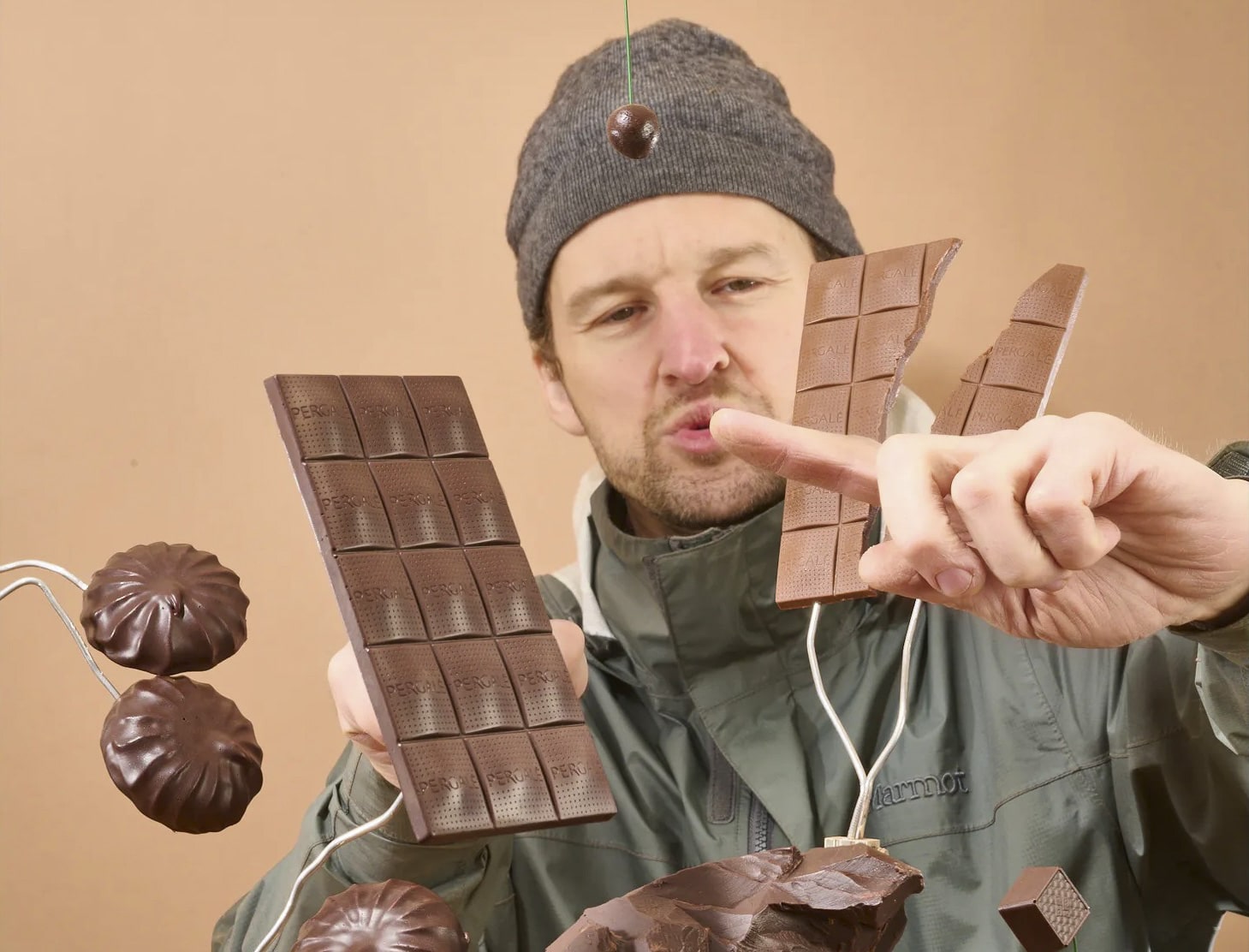
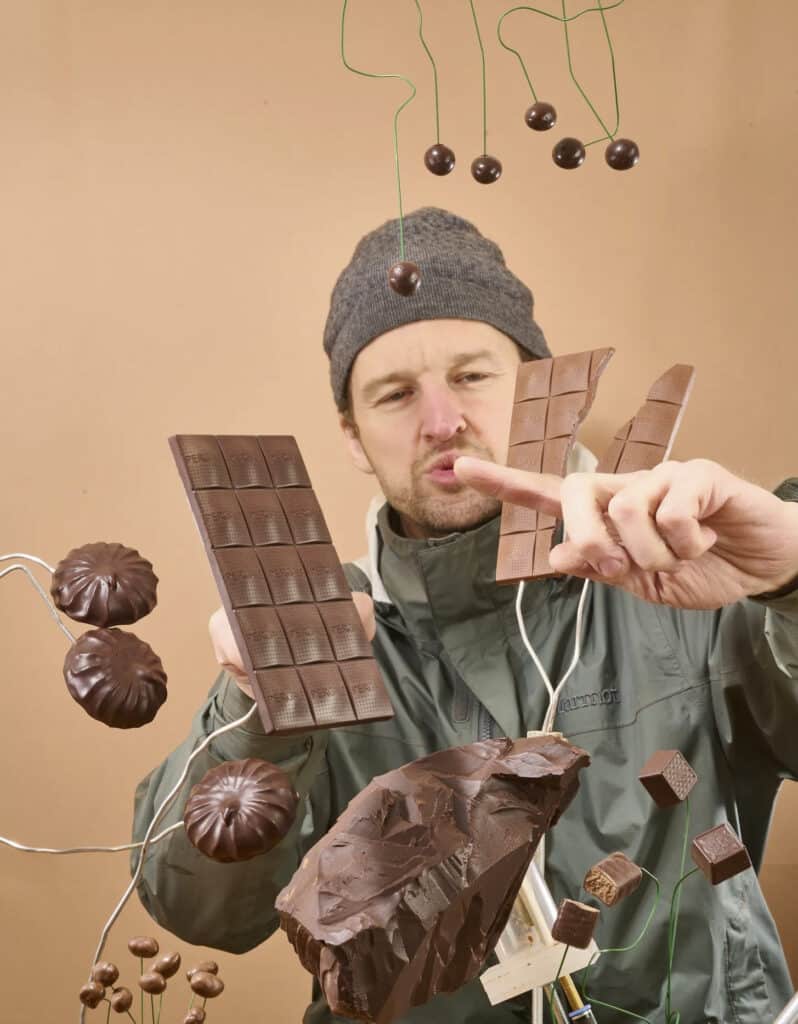
The options for adjusting the image afterwards are different too. When filming with a high-speed camera, you can have several hundred frames per second. If a product needs to hang or fly through the air, the wires and lines supporting it need to be concealed on set. In the past, removing them from the footage was particularly difficult.
It is simpler in photography: you can suspend a sausage on a wire or a fork and remove the unwanted support from the photograph later. Sometimes the biggest challenge is choosing one image out of a hundred.
– Which products are the most challenging to work with on camera?
J. Volgina: Avocados. They darken very quickly, so as soon as you cut them open, the race against time begins.
R. Šaški: I remember working with dumplings. When you take them out of the pot, they can look greyish and lose their shape. Then you start looking for solutions: put a dumpling on a fork, add some dill and give the surface a little shine. The camera operator chooses warm lighting and the right lens, and the result surprises you: the dish looks completely different in the shot.
J. Volgina: It is a team effort. The food stylist’s work alone is not enough: lighting and the way the product is filmed also shape its appearance.
– How much creative freedom does the job offer? Can you recall a task that called for a particularly unexpected solution?
J. Volgina: There are certainly tasks where you have to come up with the solution yourself. Sometimes I look for inspiration in food photographs on Pinterest. You remember an idea, and later a project comes along where you can use it. Being able to suggest your own solution makes the work more interesting.
We are currently making artificial ice cubes for a project and discussing with the production designer how to create a frost-covered room. Tasks like these certainly leave plenty of room for creativity.
R. Šaški: We use artificial ice cubes when filming drinks. There are all sorts of materials available for this today, but for some of our earliest attempts, we made them in an oven. We made moulds out of foil and bought a lot of clear disposable cutlery.
J. Volgina: At the time, we could only get disposable forks.
R. Šaški: We needed a huge amount of ice, very quickly: we had to cover an entire table with it for a commercial. We could have ordered special plastic granules, but delivery would have taken too long, and the shoot was only two days away. My mother and uncle helped us make the cubes. At the time, it was the quickest and cheapest solution, and the team was happy with the result.
– What do you think of AI-generated images? Could they replace the work of a food stylist?
J. Volgina: It is difficult to say at this point. People I speak to about it often feel pessimistic about the future, and new tools keep appearing. We hope clearer rules governing their use will help reduce plagiarism and copyright infringement.
R. Šaški: I am concerned not only with the technology itself, but also with how people relate to the images it creates. Increasingly, people cannot distinguish between what is real and what is generated. Once you start believing those images, they begin to shape your understanding of what things are supposed to look like.
I can be fooled too. That is why direct, hands-on experience matters to me: being able to see and feel the actual product yourself.
– What advice would you give someone who wants to become a food stylist? What are the most important lessons to learn before stepping onto a set?
R. Šaški: First, look for opportunities to work and do not be afraid to get hands-on experience. Information is easy to find these days, but you need to assess it critically and test it yourself.
If the task is to make pancakes, you cannot expect everything to work perfectly on your first attempt on set. You need to make ten batches at home, see how they brown, how they look once they have cooled and what their texture looks like on camera. Practice matters, but preparation matters even more.
You also need to understand that you are part of the overall production process. We do not see ourselves as a separate entity: your personal ambitions cannot take precedence over the work of the camera operator, the lighting crew or the production designer. The final shot depends on how all these people work together.
– Thank you for the conversation!
Photos „Schaschky“ personal archive