Vilnius Film Office presents the video series Films That Changed the History of Lithuanian Cinema. Through conversations with directors, actors and filmmakers, the series explores not only the stories behind landmark films, but also the growth of Lithuania’s film industry over 35 years of independence. From breakthrough achievements and international recognition to bold storytelling and new cinematic voices, these are the films that grew alongside modern Lithuania.
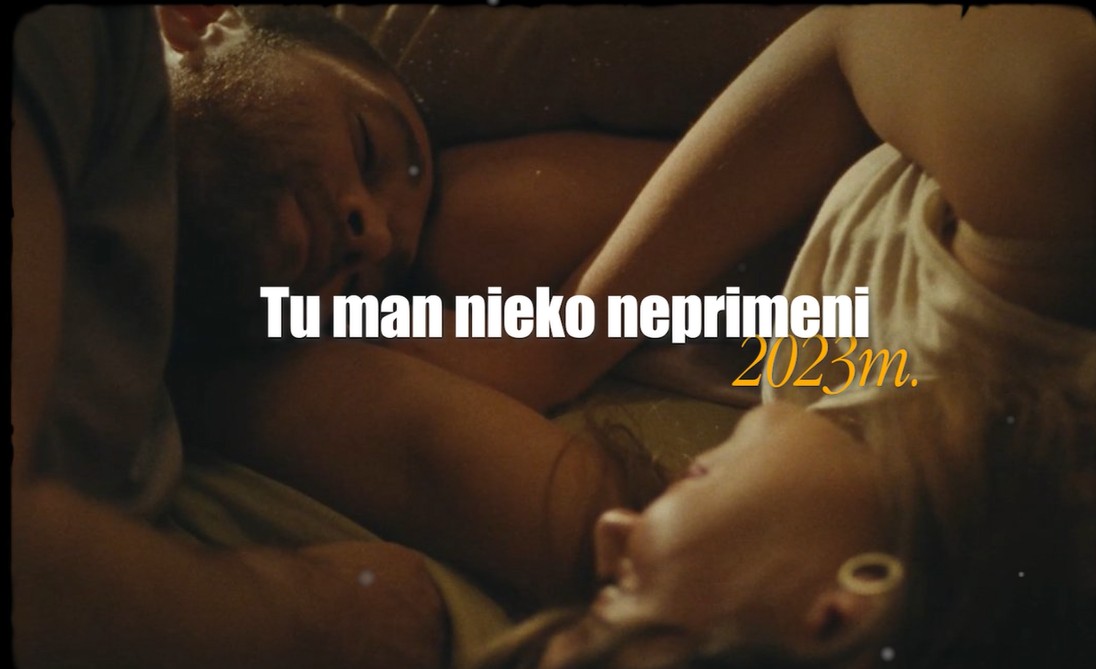
Released in 2023, Marija Kavtaradzė’s feature film Slow has become one of the most important achievements of contemporary Lithuanian cinema. Premiering at the prestigious Sundance Film Festival, where Kavtaradzė won the Directing Award in the World Cinema Dramatic Competition, the film received widespread international acclaim and demonstrated that deeply personal, intimate stories can resonate with audiences around the world.
In this episode, director Marija Kavtaradzė, producer Marija Razgutė and film critic Dmitrij Gluščevskij reflect on the creative journey behind the film and the ideas that shaped it. According to the filmmakers, although Slow may initially appear to be a familiar love story, its originality lies in the perspective from which it explores relationships – one rarely seen in cinema before.
As Marija Kavtaradzė explains, once she realised she wanted to make a film about love, she began searching for a fresh way to approach a theme that had already been explored countless times. That search led to the story of an asexual man who falls in love with a contemporary dancer for whom physicality is an essential form of expression and communication. Yet, as the director emphasizes, asexuality was never intended to be the film’s central subject. Instead, the story focuses on two people trying to understand one another, navigate uncertainty and create a relationship without an existing blueprint to follow.
Film critic Dmitrij Gluščevskij expands on this idea, arguing that Slow is not simply a film about romance. It is also a story about identity, personal boundaries and the challenge of remaining true to oneself, even when it comes at the cost of love. Rather than relying on external conflict, the film draws its emotional power from the characters’ internal struggles, making it a distinctive addition to contemporary relationship dramas.
Kavtaradzė devoted considerable time to preparing the actors before filming began. Rehearsals, in-depth conversations about the characters and continuous script development became an integral part of the creative process. The actors actively contributed ideas, asked questions and inspired changes that ultimately strengthened both the screenplay and the authenticity of the characters’ relationship on screen.
Particular attention was also given to the film’s intimate scenes. An intimacy coordinator worked closely with the cast and creative team to establish clear boundaries and create a safe working environment. According to the director, mutual trust between the actors and the filmmakers was essential in creating genuine emotional intimacy rather than merely performing it.
Dmitrij Gluščevskij also highlights how the film’s visual language is inseparable from its subject matter. Its restrained pace, poetic cinematography and understated direction are not stylistic choices for their own sake, but deliberate creative decisions that allow viewers to immerse themselves in the emotional world of the characters. The harmony between form and content, together with the film’s contemporary exploration of intimacy, emotional well-being and human relationships, is what ultimately earned Slow widespread international recognition.
Slow expanded the boundaries of how love stories can be told in Lithuanian cinema. It showed that intimacy does not have to be defined by physical closeness and that the deepest human connections are often built not through certainty, but through a willingness to understand another person. It is a film that challenges conventional ideas about love while demonstrating how cinema can approach complex human experiences with honesty, sensitivity and remarkable emotional depth.