What do church painting restorers and microscopic fungi have in common? Why does decay not necessarily mean an ending, and how can death become a story about the continuity of life? These are the questions explored in director Aistė Žegulytė’s documentary Holy Destructors, which has received international acclaim and travelled to numerous film festivals around the world.
The film brings together two seemingly different worlds: restorers striving to preserve cultural heritage and microscopic fungi that quietly continue their work regardless of human efforts. Yet rather than portraying them as opposing forces, the director invites us to see their relationship as a natural symbiosis between life and nature.
We spoke with Aistė Žegulytė about our relationship with decay, personal loss, the beauty of the microscopic world, and finding miracles in everyday life.
– In the film, restorers fight to preserve every centimetre of a painting, while the fungi patiently continue their work. During filming, did you ever feel that one side was more justified than the other?
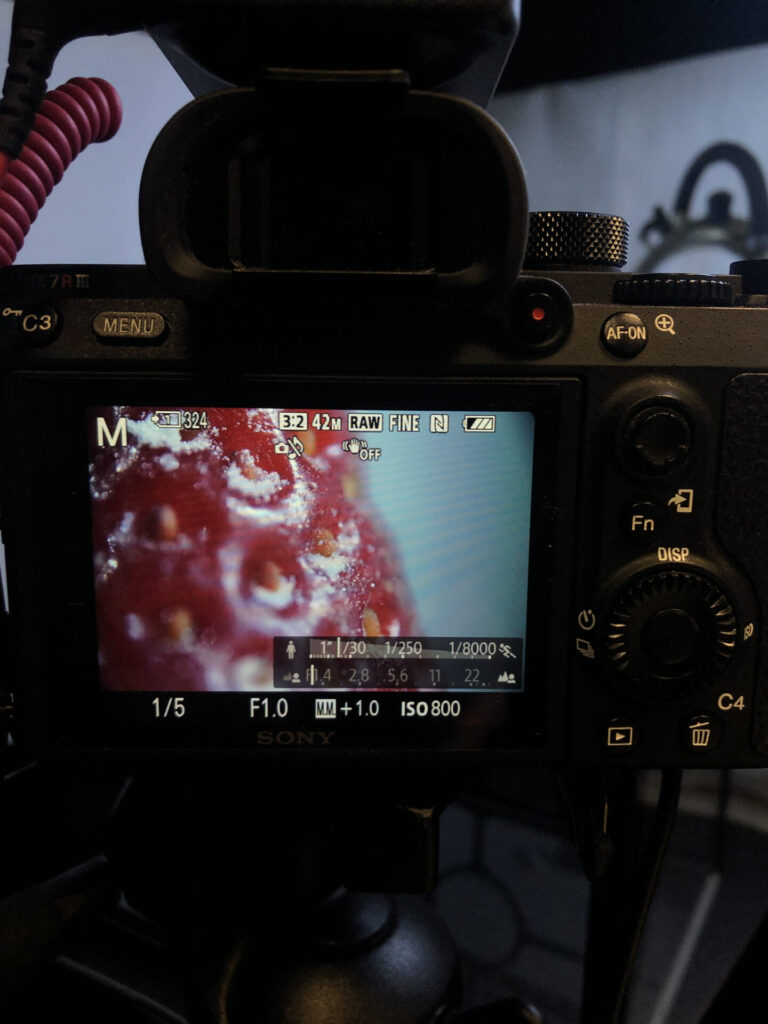
A. Žegulytė: At first, I was simply in love with those mould fungi and completely on their side because they were the reason I came to the restorers in the first place. Cinematographer Vytautas Katkus and I couldn’t stop watching them the first time we saw them under the microscope. We wanted to dive deeper into that microscopic world and see our own world from their perspective.
Later, after getting to know the restorers, I realised how important their work is. Today, I couldn’t honestly say I belong to either side. To me, humans and fungi are part of the same system. We exist in symbiosis, and neither could survive without the other.
– In many cultures, decay is associated with defeat, yet in your film it almost feels solemn. When did you begin seeing decay not as a tragedy but as a natural part of life’s cycle?
A. Žegulytė: I think this is deeply connected to the Lithuanian relationship with nature. We live through the cycle of the seasons and naturally understand that autumn is followed by winter, and winter by spring. That constant renewal is part of our culture.
When making the film, I didn’t want to speak about death or stillness but about life that never truly ends. Nature is in a constant state of transformation. A person may dissolve into the earth, but the energy itself never disappears – it simply becomes the beginning of something new.
– Religion is present throughout the film, yet it never becomes the main character. Did you consciously try to shift the focus away from humans and towards what usually goes unnoticed?
A. Žegulytė: It would have been impossible to avoid religion because many of the paintings featured in the film come from churches. And whenever you speak about life and death, you inevitably enter a metaphysical space.
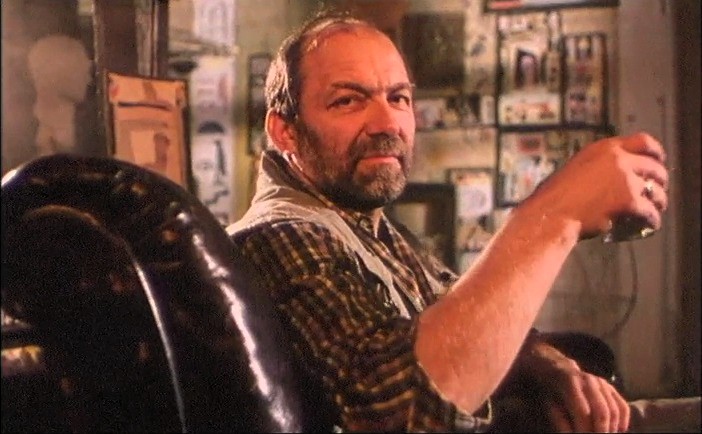
I was especially fascinated by the restorer Janina Bilotienė, who was restoring a miraculous painting of the Virgin Mary. What moved me most was that her work wasn’t about demonstrating her craftsmanship. She worked so that the painting could continue serving people.
– While watching the film, the fungi almost become a critique of civilisation, reminding us that neither art, faith nor memory is eternal. Was that idea there from the beginning, or did it emerge during editing?
A. Žegulytė: It was there from the very beginning. But for me, the film is less about criticism than about accepting the inevitability of existence.
Different cultures understand time differently. Some see it as a straight line, others as a cycle. Through this film, I wanted to explore how people come to terms with impermanence and accept that everything is constantly changing.
– The restorers in the film almost work like surgeons. Were there moments when their work seemed closer to a ritual than to science?
A. Žegulytė: I believe science can also be a ritual. Scientists spend years repeating the same actions, searching for answers without necessarily discovering something new right away. When routine becomes ritual, it gains meaning.
It was especially rewarding to hear one of the people featured in our film – a biochemist – say that after watching it, she began looking at her own daily routine as a ritual.
– Your film is filled with silence and observation. Were you worried that today’s audiences might struggle to embrace such cinema?
A. Žegulytė: That was one of my greatest fears. The film asks for patience. It invites viewers not only to watch but also to feel, to immerse themselves and actively participate. I’m always interested in how audiences themselves become part of the creative act simply by looking at the screen.
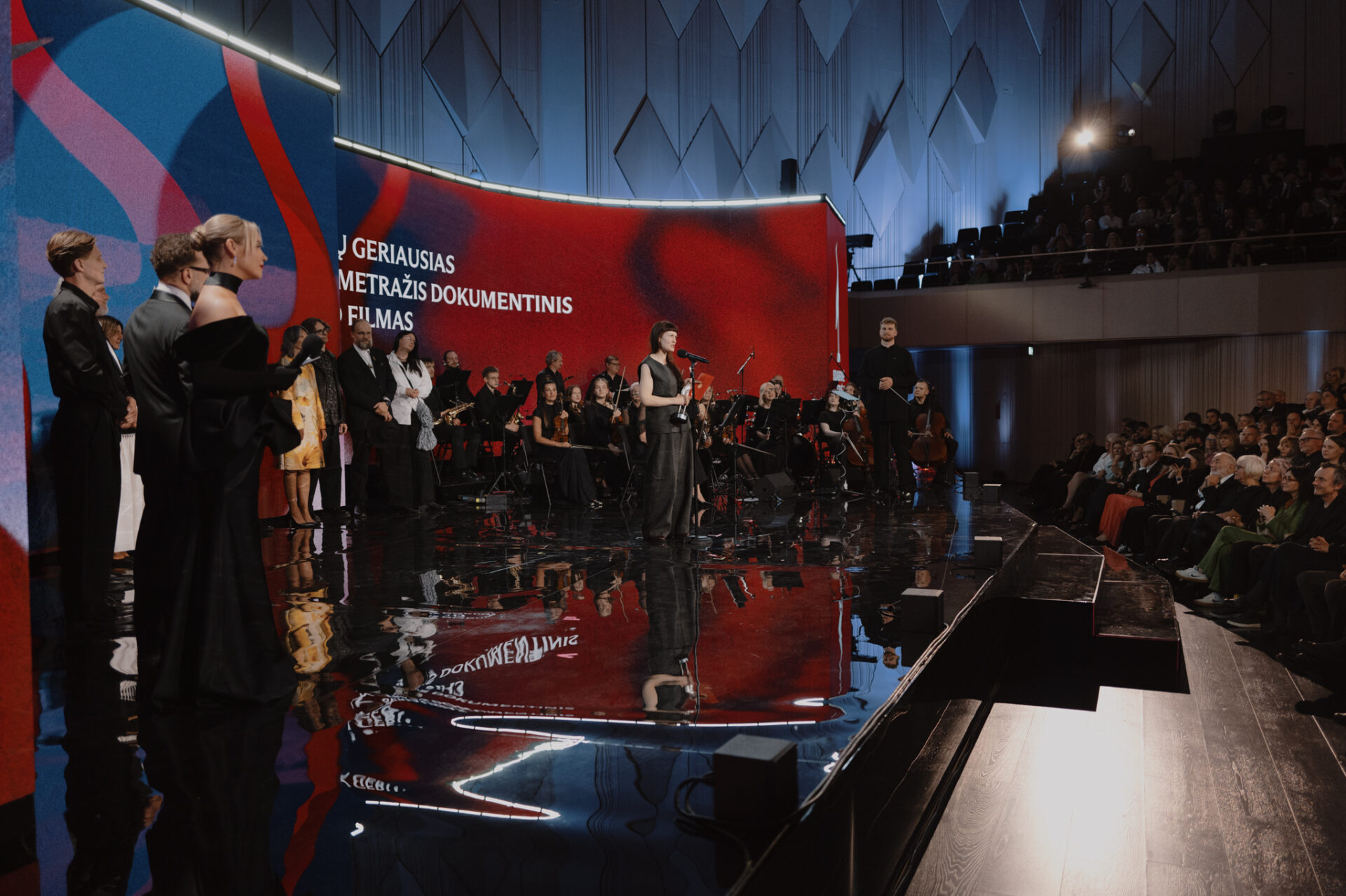
The editing process lasted more than a year. We constantly searched for the right balance between observation and storytelling. But when the film premiered at IDFA in Amsterdam and received such a warm response, it gave me much more confidence.
I believe people still need moments to pause and reflect. It’s like reading poetry – not everything has to be understood immediately.
– The microscope almost becomes a film camera operating on another scale. Did spending so much time observing what is invisible to the naked eye change the way you see the world?
A. Žegulytė: That microscopic world brought me an incredible sense of beauty and hope. You begin to see even the most ordinary things differently.
At the same time, the subject of this film was deeply connected to my own personal experiences. During its production, I had to say goodbye to several people who were very dear to me – my grandmother, my father and my grandfather. In many ways, this film became my way of accepting those losses and understanding that life never truly disappears; it simply changes its form.
– The film is about what people try to preserve. In your opinion, what do we protect too desperately today?
A. Žegulytė: I think we often place too much value on things whose worth is measured only in money. If something lacks cultural or emotional significance, financial value alone doesn’t mean very much.
– Throughout the film, there is a constant tension between control and acceptance. Which feels closer to you personally?
A. Žegulytė: Struggle is inevitable because life itself is a continuous effort to survive. But through rituals, creativity and human connection, we also learn to accept what we cannot change.
– In the film, science and mysticism are never portrayed as opposites. Do you think people today are too often forced to choose between rationality and faith?
A. Žegulytė: Yes. I think we have become too eager to fit everything into charts and diagrams. But the world is far more complex than that.
Sometimes all it takes is looking at it from space or through a microscope to realise how deeply everything is interconnected. I’m much more interested in what unites us than in what separates us.
– If the fungi in the film symbolise transformation, what transformation did making this film bring to your own life?
A. Žegulytė: It brought me a greater sense of peace and reminded me once again that patience pays off. You have to keep going and trust the process.
– By the end of the film, it feels as though humans are no longer the central figures in the world, but simply one of countless forms of life. Was that perspective important to you?
A. Žegulytė: Very important. Human self-importance often makes life more complicated than it needs to be. I wanted to portray us as tiny specks of dust in an immense universe.
This film reminded me once again that we need to cultivate empathy – not only towards one another, but towards the entire world around us.
– Alongside dust and bones, the film’s title also includes miracles. Where do you see miracles today?
A. Žegulytė: The greatest miracles usually happen when you least expect them. They have no physical form and cannot be held in your hands.
Sometimes a miracle is hidden in a glance, a feeling or an unexpected encounter. And in times when the world is filled with so much darkness and uncertainty, I think it’s important not to stop waiting for those miracles.
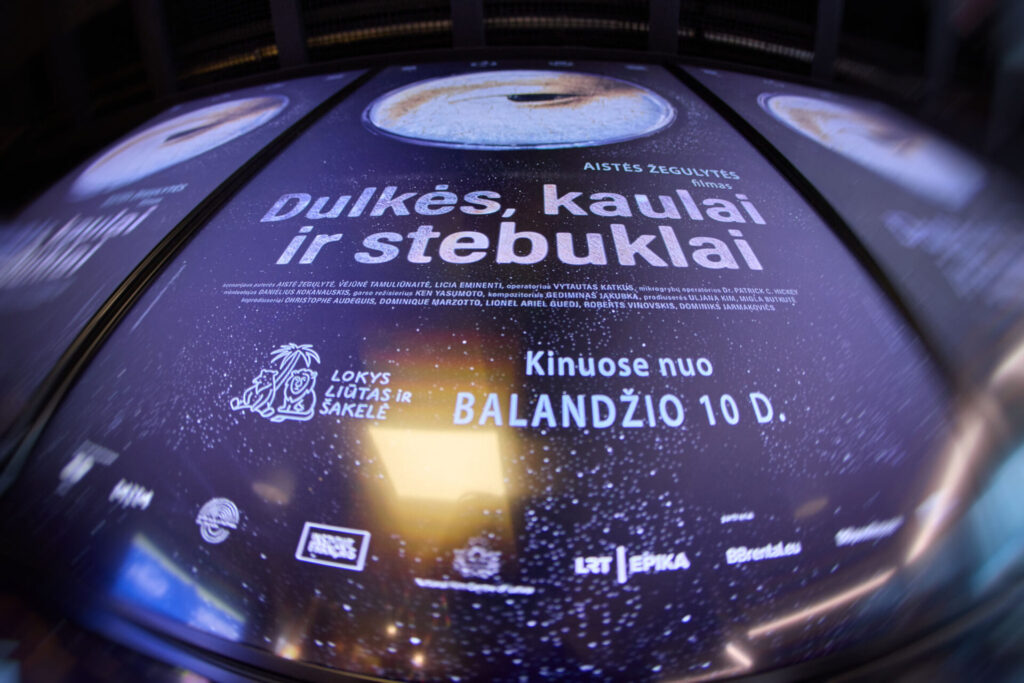
For those who haven’t seen the film yet, there will be a free open-air screening on 3 August at Lukiškės Prison.
– Thank you for your time.
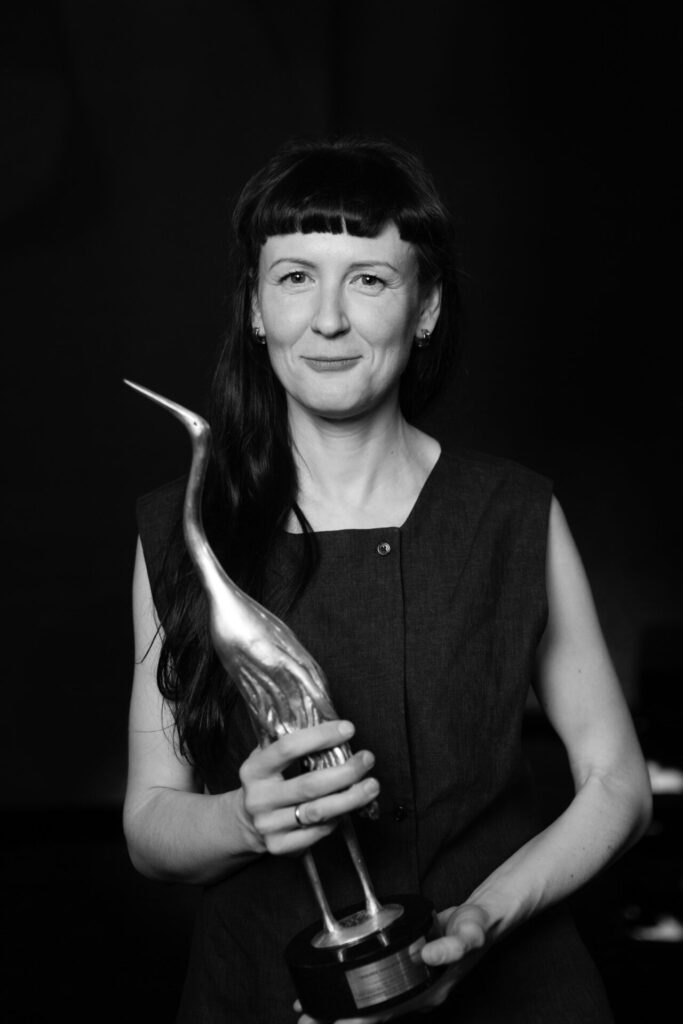
Photo by Gabrielius Jauniškis