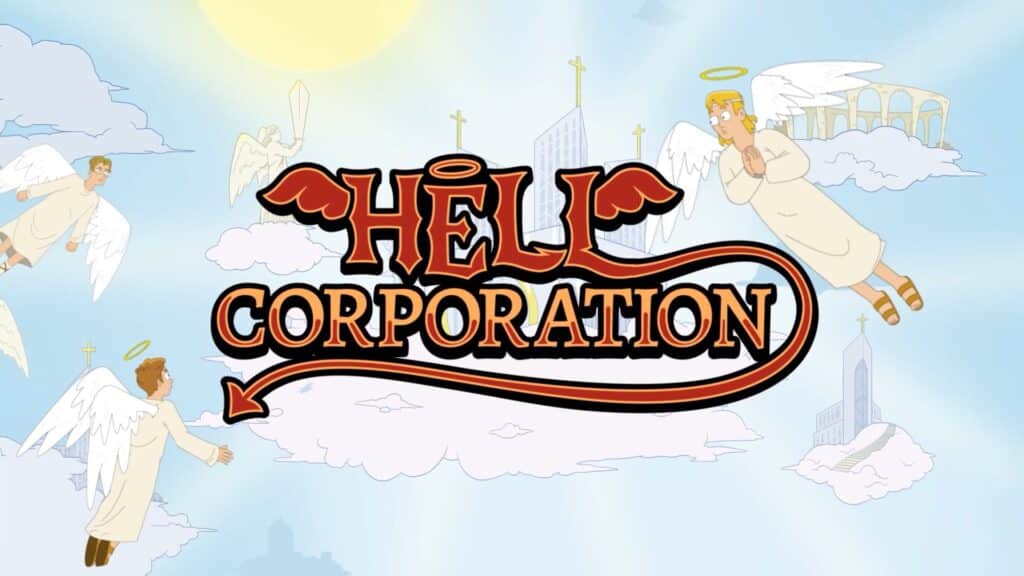
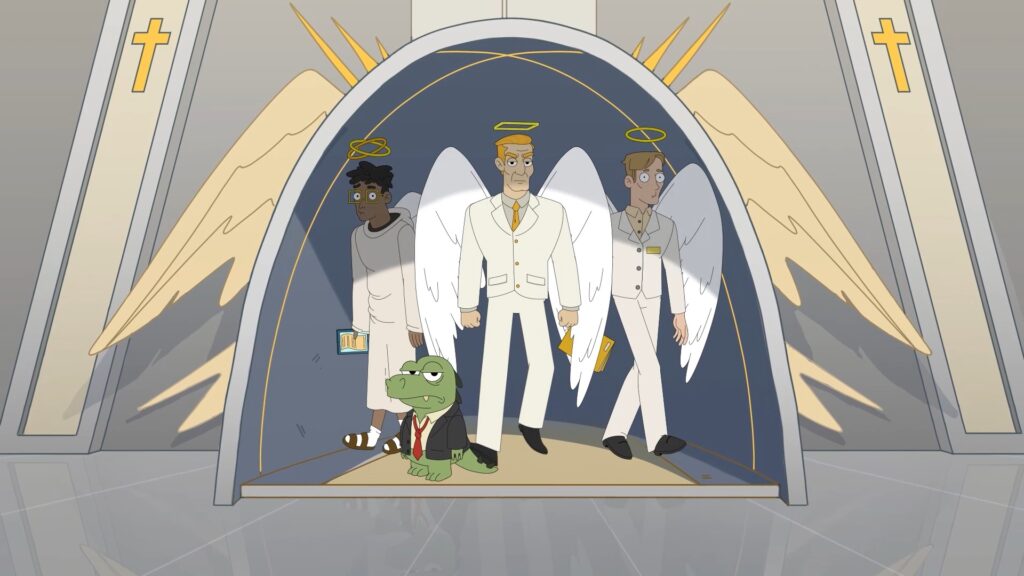
What do you see when you think of a corporation? Neatly arranged screens, deadlines, meetings, and polite emails? Or something else entirely: miscommunication, strange decisions, absurd situations, and the feeling that it has all long crossed the line of reality. It is exactly from this recognizable yet exaggerated-to-the-point-of-grotesque world that the adult animated series Hell Corporation is born.
Animation studio Meinart is developing this project for the international market, and its creators are clear – animation is no longer just a medium for children. On the contrary, it allows us to talk about today’s world more boldly, more sharply, and with greater irony.
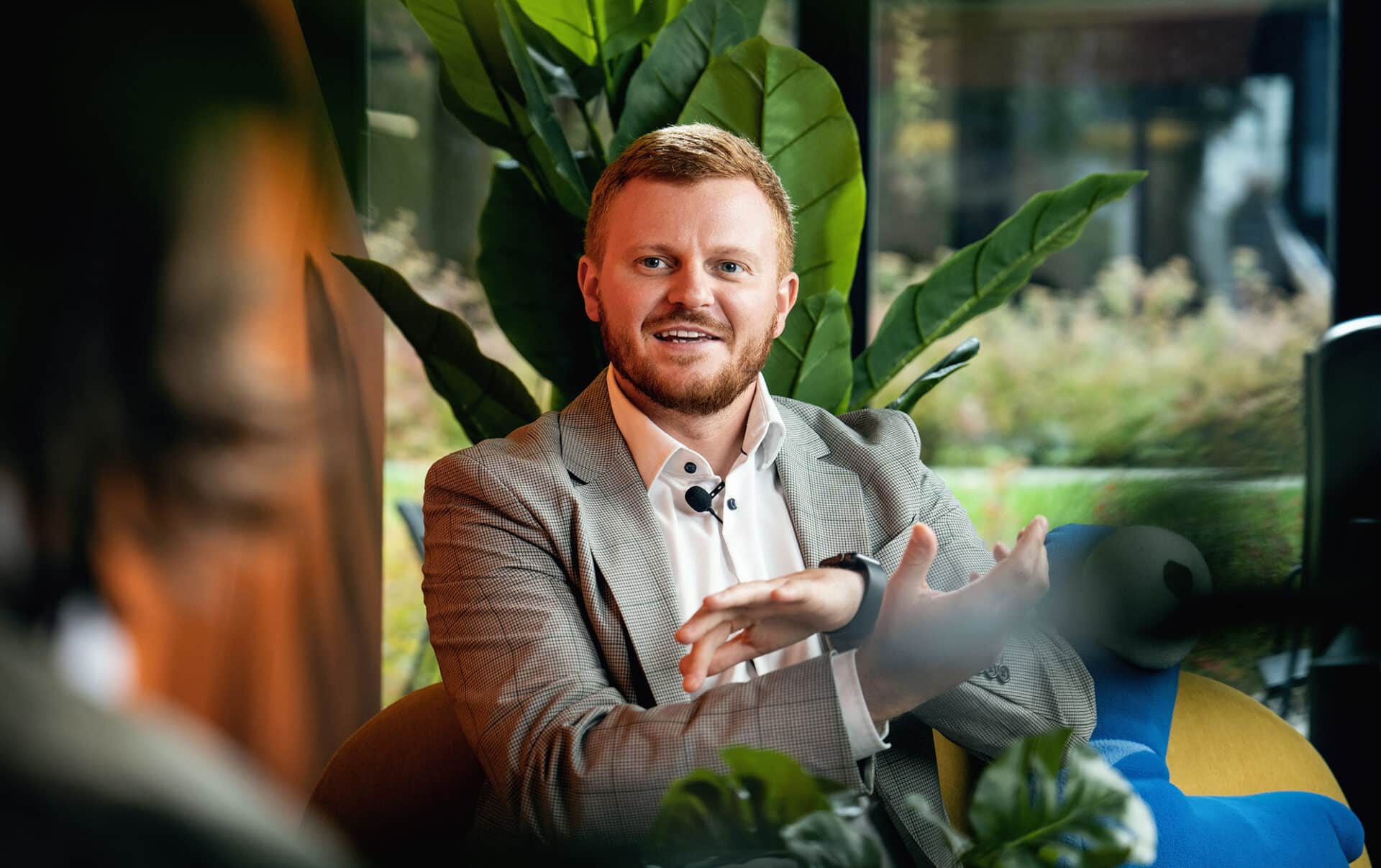
We spoke with director Meinardas Valkevičius and producer Akvilė Bliujūtė-Janušė about how Hell Corporation came to life, how adult animation differs from other formats, what it means to think globally from Lithuania, and whether artificial intelligence is a tool or a threat.
– Adult animation is still not very common in Lithuania. Why did you choose this direction – what drew you to animation “not for kids”?
M. Valkevičius: For a long time in Lithuania, we were all waiting for local animation we could show to our children. It took time, but it arrived – today we already have strong Lithuanian projects for kids, and I’ve had the honor of directing some of them myself. But animation doesn’t end there. It’s not just a children’s medium. Naturally, we started asking what else we could say with it. That led us to adult audiences – to themes that are sharper, more uncomfortable, sometimes even absurd, yet very close to reality. Hell Corporation came from the desire to talk about the world we live in today, but to do it through animation – more freely, more boldly, and with more irony than other formats would allow.
– Hell Corporation already sounds like a metaphor for modern work. How much of it is satire of the real world, and how much is creative play?
M. Valkevičius: I’d say a lot of it comes from the real world. The entire series is rooted in what we see and experience ourselves: offices, large companies, strange decisions, miscommunication, and absurd situations. Of course, we exaggerate everything heavily – otherwise it wouldn’t be as interesting to watch. But the foundation is very recognizable. I think viewers will often have that feeling of “this is literally my life.” There’s creative play too, but it mainly helps highlight reality even more clearly, rather than escape from it.
– How did the idea come about – was it a single moment or a long-built feeling that “this needs to be made”?
M. Valkevičius: The script was written by the head of a large international company who chose to remain anonymous. This is someone with extensive experience in corporate management and a deep understanding of the corporate world from the inside. His personal experience became a key foundation for the idea. The desire to show how this corporate mechanism actually works – the people inside it and the absurdities it produces – eventually grew into the core of the series.
– Sitcoms require very precise timing. How is that timing created in animation – is it more about writing or visuals?
M. Valkevičius: It always starts with the story – it needs a clear beginning, development, and ending. For us, it was important to define the theme and tell it not in a dry way, but through unexpected situations, misunderstandings, and sarcasm. But a script alone isn’t enough. In animation, a lot happens between the lines – in pauses, looks, reactions, and small visual details. That’s often where real humor is born. So timing is a combination of both – writing and visuals. That’s what makes animation so exciting to me: you can control rhythm very precisely, even when a character says nothing.
– How is humor in animation different from live-action? Where do you have more freedom, and where are the limits?
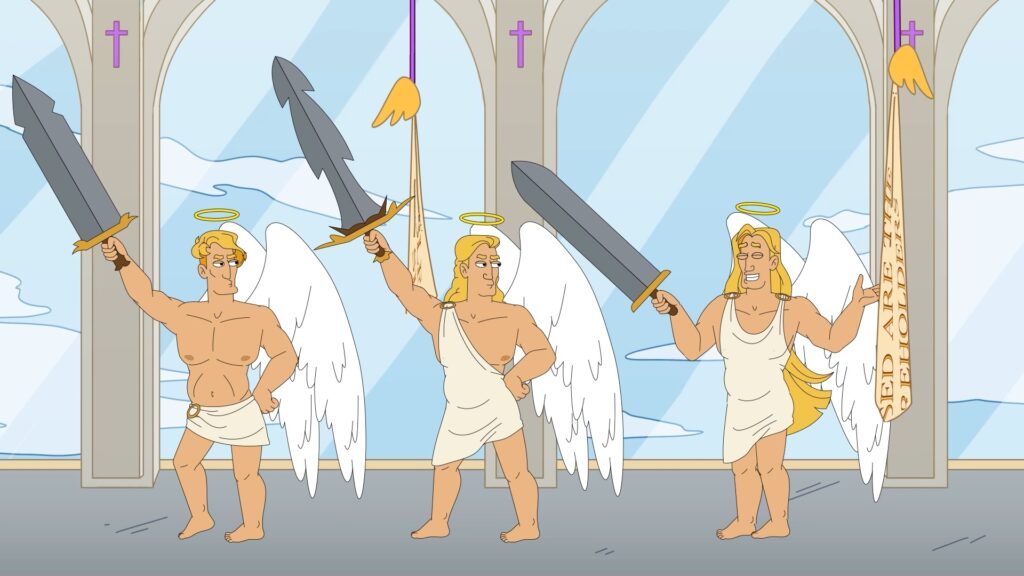
M. Valkevičius: In live-action, you’re still limited by reality: the actor’s body, physics, environment, and production constraints. In animation, those limits are much wider. Humor is created not only through dialogue but also through form – movement, deformation, unexpected visual reactions, absurd background details, and even frame composition. We focused a lot on visual gags – those quick, sharp comedic beats familiar from shows like The Simpsons or Family Guy. In animation, characters can visually express thoughts and emotions or reflect the absurdity of the world. It’s a completely different storytelling language.
– You’re targeting international markets. How realistic is it today to break through globally from Lithuania?
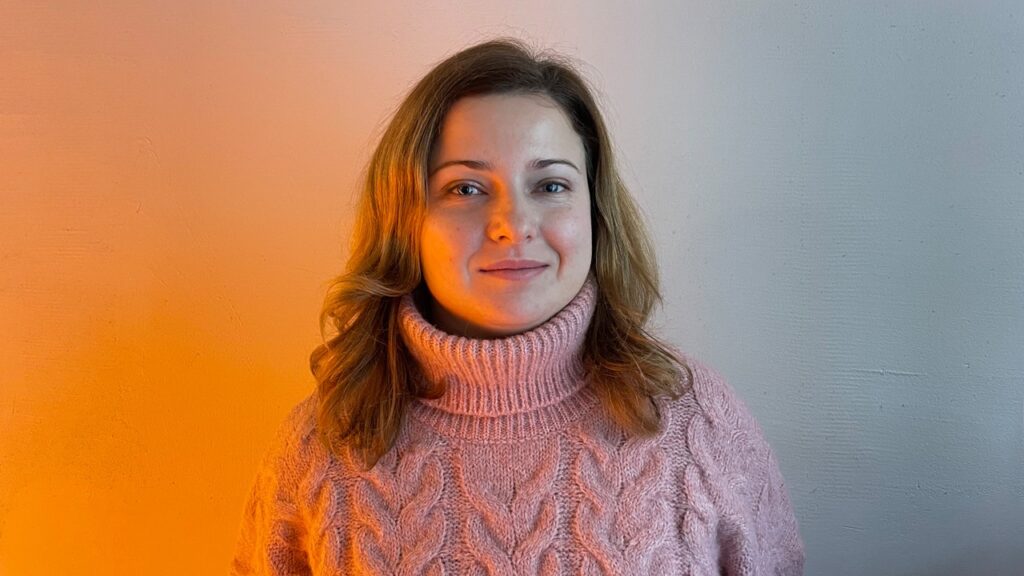
A. Bliujūtė-Janušė: It’s realistic with a strong team and a clear strategy. From the start, Hell Corporation has been developed for the international market – both creatively and from a business perspective. We actively position the project through festivals and direct work with platforms, and the first episode is being created as a strategic sales tool. We also have practical experience – our film The Perfect Fit premiered on Disney+ – so we know that strong content from Lithuania can find its audience globally.
– What has been the biggest challenge on the production side – funding, partners, or selling the idea?
A. Bliujūtė-Janušė: At this stage, the biggest challenge is time and strategic planning. We have very strict deadlines tied directly to market presentations and sales processes, so production must be extremely precise and efficient. That means ensuring both high creative quality and timely delivery of materials suitable for international pitching. From a production standpoint, it requires clear prioritization, fast decision-making, and close collaboration with the creative team and partners. Time becomes one of the most critical resources.
– When targeting international audiences, is there pressure to “soften” the project, or do you aim to stand out?
A. Bliujūtė-Janušė: The key is not to soften the content, but to clearly understand who it’s for and how to position it. With Hell Corporation, we follow global trends while maintaining a distinct tone. The series has a subtle but strong element of dark humor that resonates with our target audience. We operate in a similar space as other successful adult animated series, but we don’t aim to copy them. From market reactions, we see that the project stands out because of its theme – that’s what makes it relevant internationally.
– How important is it that viewers say, “This is about me”?
M. Valkevičius: I think it’s essential for any creator, whether making a film or a series. A work becomes powerful when the viewer recognizes themselves – their experiences, fears, or at least a familiar environment. Even in the most unfamiliar stories, we look for someone to relate to. In the case of Hell Corporation, that recognition is crucial, because so many people today work in offices, at computers – the exact environments where all the situations we’re talking about are born.
– Animation is a long and demanding process. How do you keep a team motivated when results take months or even years?
A. Bliujūtė-Janušė: Animation is a long process, so it’s important to work with a team that understands its nature and is ready for a long creative cycle. Motivation comes from developing multiple projects at once – it allows us to see progress at different stages. Strategic planning also plays a role – even completed films often wait for the right premiere moment. The state funding model shapes this pace, so projects like our feature, The Runaway House, require long-term, consistent work. Ultimately, a clear goal and shared understanding of the process keep the team motivated.
– What does your daily work on a project like this look like – how much is creativity and how much is crisis management?
A. Bliujūtė-Janušė: Every project involves both creative decisions and crisis management. A producer’s daily work is about balancing these two poles: supporting the creative process while constantly solving problems, from planning to quick decision-making. The most important element is the team. A motivated team ensures both creative quality and efficient problem-solving, and my role is to align creative goals with production realities.
– Adult animation often balances humor and darker themes. Where do you draw the line – what is “too much”?
M. Valkevičius: The boundaries are definitely wider than in children’s content. But what matters isn’t how far you go – it’s why you go there. I’m not interested in shocking just for the sake of it. Dark themes, sharp humor, or uncomfortable situations should serve the story and help reveal the world, the characters, and their relationships. “Too much” starts when everything is done for effect, when the story begins to slip out of your hands. Then provocation becomes empty. For me, the most important thing is that the story holds everything together and clearly answers why it is being told.
– How do you see the future of Hell Corporation – a single strong piece or a broader universe?
A. Bliujūtė-Janušė: From the start, Hell Corporation has been developed for the international market, targeting global platforms and wide audiences. At the same time, that doesn’t mean it’s distant from Lithuanian viewers – quite the opposite. We believe that once it lands on the right platform, it will be accessible to them as well. Today, content travels globally more than ever, so the key is to create something strong and universally understandable. We see this project as an expandable universe, with potential for future seasons and other formats.
– How do you evaluate the impact of artificial intelligence on animation? Tool or threat?
A. Bliujūtė-Janušė: I see AI primarily as a tool, not a replacement for creativity. Human talent and авторial perspective remain essential. From a production standpoint, AI can help optimize processes, especially in animation, where production is long and resource-intensive. It can handle technical tasks more quickly, freeing up time for creative work. The key is balance – using AI consciously to increase efficiency without losing creative identity.
– Thank you for the conversation!
The animated series Hell Corporation is directed by Meinardas Valkevičius and Šarūnas Vyštartas.
Photograph by Augustas Raulinaitis