Search

News

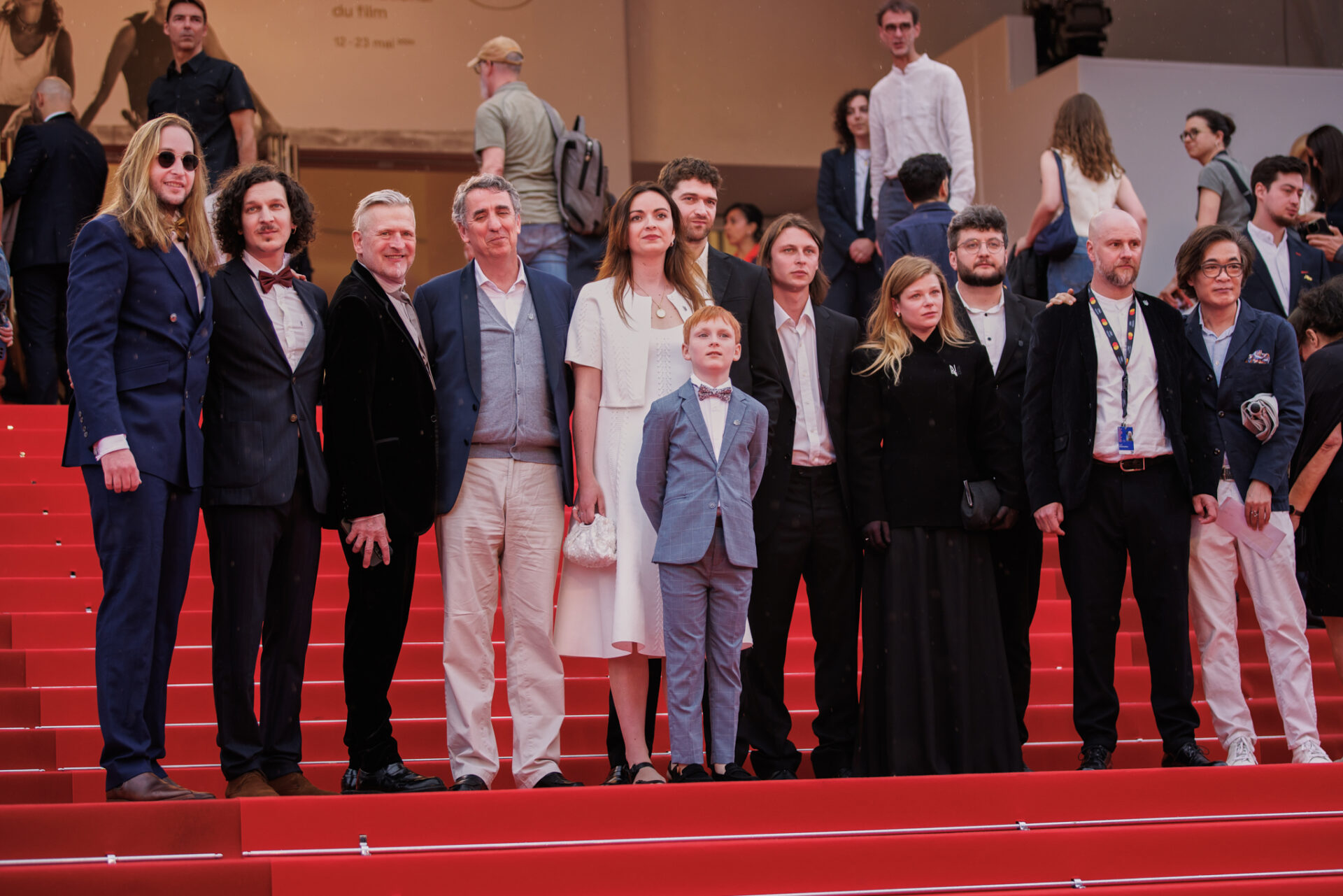
Yesterday, the world premiere of Spring, the debut feature film by Lithuania-born Ukrainian director Rostislav Kirpičenko, took place in the “Special Screenings” section of the Cannes Film Festival. The Lithuanian-French-Estonian co-production explores the search for humanity amid the devastation of war.
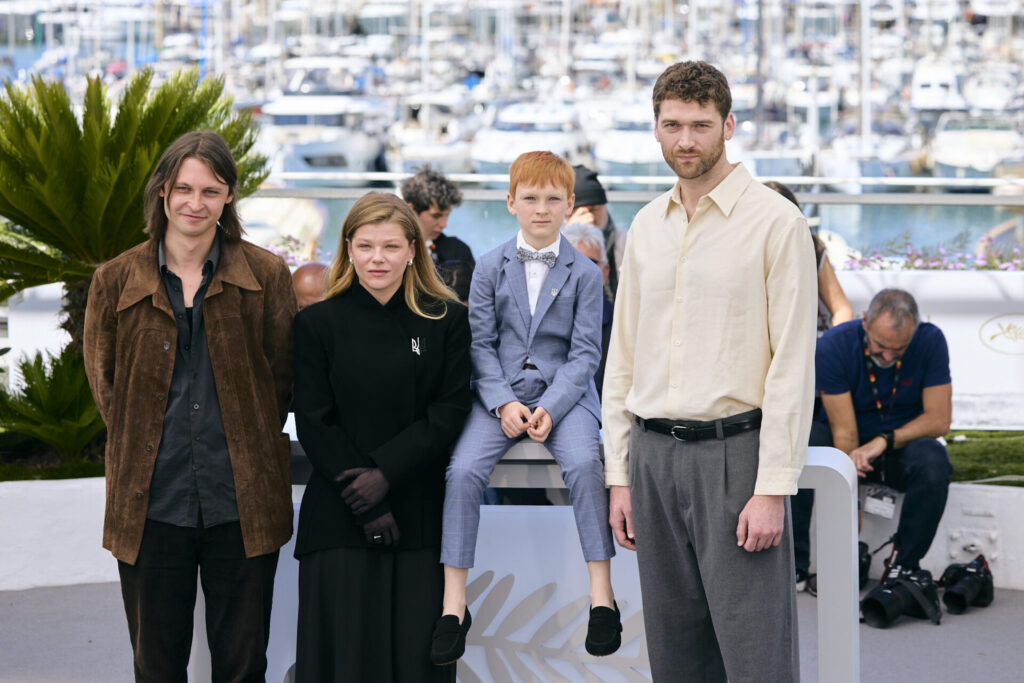
Photo by Audrius Solominas

The film is set in a Russian-occupied town in southeastern Ukraine. Orthodox priest Andriy is forced to guard the bodies of Ukrainian civilians before they are transported to mass graves. Risking his own life, he secretly returns the bodies to their families, but as winter freezes the ground, the danger intensifies.

“War destroys memory, but cinema records and bears witness to events, preserving that memory. This is the central axis of the film – a necessity that unites the characters once the initial battle has already been lost,” says director R. Kirpičenko.

He notes that the virtual space lacks images revealing the invisible side of war. Most depictions focus on the horrors of invasion – torture, killings, violence. According to the director, fiction cinema allows audiences to observe the subtle details of everyday life that convey the loss of humanity more powerfully than conventional images of war. Over time, people grow tired and numb to evil, making these processes harder to recognize and grasp.

Occupation as a territory of altered meanings

According to the director, occupation represents a constant existence beyond moral boundaries. The circumstances people find themselves in, along with their continuous confrontation with death and suffering, gradually erase or transform the meanings of things.
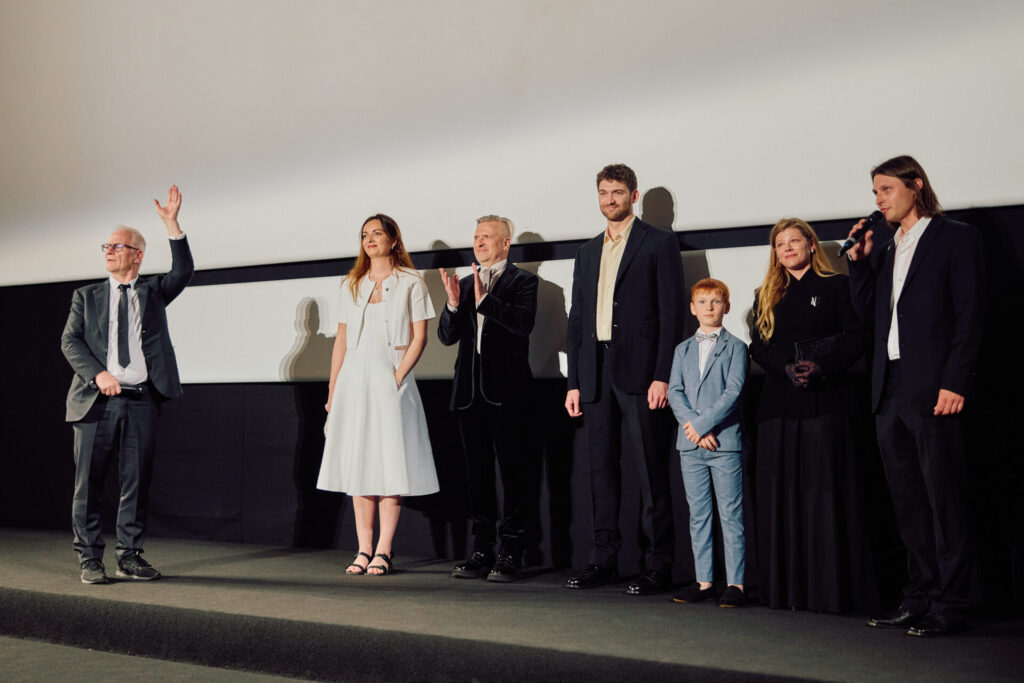
 

Photo by Audrius Solominas

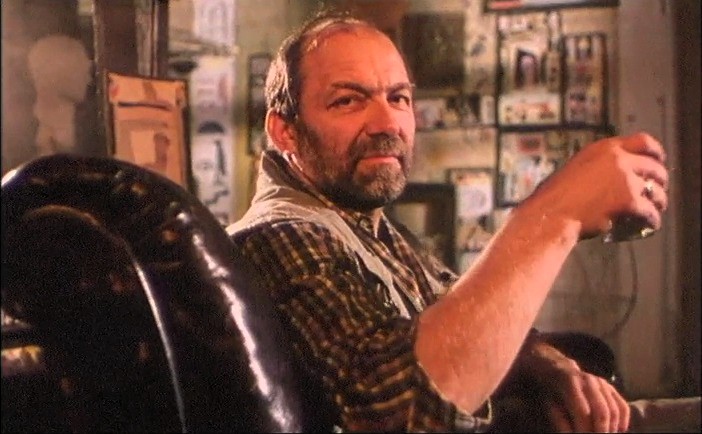
The lead role of Father Andriy is portrayed by Lithuanian actor Kęstutis Cicėnas. His character’s service to God and his community is accompanied by a constant confrontation between good and evil. He understands this struggle deeply and is prepared for it, yet war changes the usual logic of things, and actions guided by morality may lead to entirely different consequences.

“What surprised me the most was the director’s contribution. I honestly don’t understand how he wrote such a screenplay. If I had to briefly describe what we explored while creating the role of the Orthodox priest Father Andriy, it would be a believer’s confrontation with war. Or a man trying with all his strength not to lose his humanity in the face of war. In the film, war is portrayed as the ultimate expression of spiritual terror. As Father Andriy experiences it firsthand, David’s fight against Goliath begins to sound like a children’s tale – weak, naive, and powerless,” says the actor.

The grey face of evil

In an effort to reveal the pervasive nature of evil, R. Kirpičenko paid particular attention to the subtle nuances that gradually and almost imperceptibly create dehumanizing circumstances. According to him, it is easy – but wrong – to judge complex processes in black-and-white categories.

“To call the side that started the war monsters or madmen would mean freeing them from responsibility. Every action has a reason behind it, so it was important for me to understand the logic of extreme evil and aggressive behavior, as well as the grey moral zones surrounding them,” argues the director.

Actor Daumantas Ciunis, who portrays the film’s antagonist, Russian captain Igor, explains that the director sought to highlight the character’s vulnerability – he is unhappy, haunted by a sense of inevitable doom. The occupier craves power, yet impunity is far more fragile than he imagines. Everything can end instantly in the very same grave.

“It is extremely difficult to portray someone you yourself do not consider human. I still haven’t seen the final result, but from the feedback I’ve heard, it seems we managed to combine both my vision and the director’s,” says D. Ciunis about the challenges of creating the role.

R. Kirpičenko was born in Lithuania, spent his childhood in Ukraine, and later moved to Europe after becoming a professional football player – first to the Czech Republic, then to Germany. In 2016, he left football behind to study French language and literature at the prestigious Sorbonne University in Paris, and in 2019 continued his studies at the La Fémis film school.

Alongside Spring, the director’s filmography includes the feature documentary Angarska Street, 1 (2024), presented at the international documentary film festival Cinéma du Réel, as well as three short films: Little Pierre (2023), Eel (co-directed with Sacha Teboul, 2022), and Talentless Country (2022).

The film stars Kęstutis Cicėnas, Valentinas Novopolskis, Anastasiia Pustovit, Viacheslav Lukyanov, Bartas Ždanovičius, Martynas Kukta and Šarūnas Datenis. The creative team also includes cinematographer Vilius Mačiulskis, sound designer Marius Blažys, editor Marie Vettese, costume designer Rūta Lečaitė, make-up artist Justė Butkė, and producers Stasys Baltakis and Helena Pokorny.

The film was produced by production companies Film Jam (Lithuania) and Matka Films (France). The production was supported by the Lithuanian Film Centre, the French National Centre of Cinema, the Estonian Film Institute, and Lithuanian National Radio and Television.

Photo by Marco Barada
Share
Related Posts