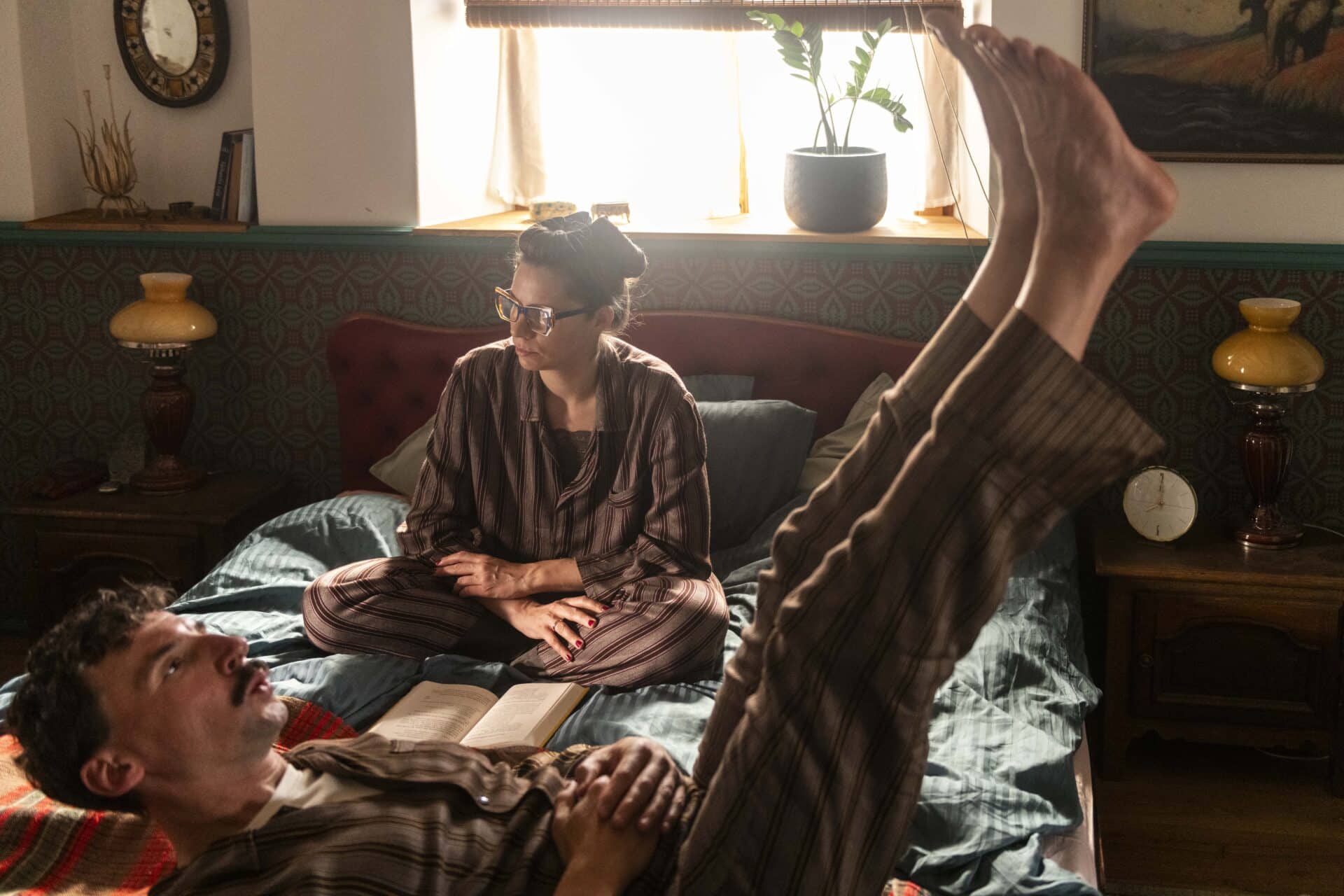
Some stories come to life quickly, while others patiently wait for the right moment. Director Ernestas Jankauskas’ family feature film The Queen of England Stole My Parents has been making its way to the big screen for more than a decade – from an award-winning short film that received the Lithuanian Silver Crane Award to the feature-length production currently being filmed in Vilnius.
It is the story of a young girl who believes that the Queen of England kidnapped her biological parents. Yet beneath this unusual premise lies a far more sensitive subject: the adoption of older children, explored through a child’s imagination, humour, and the ability to hold on to hope even in life’s most difficult moments.
We spoke with director Ernestas Jankauskas about the film’s long creative journey, working with child actors, Vilnius as a recurring presence in his films, and why, in his words, making a good film for children is thousands of times more challenging than making one for adults.
– The short film The Queen of England Stole My Parents was released back in 2014. Why has this story stayed with you for more than ten years?
E. Jankauskas: Even then, we wanted to make it into a feature film, but we didn’t receive funding, so we only had enough resources to produce the short version. I suppose I simply wanted to bring back to life the dream I had ten years ago.
– When did you realise that this story could no longer fit within the format of a short film and deserved to become a feature?
E. Jankauskas: To be honest, I realised that more than ten years ago. This story never truly fit into the short-film format.
– The film explores adoption through humour, fantasy and a child’s imagination. Why was it important for you to approach the subject this way rather than through a straightforward social drama?
E. Jankauskas: Because this is a film for the whole family, especially for children. I wanted to tell a story that reminds us imagination can help us through even the hardest moments.
– Statistics show that older children are rarely adopted. While making this film, did you feel a responsibility to address such a sensitive topic in a way that would resonate with both children and adults?
E. Jankauskas: Every time I tell a story about a social issue, I feel that responsibility. It is very important to me that audiences understand the film and that it encourages discussion.
– Children often see the world very differently from adults. In your view, how much is this film about children’s imagination, and how much is it about adults forgetting how to believe in the impossible?
E. Jankauskas: That’s a very good question. I truly believe that one of the greatest things we can do as adults is never forget that our inner child is always with us. And I completely agree that believing in the impossible is incredibly important.
– The lead role is played by Viktorija Jankauskaitė. How did you find your young heroine, and what qualities were you looking for in the actress?
E. Jankauskas: Whenever I work with child actors, I look for someone who genuinely understands both the role and the character’s story. I believe Viktorija embodied exactly that.
– Many scenes on set involve children. How does directing child actors differ from working with professionals?
E. Jankauskas: Directing children is always a film in itself. It’s very important that, when they’re in a scene, they truly believe the adult actors are their partners. That means I have to spend a great deal of time working with the adult cast so the children can trust them.
– Your films often use gentle humour even when dealing with difficult subjects. Is humour your way of making painful topics easier to talk about?
E. Jankauskas: I think humour helps us talk about painful things – not only me, but all of us.
– The film was developed through the international Cinekid workshops. What did that experience bring to the project?
E. Jankauskas: It only made the film stronger. It especially helped screenwriter Gabija Siurbytė strengthen the dramatic structure. I also believe it gave the whole team confidence that the film would be understood not only in Lithuania but internationally as well.
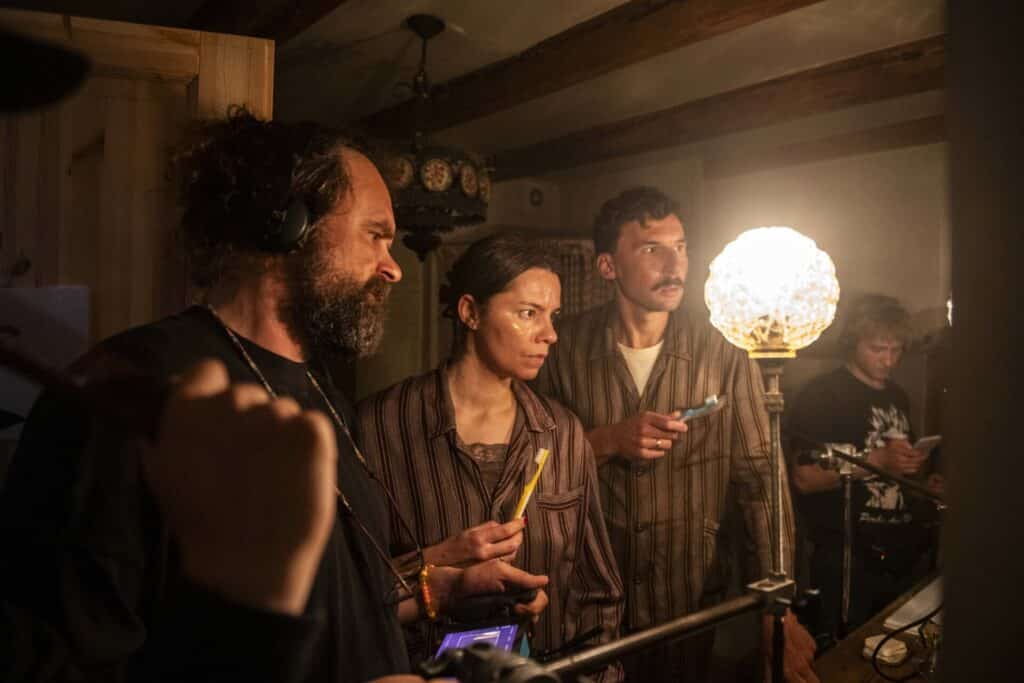
– You are currently filming in Vilnius. Why is this city so important to the story?
E. Jankauskas: I was born and raised in Vilnius, and my entire childhood unfolded here. Whenever I create, I close my eyes and see Vilnius. It is an inseparable part of who I am.
– After making films for adult audiences, you’ve returned to family cinema. Is making a good children’s film more difficult?
E. Jankauskas: Making a good film for children is thousands of times harder than making one for adults.
– If, after seeing the film, even one family began to consider adopting an older child, would you feel the film had achieved one of its most important goals?
E. Jankauskas: That would be wonderful. But even if all the film does is inspire people to spend more time with those they love, I would already consider that meaningful.
– What would you like children and their parents to take home with them after watching the film?
E. Jankauskas: That family is what matters most. And that families come in many different forms – not only the kind we’ve grown used to imagining
– Thank you for the conversation!
Photo by Rokas Morkūnas