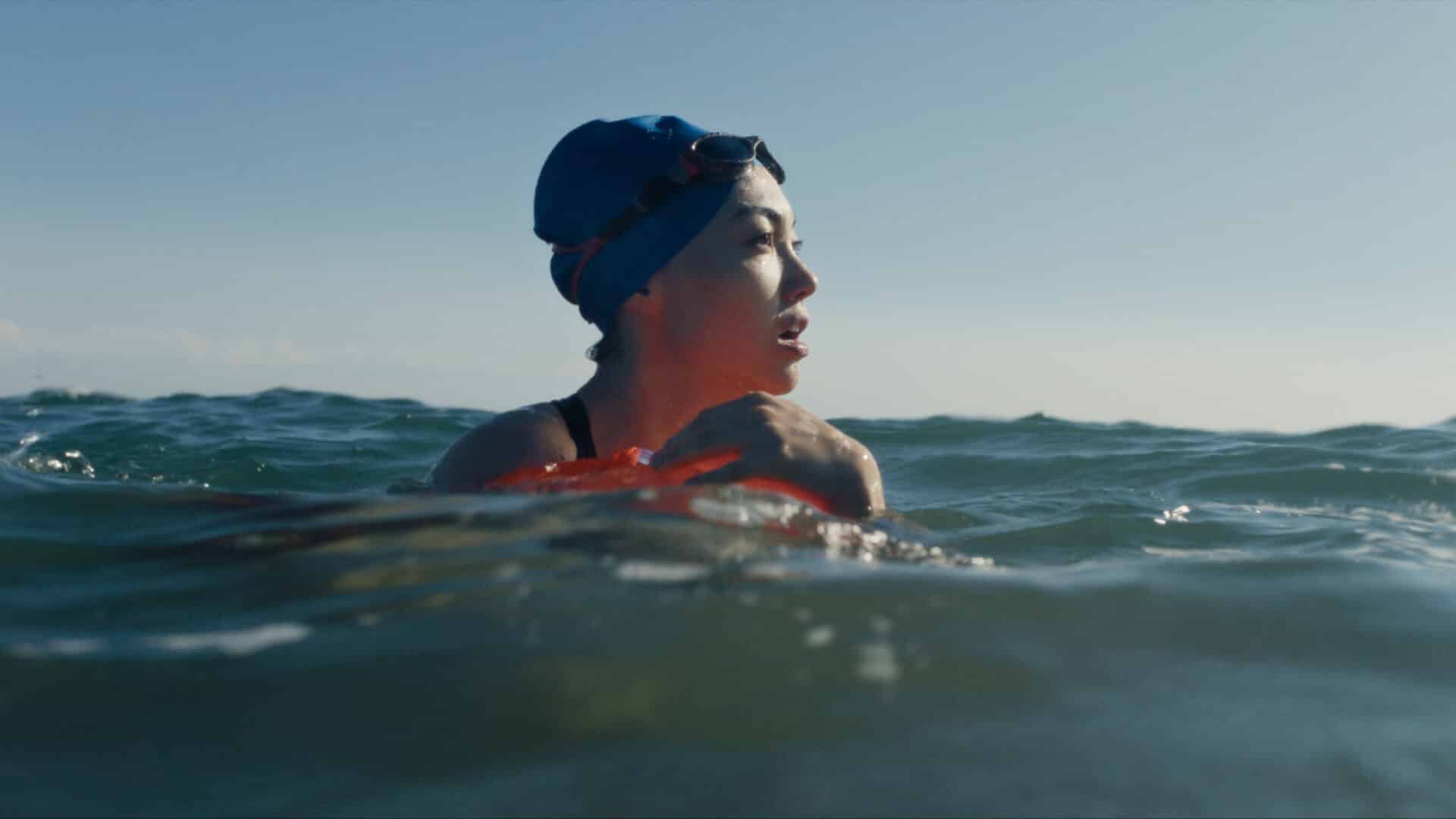
There are things in cinema that the audience is never supposed to notice. That actors travelled across several countries for just a few minutes on screen. That a single cancelled flight late at night could throw four days of work into disarray. That in a scene that looks like the height of summer, the actresses were actually wading into water at just 15–16°C, while a team of Lithuanian professionals worked beneath the surface with their cameras.
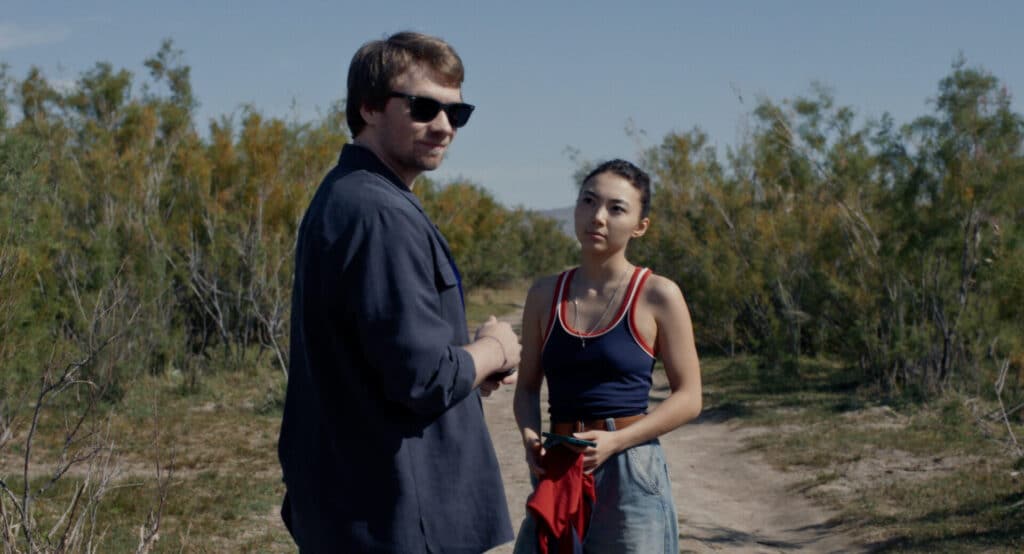
Opening in Lithuanian cinemas on 7 August, the drama directed and written by Zhannat Alshanova tells the story of Mila, a 17-year-old living in Kazakhstan. Seeking refuge from the chaos at home, she joins an open-water swimming team and, for the first time, experiences a sense of discipline and belonging. But when her place on the team is threatened, Mila must decide how far she is willing to go to keep her balance.
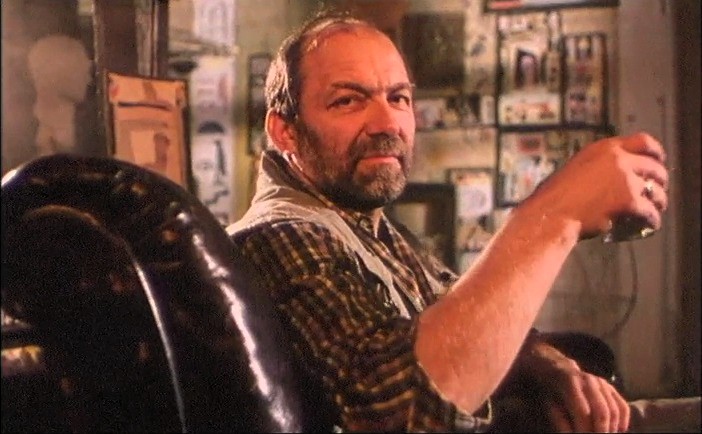
The film had its world premiere at the Locarno Film Festival in 2025. A co-production between five countries – France, Kazakhstan, the Netherlands, Lithuania and Sweden – it also brought together a notable Lithuanian team. Actor Valentinas Novopolskis played one of the leading roles, Fausta Naujalė designed the costumes, Simonas Šaineris worked as first assistant director, while the technically demanding water scenes were filmed by the CineDive team. In Lithuania, the film was produced by Marija Razgutė and Brigita Beniušytė of M Films.
We speak with the film’s co-producer Brigita Beniušytė about shooting in Kazakhstan, working creatively with internationally acclaimed French cinematographer Caroline Champetier, the decisions audiences may never notice on screen, and those days when a producer’s job feels less like the romance of filmmaking and more like a marathon of solving one problem after another.
– What was the most costly decision on “Becoming” – not necessarily in financial terms – that looks so natural on screen that audiences would never guess how much work went into it?
B. Beniušytė: – It really depends on the viewer, because some people may suspect that scenes shot in water, for example, are quite complicated. In this film, they were especially challenging.
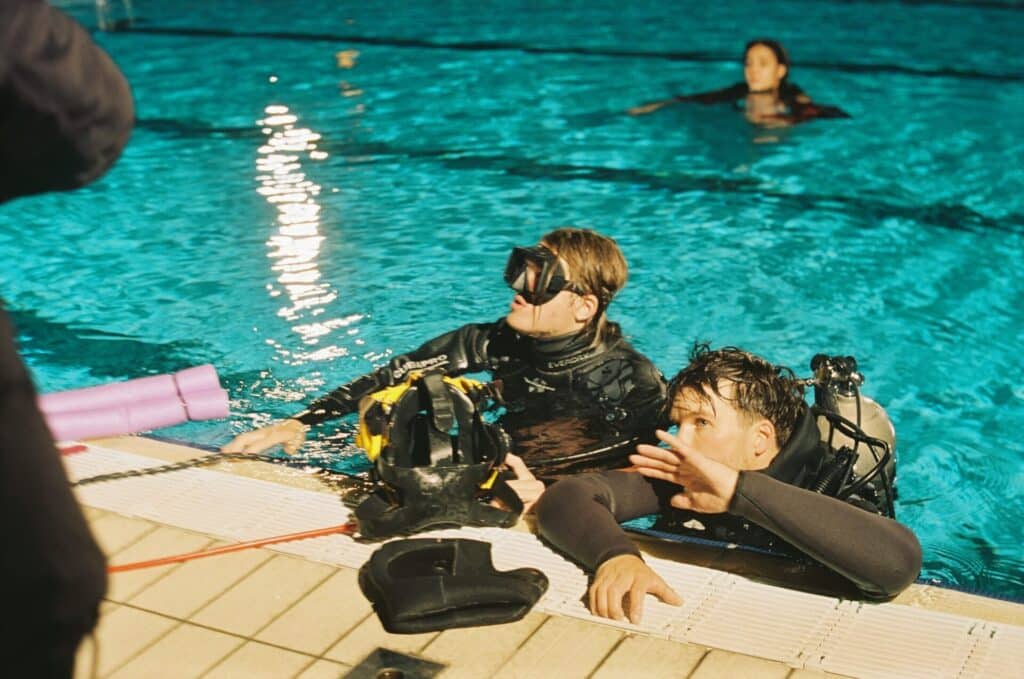
It was extremely difficult to find specialists in Kazakhstan who could film both on and underwater, so this part of the production was entrusted to CineDive, an underwater filming team from Lithuania. Working with internationally acclaimed French cinematographer Caroline Champetier, the team had to perform highly complex manoeuvres both in open water and in swimming pools to realise her ambitious creative vision.
The scenes filmed in the water look spectacular in the finished film, so we are extremely pleased with the work of the Lithuanian team.
– Water seems to have become a character in its own right in this film. Was there a scene that cost you a lot of nerves, not because of money, but because it felt as though circumstances simply did not want it to be filmed?
B. Beniušytė: – I have to mention the open-water shoots again. Filming took place in August and September, and because of the actors’ schedules, all the lake scenes had to be shot in September. It was one of the most difficult stages of the production.
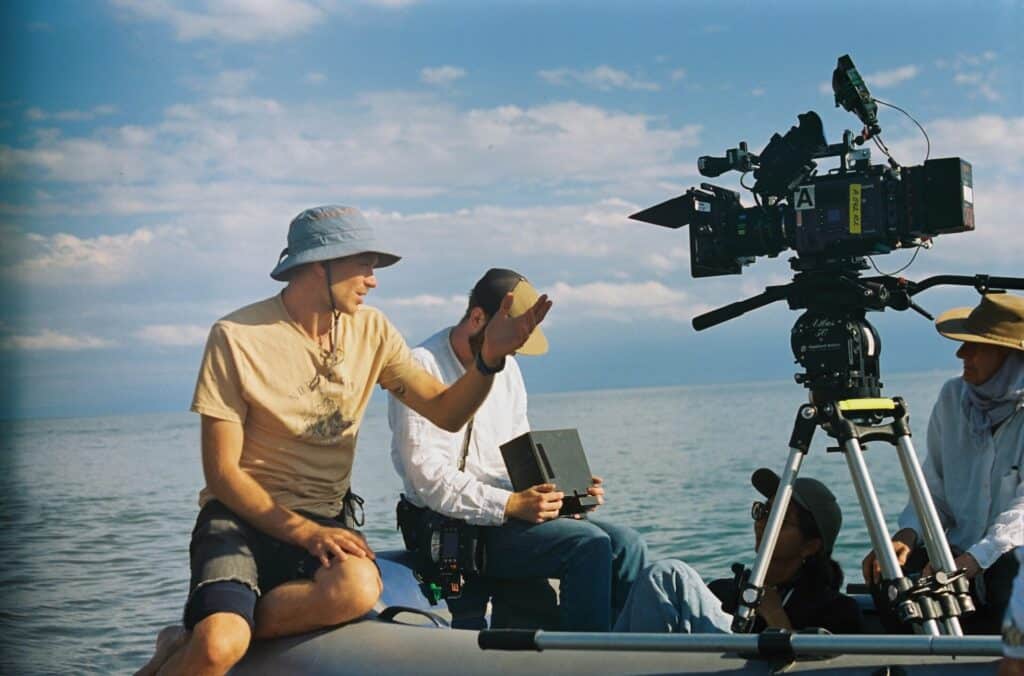
The teenage non-professional actresses, wearing summer swimsuits, had to enter the lake when the water temperature was only 15–16°C. We filmed both from boats and directly from the water, and the technical challenges alone meant that we needed a great many takes. We wanted to get everything done as quickly as possible, but something kept going wrong.
The days spent filming in the water were full of challenges. There was tension within the crew, which was completely understandable. I think those difficult days stayed with every member of the team.
– If you were to show us your work calendar from the most intense period of “Becoming”, which day would look like complete chaos now?
B. Beniušytė: – There were quite a few days like that, but I would single out our first trip to Kazakhstan for the technical location scout.
At around 10 p.m., I received a call from first assistant director Simonas Šaineris, who had already been travelling towards Kazakhstan for an entire day, telling me that his flight had been cancelled. He could not afford to be late – teams from France and the Netherlands were also flying in for the location scout, and the scout itself was supposed to last only four days.
I spent at least three hours continuously talking on different phone lines. In the end, we managed to resolve everything and adjust our plans.
– Who was the most unexpected person, or what was the most unexpected profession, without which this film probably could not have happened?
B. Beniušytė: – Since the film crew came from four countries, and both the screenplay and the filming location presented a number of challenges that we knew about in advance, we chose Simonas Šaineris, who has extensive experience on film sets, as our first assistant director.
At first, his job seemed fairly standard, just with a few more exotic details. Since he speaks both English and Russian, everything was expected to run quite smoothly. It was only after arriving in Kazakhstan and beginning pre-production that we realised Simonas would have to go well beyond the usual boundaries of his role and take on much broader responsibility for managing production processes than would normally be expected of a first assistant director working in Lithuania.
We are extremely grateful to Simonas for readily adapting to different working practices, taking responsibility for production tasks and making such a significant contribution to the successful completion of the shoot.
– Was there a moment when you realised that you could see the director’s vision just as clearly as she did, even though at first it may have seemed difficult to grasp?
B. Beniušytė: – We first met Zhannat back in 2020, when she took part in the Pop Up Film Residency VILNIUS organised by M Films. At the time, she was working on the first draft of the “Winner” screenplay, so we were immersed in the story from the very beginning.
Several years later, when the film received financing in France, we joined the project as Lithuanian producers. From then on, we worked closely together and had a very clear understanding of how Zhannat envisioned the film, so we did everything we could to help bring that vision to life.
– Some decisions seem small until you actually make them. What seemingly minor decision had the greatest impact on the final result of this film?
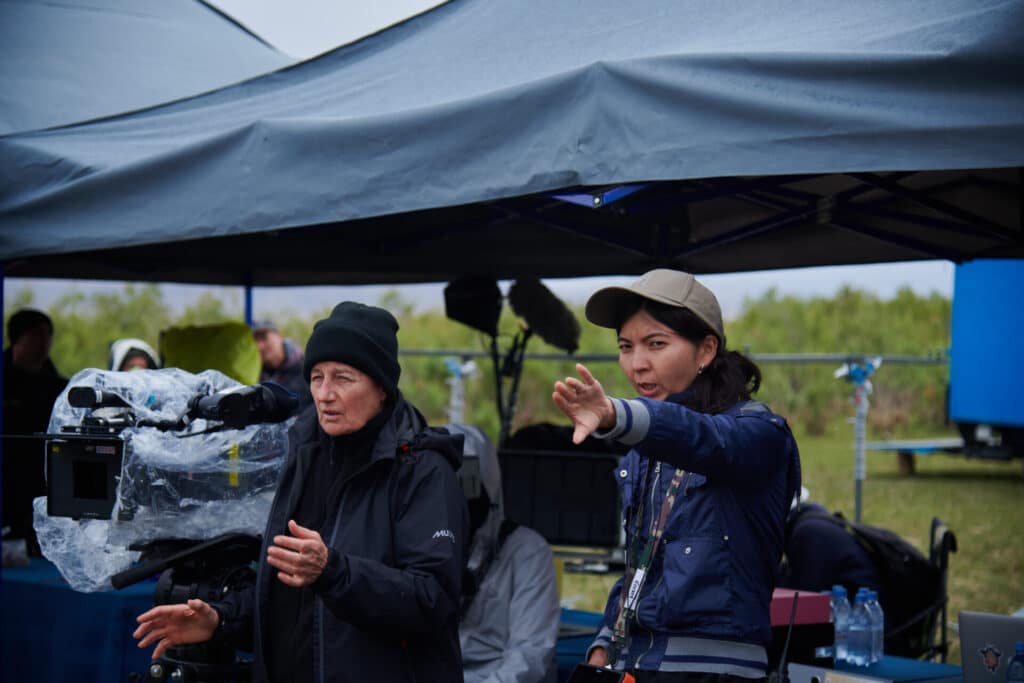
B. Beniušytė: – “Becoming” brought new discoveries for the film’s costume designer, Fausta Naujalė. She worked closely not only with director Zhannat Alshanova but also with cinematographer Caroline Champetier. Together, they discussed how the characters should be represented through colour on screen and what emotions the costumes should convey.
In the end, Fausta chose a highly expressive colour palette that gave the film a very distinctive charm. Recurring colours that contrast with the surroundings help set apart the world of the film and its characters. It might seem like a relatively small decision, but it had a major impact on the film’s visual identity.
– At what stage of a film is it hardest for a producer to let go of control – when filming ends, when editing begins, or when the film is shown to an audience for the first time?
B. Beniušytė: – I think a good producer should exercise only as much control as is necessary to ensure that the filmmaking process remains professional, stays on schedule and works within the available resources.
There are often stages when you need to be more involved – during pre-production, filming and post-production – but even then, only as much as is needed to keep things running smoothly. Once the film is finished, there is nothing left to control. All you can do is hand it over to the audience, and from that point on, it takes on a life of its own.
– And when that independent life finally begins, whose reaction are you most eager to see: the critics’, the first audiences’, or the people who know exactly what happened behind the scenes?
B. Beniušytė: – Of course, the reactions of both critics and audiences are very interesting and important to us, but what we are looking forward to most is showing the film to the Lithuanian team who worked on it with such dedication.
For Valentinas Novopolskis, who played one of the leading roles, the experience must have been truly fascinating – from the long journeys and working with Zhannat and Caroline to acting alongside Kazakh Instagram star Tamiris Zhangazinova.
Costume designer Fausta Naujalė immersed herself in a completely different culture and created unforgettable costumes, while assistant costume designer Aura Narmontaitė showed remarkable flexibility in adapting to unfamiliar production processes. The CineDive underwater filming team took on the challenge and overcame every obstacle to deliver something truly exceptional. And then there was Simonas Šaineris, who found himself working not only as a first assistant director but, to some extent, as a production manager as well.
We are incredibly grateful to every member of our team, and we want them to see the film – and their own contribution to it – as soon as possible.
– Thank you for the conversation!