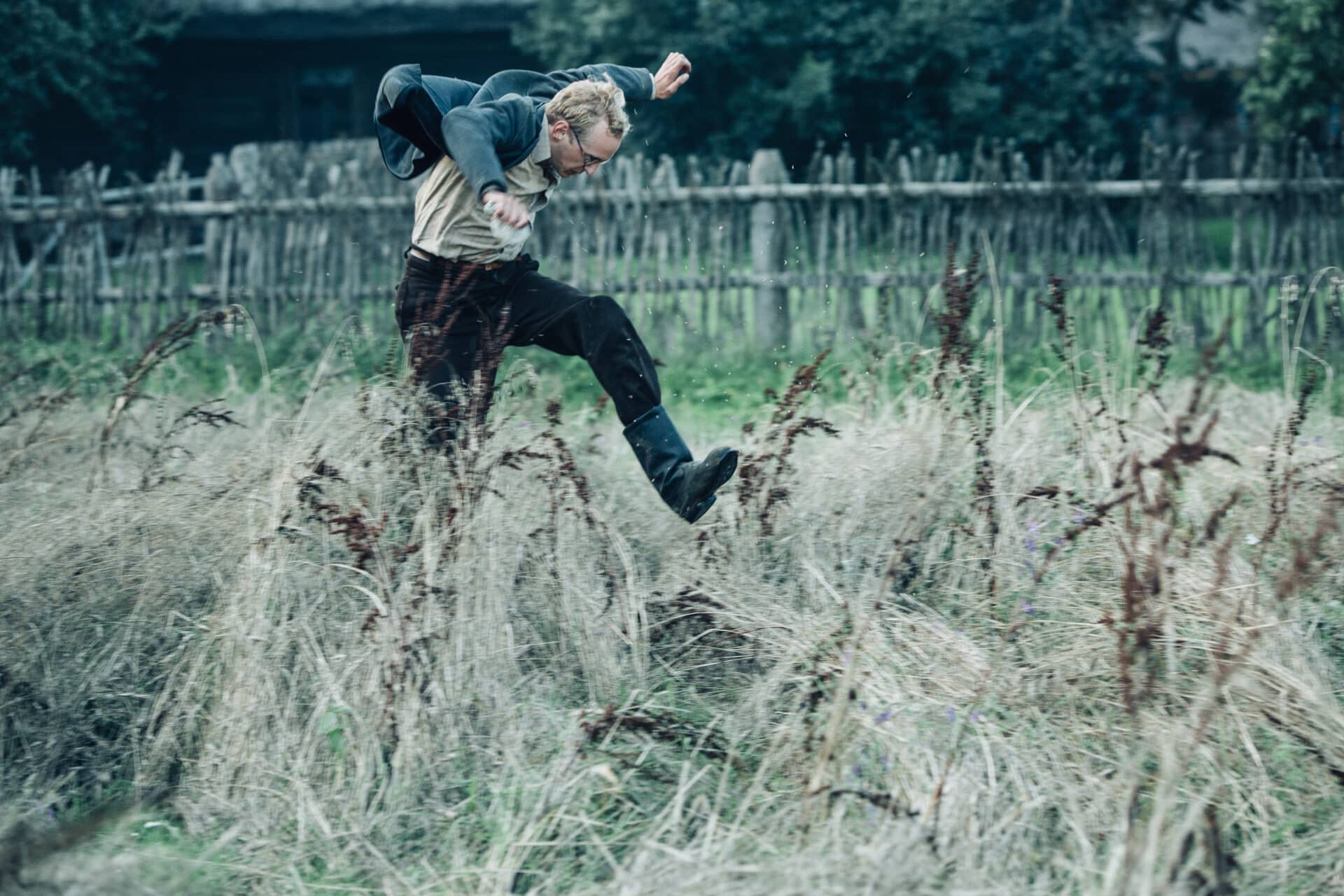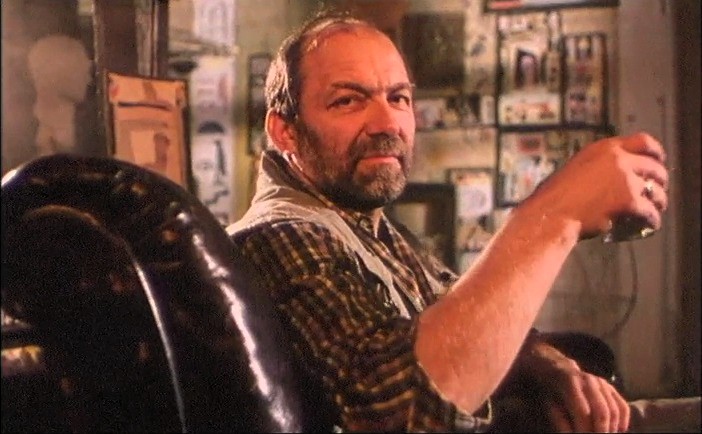
Nearly three decades ago, director Algimantas Puipa took on the challenging task of bringing the world of Leonardas Gutauskas’ novel trilogy Wolf’s Tooth Necklace (Vilko dantų karoliai) to the screen. Filled with memories, dreams, reality and imagination, the story became a cinematic work in its own right, portraying an artist’s life not through a chronological sequence of events, but through images, emotions and fragments of memory.
Released in 1997, Wolf’s Tooth Necklace will return to the big screen on October 21, closing this year’s Book + Cinema: Autumn Film Evenings series at Vilnius Town Hall. The film is the third and final screening in a programme exploring Lithuanian literature and its life on screen.
Ahead of the screening, we speak with director Algimantas Puipa and actor Vidas Petkevičius about the literary world of Leonardas Gutauskas, the relationship between cinema and dreams, an actor’s creative freedom on set, memories that have endured for nearly three decades, and why an older film can find a new audience.
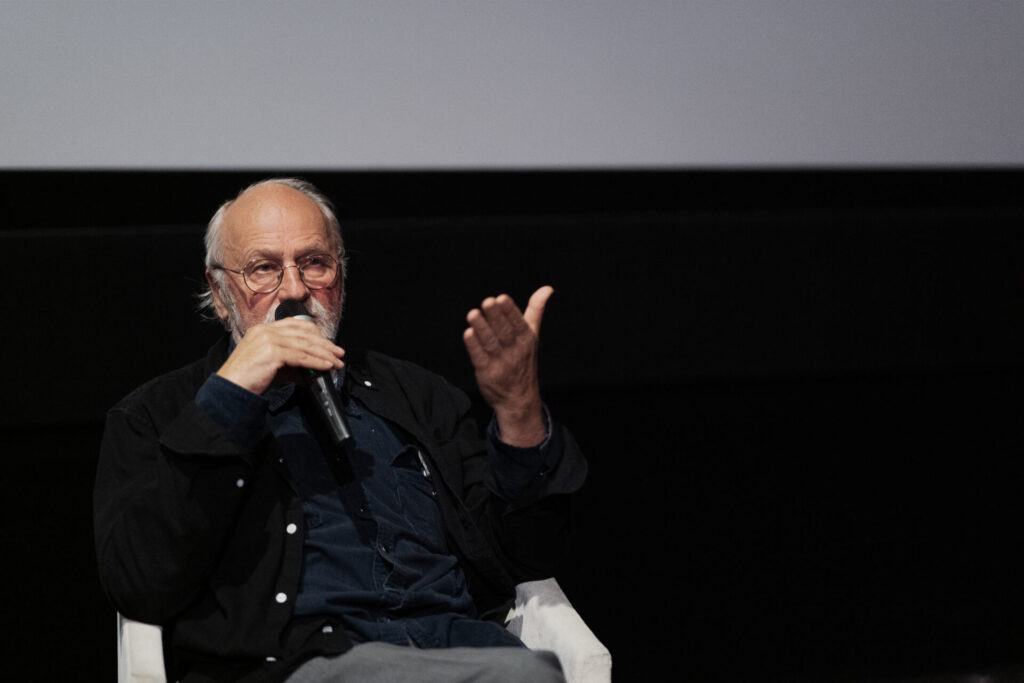
Algimantas, Wolf’s Tooth Necklace is based on Leonardas Gutauskas’ novel of the same name. What attracted you most to his work and inspired you to adapt it for the screen?
A. Puipa: I was searching for exceptional literature. Leonardas Gutauskas’ trilogy Wolf’s Tooth Necklace is almost a Lithuanian version of Marcel Proust, a kind of calendar of an artist’s self-awareness. The confrontation between humanity and totalitarianism is seen through the eyes of a child, a young man and a mature artist. At different stages of Tadas’ life, unforgettable experiences leave their mark, becoming the novel’s central motifs and symbols.
After reading all three volumes, I realised I was about to open Pandora’s box.
Adapting a literary work for cinema inevitably means leaving certain things behind while creating others anew. What mattered most to you in finding a cinematic language that would preserve the spirit of Gutauskas’ work while allowing the film to stand on its own?
A. Puipa: Whenever I began a new creative journey, I would say: “Literature is only a map to me. I have to follow it, not to arrange colourful pictures, but to create a distinctive world of my own.”
I remember Leonardas Gutauskas’ words. When asked what the film based on his novel would be like, he replied: “Only God and Puipa know what the film will be like.” The writer gave me complete freedom.
Vidas, had you read Gutauskas’ novel before filming began? How much did the literary material help you develop your role?
V. Petkevičius: I hadn’t read Gutauskas’ novel before filming. Of course, literary material always helps an actor gain a deeper understanding of a role. The imagination that opens up through reading allows you to think more broadly about how a character might behave in different situations.
Algimantas, the film intertwines reality, memories, imagination and the artist’s inner world. How did you approach the boundary between reality and fantasy?
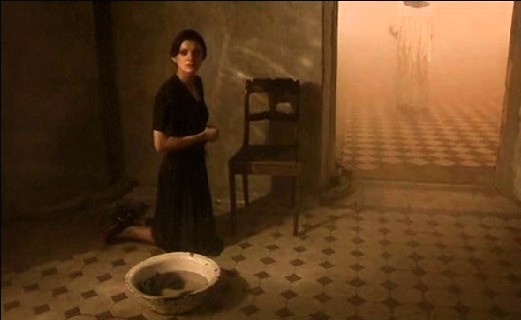
A. Puipa: This is a film in which I returned to my parents’ youth, recreating it visually through my own imagination. I also drew inspiration from Leonardas Gutauskas’ sacred paintings, rich in biblical narratives, dreams and metaphors. The novel’s text seemed to push the film’s cinematic language towards the world of dreams.
The film contains many personal discoveries I made as a director, which I hoped the audience would notice. Cinematographer Viktoras Radzevičius deserves enormous credit for making the film so visually expressive. At the Nordic Film Festival in Rouen, the film received the main prize for its visual qualities.
Vidas, did this unconventional, not entirely realistic form of storytelling present different challenges for you as an actor?
V. Petkevičius: When working with such a fantastic director as Algimantas Puipa, you can barely keep up with processing everything he tells you. His imagination is limitless, and your task is to keep pace with him.
How much room did the director leave for your own interpretation and improvisation?
V. Petkevičius: The director never confined me to a rigid framework. I always had room to improvise and offer my own interpretation. The important thing was to bring a serious idea to the table, and then Puipa would decide whether it fitted into the overall fabric of the film.
Algimantas, the film’s central character, Tadas, looks back on his life through memories, encounters and experiences. What did this character represent to you, and what did you want to express through him about an artist and their relationship with life?
A. Puipa: In my vision, the film’s protagonist, Tadas, dreams his entire life, from early childhood to maturity shaped by experience. By filling the film with dreams, I was able to move away from the strict narrative structure of the novel and focus instead on the spiritual evolution of the artist’s world, in which his relationships with his Mother, Father and Grandmother Marija play an important role.
Wolf’s Tooth Necklace is a film that is very dear and close to me.
Vidas, you portrayed more than one character in this film. Looking back nearly three decades later, how do you view your performance today?
V. Petkevičius: It was the first time I played two characters – Tadas and his father. I don’t think I could perform those roles any better today, even with all the experience I’ve gained since then. This was the first and only time I attended an international film festival with a film I had acted in. That meant a great deal to me…
Which memories from the filming itself have stayed with you most vividly?
V. Petkevičius: I remember actor Jonas Čepaitis. He is a great comedian, but in the film he played a serious role as a priest. It was the first time I had met him, and our interactions left a lasting impression on me.
I was also surprised by my on-screen son, a boy from a children’s home, who took his role very seriously and gave an excellent performance.
And, of course, I remember my fellow actress Monika Bičiūnaitė, with whom I performed the film’s final scene so effortlessly, in a single take. Immediately afterwards, we were told that director Vytautas Žalakevičius had passed away. These are things you never forget.
Algimantas, literature has always played an important role in your work. In your view, what makes a literary work worth adapting for the screen?
A. Puipa: My attitude towards literature has changed over the years. During the Soviet era, adapting literary classics was a safe territory, a way to avoid censorship or having a film cut apart.
In Leonardas Gutauskas’ literature, I searched for certain symbolic codes that resonated with me personally: the mystery of a character’s inner light and their ability to radiate that light even in the most extreme circumstances.
When depicting an absurd era filled with tragic events, you can enrich the historical setting and its characters with surrealist symbols.
Choosing literature to adapt involves many risks. Dialogue in literature and dialogue on screen have different kinds of impact. You have to bring the text closer to spoken language. Sometimes writers feel that this diminishes their work and causes the text to lose its distinctive qualities.
There is a saying among auteur filmmakers who adapt literature: “The less literature there is on screen, the better it is for both the book and the film.”
Vidas, the film explores memory, the past, creativity and the human desire to understand one’s own life. Do these themes resonate differently with you today than they did when the film was made?
V. Petkevičius: Memory, the past, creativity and the attempt to understand one’s own life remain extremely important themes today.
Young filmmakers sometimes get bogged down in small problems, whereas I believe we should always address timeless questions and try to find answers to them. That is what I would wish for the talented young filmmakers of the new generation!
Algimantas, nearly three decades after its release, Wolf’s Tooth Necklace will meet audiences once again. How do you view cinema’s ability to return and be rediscovered by a new generation?
A. Puipa: A film is like a genie from a fairy tale, emerging from an opened tin box. The viewer sits in a dark cinema and dreams someone else’s dream.
The current era of Lithuanian cinema is being called a “small golden age of cinema.” I am no Salieri, and I am happy to shake the hand of every Mozart, whether they are a filmmaker or a viewer.
Vidas, what does it mean to you to know that Wolf’s Tooth Necklace will once again be shown on the big screen?
V. Petkevičius: I am very grateful to the organisers for bringing Wolf’s Tooth Necklace back to the screen.
Old cinema is good cinema!
Thank you both for the conversation!
Wolf’s Tooth Necklace will be screened on October 21 at 6 PM at Vilnius Town Hall, closing the anniversary edition of Book + Cinema: Autumn Film Evenings. Following the screening, audiences will be invited to continue the conversation about the relationship between literature and cinema, literary adaptations, and a film returning to the screen nearly three decades after its original release.
Tickets are available at Bilietai.lt.
Photography may take place during the event.
The project is organised by Fralita Films, Vilnius Film Office and Vilnius Town Hall.
The project is supported by the AVAKA Association, the Lithuanian Publishers Association and the Creative Europe Desk Lithuania, and is partially funded by the Lithuanian Film Centre.
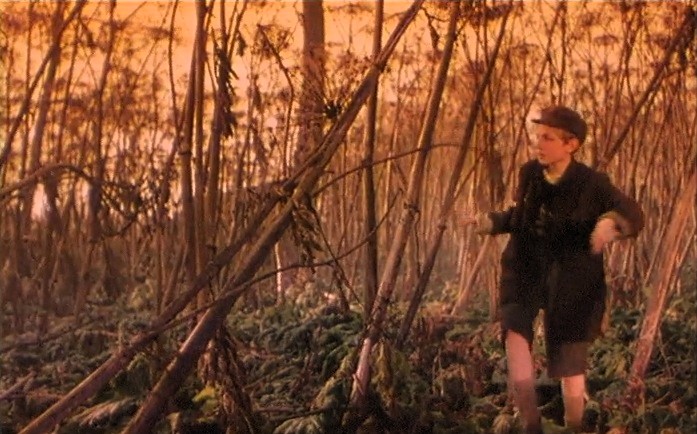
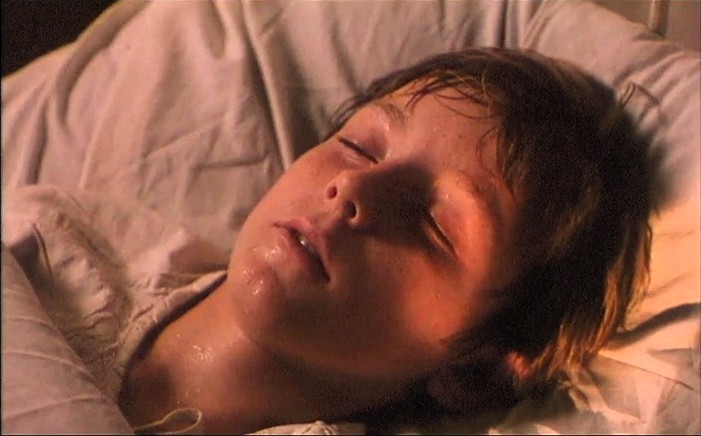
Stills from the movie Wolf’s Tooth Necklace | LKC