The international journey of a short film rarely ends when the final cut is finished. Festival strategy, sales, distribution, licensing and even decisions made during production can determine where – and whether – a film will find audiences beyond its home country. In a highly competitive international market, however, there is no single formula for success.
Stine Wangler works in acquisitions and world sales at Kurzfilm Agentur Hamburg, one of the established players in international short film distribution. Through her work, she encounters films from across the world and observes what attracts buyers, which stories travel across borders and how the rapidly changing distribution landscape is shaping opportunities for short filmmakers.
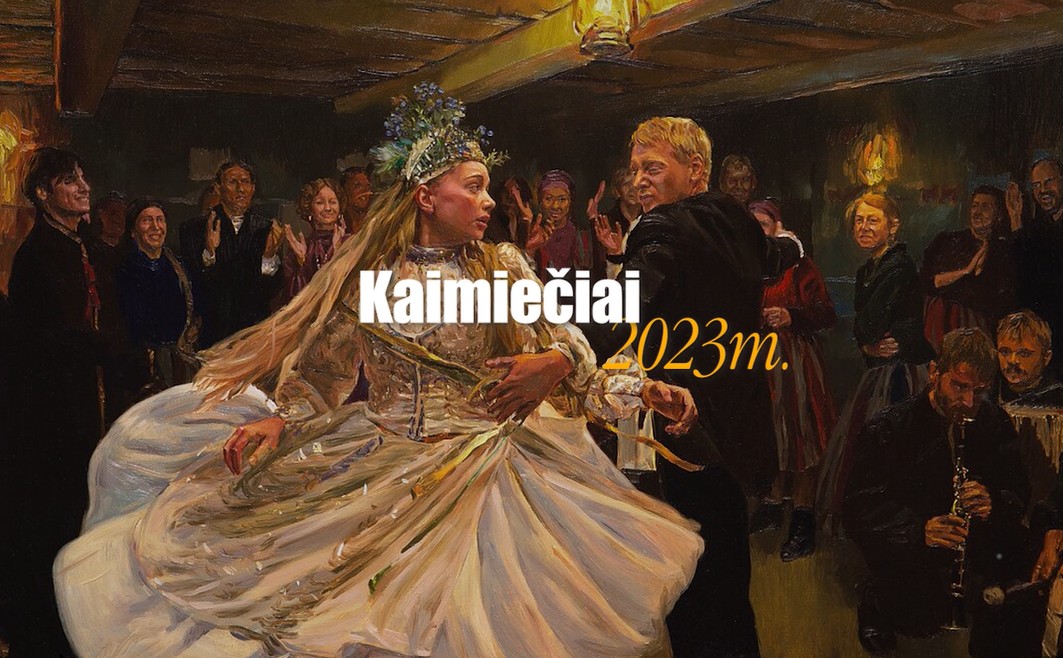
Her connection to Lithuanian cinema has recently become particularly direct: the agency’s catalogue now includes Class Photo, the latest short film by Lithuanian director Arnas Balčiūnas. The film caught the agency’s attention after being selected for Semaine de la Critique at the Cannes Film Festival. According to Wangler, its exploration of transience, rural life, education, social class and bullying through a seemingly simple story immediately stood out.
Wangler will also take part in this year’s Baltic Pitching Forum, taking place in Vilnius on 6–9 October, where emerging filmmakers will present projects that are still at an early stage of development. Ahead of the forum, Vilnius film office spoke with her about what makes a short film stand out internationally, the potential of Lithuanian short cinema, festival and sales strategies, and what young filmmakers should consider if they want their work to travel beyond their home country.
– You have been working with short films from around the world for many years. What makes a short film stand out to you today, especially in such a crowded international market?
S. Wangler: To me, a short film stands out when it still manages to surprise me. In the short format, you have so much freedom in how you want to make your film, so if there is something new while still being engaging and dealing with a topic that I find interesting, then it is a film to remember.
A film also stands out if it stays with you long after it has ended.
– When you watch a film for the first time as a sales agent, what are you looking for? Is there usually a moment when you think, “This film can travel”?
S. Wangler: As a sales agent, we have a feeling for what our buyers would potentially license. It then depends on the film’s genre or category.
If it is a children’s film, an entertaining film without dialogue and with a good message can be perfect. If it is a documentary, it is about the style and content, and whether we see commercial potential or not. With animation or fiction, we probably have the most discussions because it is not always so clear.
What works very well is a film with an individual signature and an interesting visual style.
– Kurzfilm Agentur Hamburg’s catalogue currently includes Arnas Balčiūnas’ latest Lithuanian short film, Class Photo. What caught your attention about the film and made you want to represent it internationally?
S. Wangler: We came across the title when it was selected for Semaine de la Critique in Cannes. We requested screeners for many films that were selected for Cannes, but Class Photo stood out to us immediately.
We liked how it dealt with topics such as transience, rural areas, education, social class and bullying within one simple story.
– What qualities in Class Photo do you think could resonate particularly well with audiences outside Lithuania?
S. Wangler: I think the topics mentioned above can be transferred to many other countries as well, especially when it comes to interpersonal relationships. Class differences and the way school experiences can shape you as a person are also very universal.
– How much does a film’s country of origin matter in the international short film market today? Do programmers and buyers still respond to particular national or regional film identities, or has that become less relevant?
S. Wangler: It depends. For TV sales and perhaps for some VoD platforms, I would say the country of origin can be relevant, especially when short films are curated within a programme or magazine. There could, for example, be a particular country in focus. Otherwise, I believe it comes down more to the film itself than to its origin.
That said, a large part of the international short film market and many potential buyers are based in Europe, so European films potentially have it a little easier. However, I think it is also very important to pay more attention to non-European films and always remain open to different narrative approaches.
– Through your work, you encounter films from many different countries. Have you noticed any distinctive qualities, themes or approaches in Lithuanian short films?
S. Wangler: From the few Lithuanian films I have seen over the last years – mainly at A-list festivals – I feel there is a great sense of storytelling through cinematic language.
– From your perspective, where does Lithuanian short cinema currently stand within the wider European and international landscape? What do you see as its strongest qualities?
S. Wangler: I think there is great potential within Lithuanian short cinema. It is young, energetic and at a high professional level.
Furthermore, seeing how Lithuanian Shorts and the Baltic countries are present at international markets, I feel that there is great support for Lithuanian short cinema. Only if cinema is supported and funded domestically does it have great potential internationally as well.
– Have you noticed growing international interest in films coming from Lithuania or the Baltic region in recent years? If so, what do you think is driving it?
S. Wangler: Not specifically yet. But my main circle consists of buyers rather than festivals, and I have not received a specific request for Lithuanian films from buyers yet.
With the first Lithuanian short now in our catalogue, I will definitely start pushing for it.
– You work on both acquisitions and world sales. What are some of the most common misconceptions filmmakers have about what happens to a short film after it is finished?
S. Wangler: We always warn our filmmakers that it could happen that we do not make a single deal for the film. Even if a film has been very successful at festivals, it is not guaranteed that it will also land a licensing deal.
I used to say that, as a filmmaker, you have to choose whether you want many viewers for your film or whether you want to earn some money back from it. These two things do not always go together.
Traditional TV sales, educational licences and sometimes even VoD licences require exclusivity, so you cannot have your film available online for free, for example. On the other hand, having the film on Vimeo or YouTube might give you many more views.
Of course, there are exceptions. If you sell your short documentary to an online news magazine, you might get a lot of viewers while at the same time receiving a reasonable licence fee.
– Festival premieres are often seen as a crucial part of a short film’s journey. How important is festival strategy today, and can choosing the “wrong” festivals actually limit a film’s future opportunities?
S. Wangler: Of course, it depends on the film which festival is wrong and which is right. But to give one example, I would say that as a filmmaker you should not only wait for the big A-list festivals such as Cannes, Venice or Berlinale.
I think it is important not to wait too long and to research which festivals actually fit your film. There are great festivals that require only a national premiere or no premiere at all, such as Clermont-Ferrand or our Kurzfilm Festival Hamburg.
– You have also researched online distribution and sales opportunities for short films. Has the way audiences discover and watch short films online changed their value or potential in the international market?
S. Wangler: When I did the study about short film on the internet, many platforms were still evolving. It was nearly 15 years ago, and the landscape has completely changed.
Audiences are now much more used to very short content because of social media. In that sense, I think there is more openness towards the short format. However, many people have said that the internet and VoD would be the moment for short film to become popular. We have never really experienced that. Short film as an artistic format will most likely always remain a niche.
That said, this niche can also find new ways of gaining exposure. Especially when it comes to short documentaries, we have seen a big change over the last decade. Major newspapers have started buying licences for short documentaries and giving them a platform they never really had on television, for example.
– At Baltic Pitching Forum, you meet filmmakers whose projects are still at an early stage. When listening to a pitch, what makes you feel that an idea could eventually become a film with strong international potential?
S. Wangler: In the end, it comes down to the story and the script. If there is a story that we really like and that we would also like to distribute, that is already the biggest part.
Only then comes the visual style. And for that, we also have to think commercially. If something is too dark, for example, it would not work well on a small screen in daylight. If an animation is not immediately accessible visually – which can nevertheless be a great way of telling your story – it will most likely be more difficult to sell.
– Is there something you wish emerging filmmakers would think about earlier – perhaps already during development or production – if they want their film to have a life beyond their home country?
S. Wangler: That is a difficult question. I tend to say that filmmakers should make the film the way they want it to be.
But one major issue is third-party materials. If you use music or archival footage, it is very important that those rights are completely cleared worldwide for all media. Otherwise, it is not possible to license the film at all.
– If you could give one piece of advice to a Lithuanian filmmaker hoping to take their short film to an international audience, what would it be?
S. Wangler: Go out there. Visit festivals. Watch short films. Network. That gives you a sense of what is being selected, what works and where you stand within all of this.
– Thank you for the conversation!
Photo by Hannes Vartianen