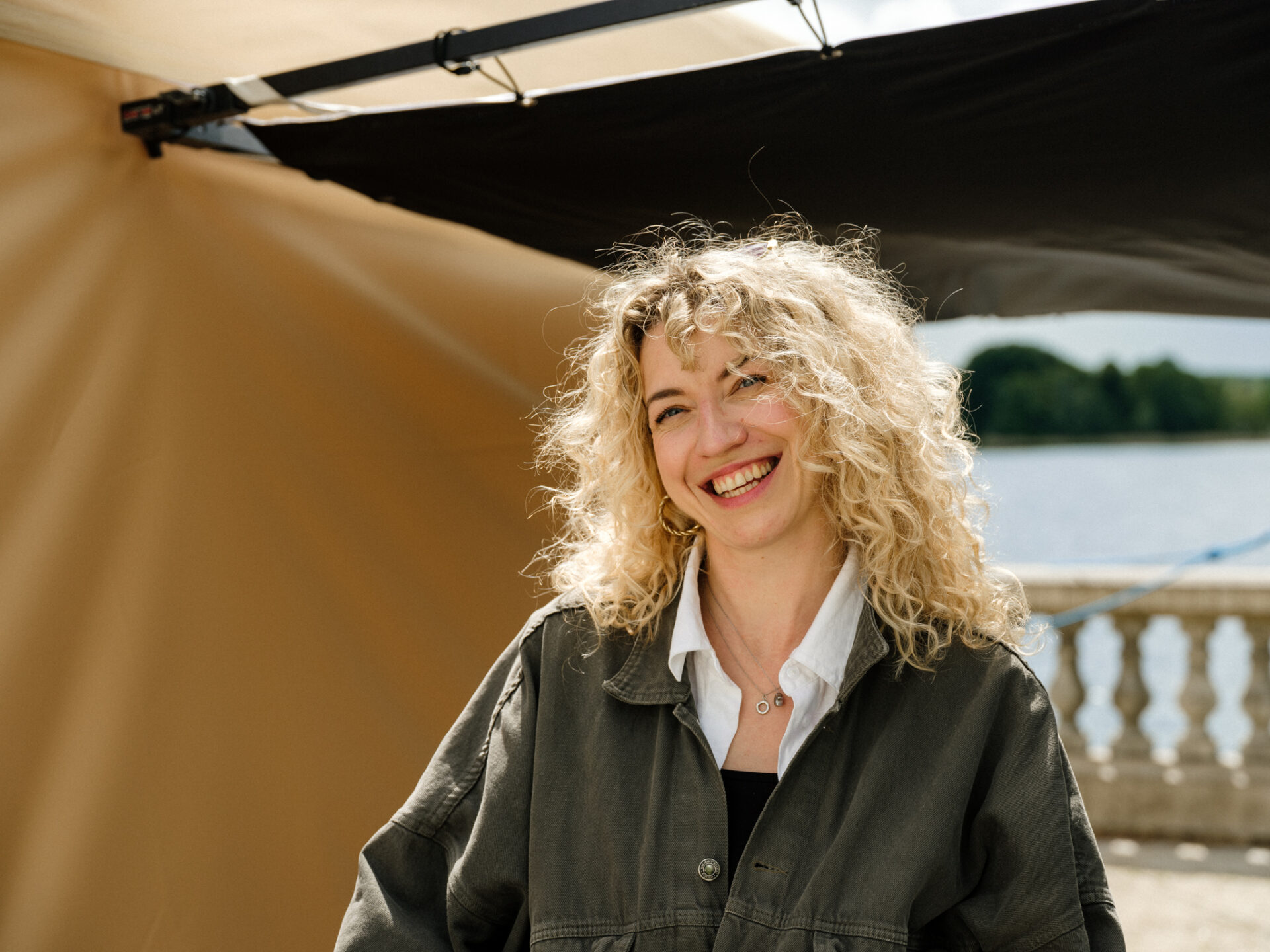
What happens when the desire to be close to someone collides with the fear of losing yourself? Is it possible to preserve a relationship when, in the process, you begin to lose who you are? These are the questions explored in the feature film Hold Me Closer, currently in production, written by playwright and screenwriter Birutė Kapustinskaitė.
The film follows a woman struggling to maintain her connection with her partner as their relationship is gradually eroded by codependency, recurring behavioural patterns and difficult emotional choices. Yet, according to the writer, this is far more than a story about romantic love.
We spoke with Birutė Kapustinskaitė about the boundaries of intimacy, codependency, the screenwriting process, and what she hopes audiences will take away from the film.
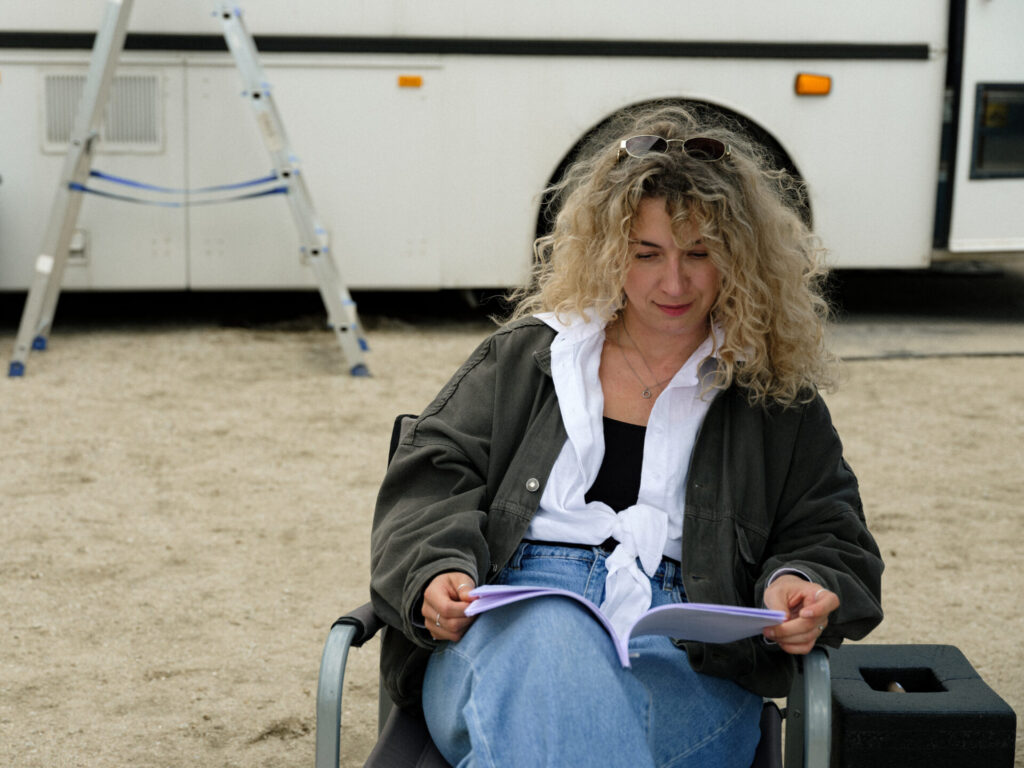
– The title Hold Me Closer seems simple, yet it carries many layers of meaning. What does the word mean to you?
Birutė Kapustinskaitė: To me, above all, it’s about closeness. It can be physical, emotional, romantic, or not connected to romance at all. I love the universality of the word and the way it allows us to talk about many different kinds of human relationships. Intimacy always requires a certain degree of vulnerability and openness, which makes it an endlessly fascinating subject for storytelling.
– Which aspect of intimacy does the film explore?
Birutė Kapustinskaitė: The film primarily focuses on intimacy between romantic partners and on the challenge of preserving it. Sometimes crossing the boundary into physical intimacy is easier than maintaining emotional closeness. That process is at the heart of the story, but the film also touches on other layers of relationships – family bonds, one’s relationship with oneself, and the subject of addiction.
– Codependency plays an important role in the film. Why did this theme feel important to explore?
Birutė Kapustinskaitė: Although the title points to intimacy, this is also a story about codependency. I’m interested in why people find themselves repeating similar relationship patterns over and over again. We often tend to blame the other person, but the film invites us to look inward as well – why do we choose these kinds of relationships, and what do they reveal about us?
– Could this film be described as a story about toxic relationships?
Birutė Kapustinskaitė: Personally, I would avoid that term. Relationships are far more complex than a single label can capture. The characters in this film are trying to preserve their connection at a time when everyone around them believes there’s no point in doing so. I’m less interested in labels than in understanding why people stay, why they cannot leave, or why they keep returning to similar situations.
– One of the film’s themes is sex addiction. Did this topic spark many discussions during the creative process?
Birutė Kapustinskaitė: Absolutely. At first, I questioned whether it should even be considered an addiction. Some specialists define it that way, while others approach it more cautiously. Throughout the creative process, it was important for me not to treat one answer as definitive but to explore different perspectives. However, the more stories I heard and the more conversations I had with professionals, the more I realised that, for some people, this issue causes very real struggles.
– How important is research when creating characters like these?
Birutė Kapustinskaitė: It’s essential. While working on this film, I spoke with psychotherapists and studied real-life stories. It’s important for me not only to understand my characters but also to make sure that their behaviour, language and experiences feel authentic. I also think a great deal about responsibility – about how these themes may affect people who recognise parts of their own lives in the story.
– The film’s protagonist works as an intimacy coordinator on a film set. Why did you choose this profession for her?
Birutė Kapustinskaitė: It’s a relatively new profession in the film industry, and I found it fascinating. It naturally connects to the film’s central themes while also allowing us to explore intimacy not only in personal relationships but in professional settings as well. Since film productions today are often international, the profession also provided an organic way to incorporate the film’s co-production aspect.
– How important is authentic dialogue to you?
Birutė Kapustinskaitė: Very important. I love listening to the way people actually speak. Sometimes I even write dialogue that is intentionally grammatically imperfect because that’s how we communicate in everyday life. Of course, in cinema you have to remove some of the “noise” that naturally appears in real conversations, but I always try to preserve the natural rhythm, unfinished thoughts and imperfections. Those details are often what make a character feel alive.
– What do you hope audiences will take away from the film?
Birutė Kapustinskaitė: What interests me most is when people leave the cinema discussing the characters rather than the filmmaking itself. Why did they make those choices? What would the audience have done in their place? Could things have turned out differently? I believe a film truly begins to live only once it becomes part of a conversation.
– What is the main feeling or idea you would like audiences to leave Hold Me Closer with?
Birutė Kapustinskaitė: Probably freedom. The freedom to be yourself, the freedom to choose, and the courage to ask yourself whether you are truly free where you are. I don’t think this film is only about romantic relationships. It’s also about our relationship with ourselves and about how much freedom we really have in our lives.
– A few years from now, how would you like to look back on this film?
Birutė Kapustinskaitė: As a work that encouraged people to talk. If audiences continue discussing its themes long after watching it, debating them, searching for answers or asking new questions, then the film will have achieved exactly what it set out to do.
– Thank you for the conversation.