Vilnius Film Office presents the report series “Films that changed the history of Lithuanian cinema.” Through conversations with directors, actors, and contemporaries, the series reveals not only events of the past but also the industry’s internal growth – how far we have come over 35 years of independence, which films marked turning points, and which became bridges to the world. Major awards, first international productions in Lithuania, bold themes, historical shifts, and the courage to speak in a new cinematic language – this is a story of a cinema that grew alongside Lithuania.
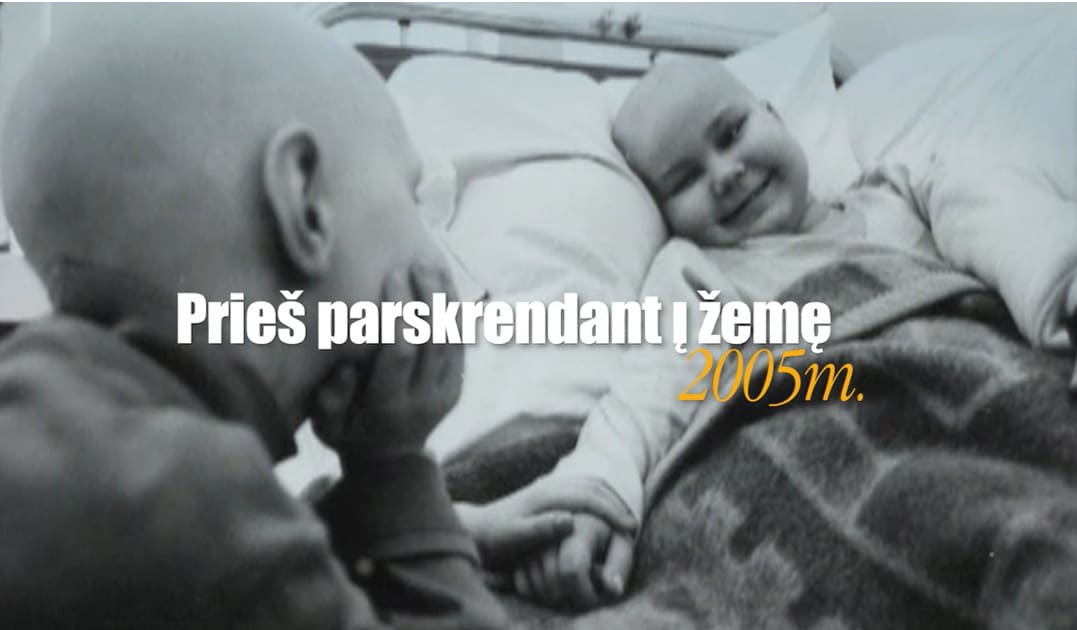
In 2005, director Arūnas Matelis’ documentary “Before Flying Back to Earth” became one of the most powerful and sensitive works in Lithuanian documentary cinema.
Born out of a personal experience – his daughter’s illness – the film transcended an individual story and turned into a universal reflection on life, fragility, and hope.
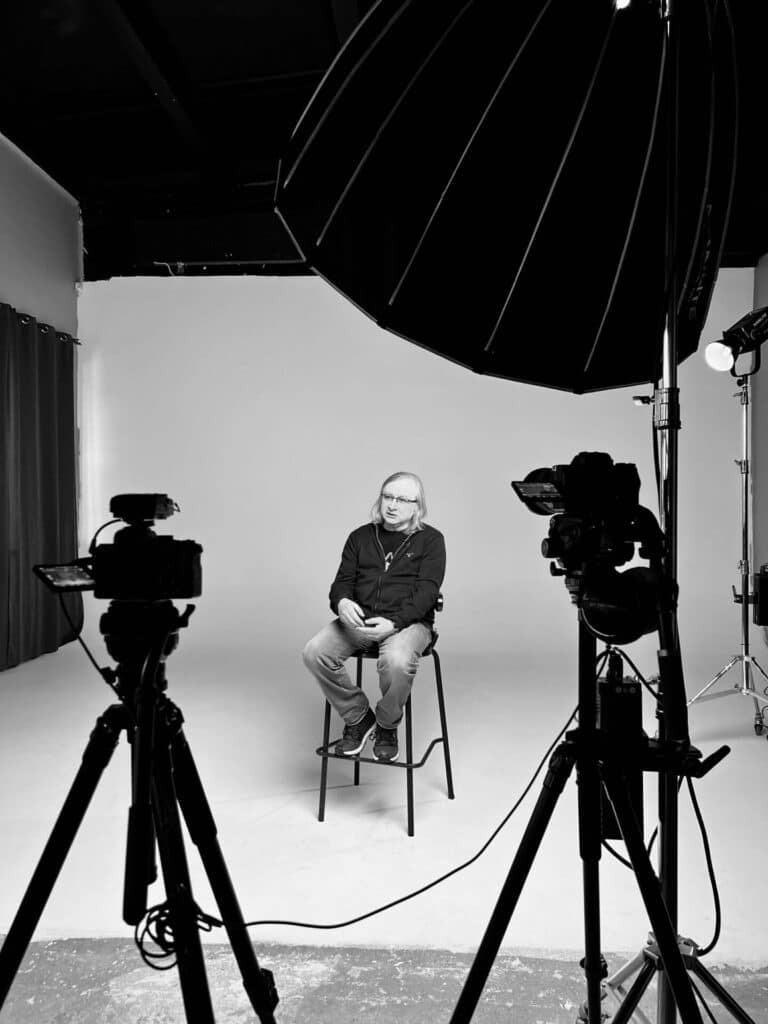
The film’s creation process, its beginnings, and the difficult decisions behind it are explored through the insights of the film director and producer Arūnas Matelis and the director’s assistant Giedrė Beinoriūtė.
According to them, the starting point was not filming but simply being present – spending time with the children and their families and gradually becoming part of their environment.
Only after trust was established did the possibility of making the film truly emerge.
“If we don’t find our place there, we won’t make the film,” recalls A. Matelis.
The turning point came when the crew was accepted not as observers, but as people who were needed – those who could be trusted in everyday life.
Ethics played a central role throughout the filmmaking process.
The creators consciously drew a line between what could be shown and what had to remain unseen.
As G. Beinoriūtė notes, sometimes the most important decision was not to film, but to turn the camera away.
These choices became an essential part of the film’s language.
Although the film explores difficult experiences, its focus is not on illness but on life itself.
The camera captures everyday moments: conversations between children, small games, and pauses of silence that take on a deeper meaning.
According to A. Matelis, documentary filmmaking requires openness to reality – allowing life to shape the story, even when it diverges from the original idea.
The film also had a tangible impact on society.
At the time, childhood cancer was often surrounded by fear and stigma, but “Before Flying Back to Earth” helped shift public perception, encouraging empathy and understanding.
For the director, the film’s greatest achievement lies not in awards, but in real changes in how people think and relate to one another.
It is a film about extreme experiences that, paradoxically, make life feel even more present.
About being there for someone when it matters most.
And about cinema, which not only reflects reality but also has the power to change it.
The film “Before Flying Back to Earth” received significant international recognition and was awarded at some of the most important documentary film festivals. In 2005, director Arūnas Matelis won the Silver Wolf at the International Documentary Film Festival Amsterdam (IDFA), and the film also received the Golden Dove at DOK Leipzig. In 2006, it was awarded the Spirit Award at the Brooklyn International Film Festival, received an Honorable Mention at the Silverdocs Documentary Festival, and won the Big Stamp in the international competition at ZagrebDox. In 2007, Arūnas Matelis was honored with the Directors Guild of America (DGA) Award for Outstanding Directorial Achievement in Documentary. The film was also nominated for the European Film Award for Best Documentary.