This year at the Cannes Film Festival, the work of costume designer Rūta Lečaitė will be seen in two films – Latvian director Viesturs Kairišs’ “Ulya” and the Lithuanian-Ukrainian-French co-production “Vesna” (“Spring”).
Although the two projects created completely different worlds, emotional states, and visual languages, they were brought together by the same international platform – Cannes. We spoke with costume designer Rūta Lečaitė about costumes that need to feel real rather than beautiful, invisible details, cold, chaos, intuition, and creative trust.
– How did it happen that this year you are going to Cannes with two films – “Ulya” and “Vesna”? Did these projects come to you around the same time, or were they completely different stories?
R. Lečaitė: – I would love to say it was all very strategically planned – but no. It’s more of one of those situations where you just do your work, move from project to project, and then suddenly realize they somehow met each other in Cannes. The projects came at different times and with very different energies, so during production, it never even felt like they were connected in any way. And then – bam – the same platform. It’s that feeling where there’s timing, work, and a little bit of “okay, interesting… where is this going to lead?”
– As a costume designer, how different was your work on two such distinct projects as “Ulya” and “Vesna”? Where was the biggest contrast? Or maybe there were similarities as well?
R. Lečaitė: – The difference was very clear. “Ulya” was the kind of project where doing too much was already wrong. “Vesna” was the kind of project where if you don’t do enough, that’s also wrong. “Ulya” required a lot of subtlety, silence, and almost invisible decisions. “Vesna” demanded more courage, contrast, a clearer gesture. But in both cases, the same principle applies – the costume cannot be more interesting than the character.
– When working on different projects, what helps you “catch” the tone and world of each film before you even start creating costumes? How did you build the characters’ visual identities in these films – was one project driven more by intuition and the other by research and analysis?
R. Lečaitė: – I never start with clothes. I start with a feeling – how that world breathes. Sometimes it’s a color, sometimes a texture, sometimes something completely strange – the way a person moves or even how they stay silent.
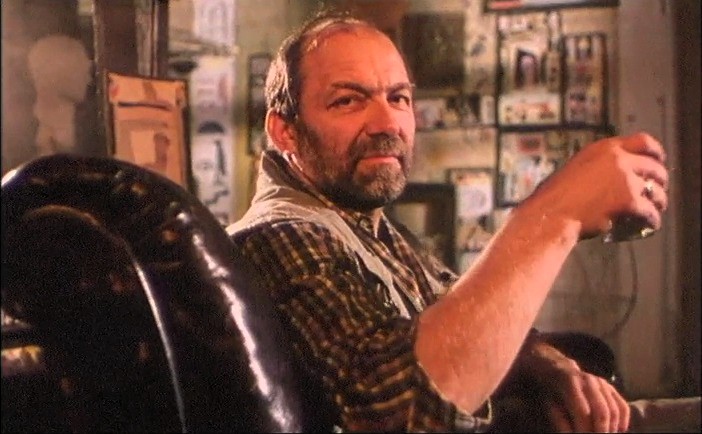
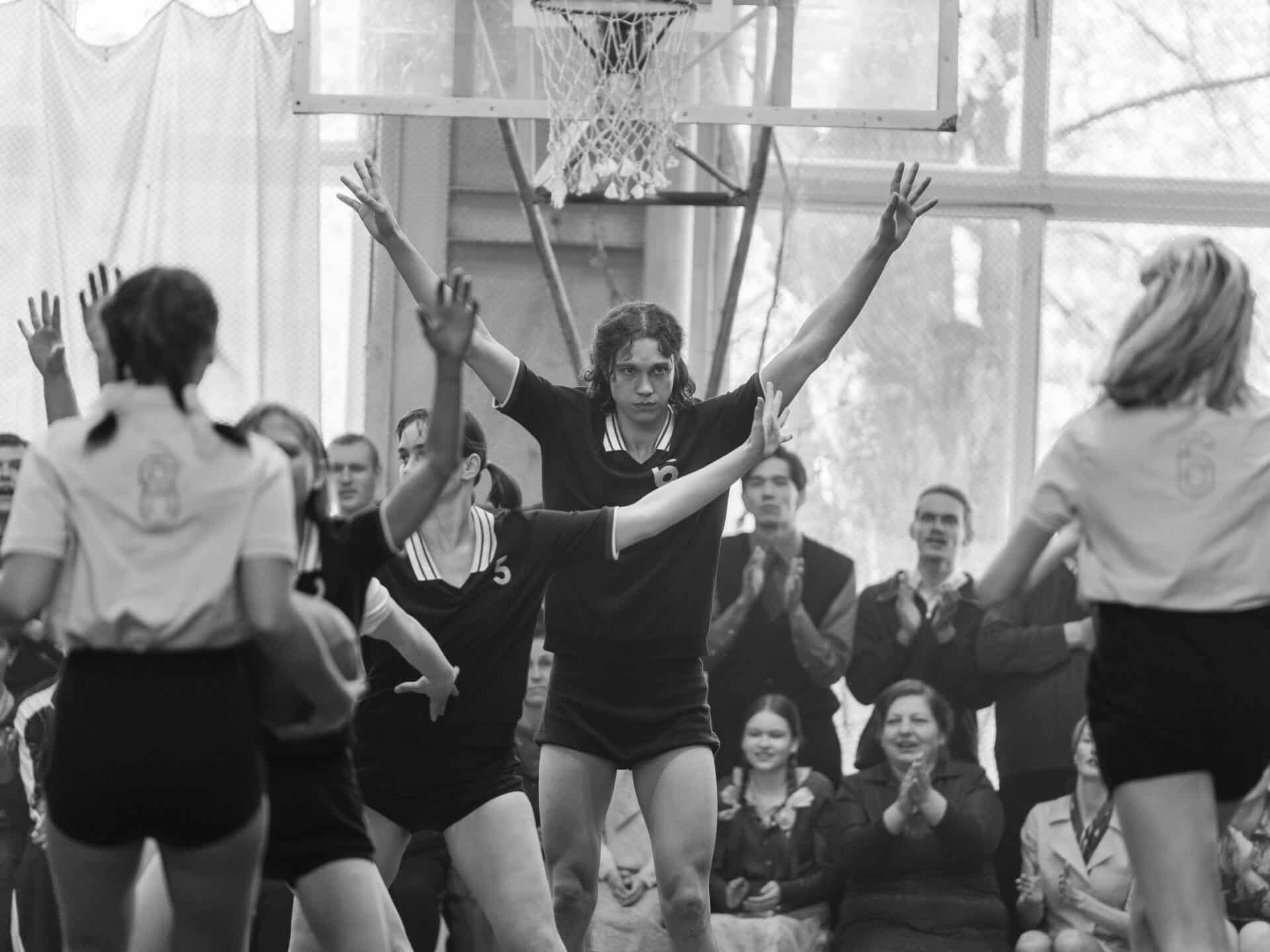
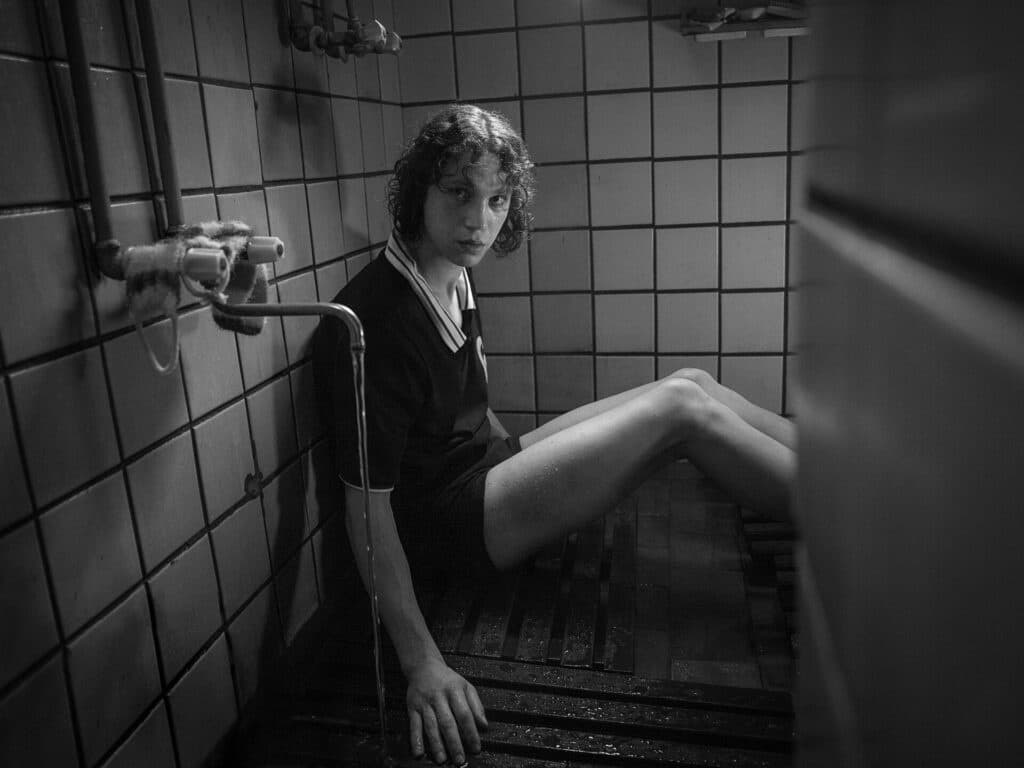
In the case of “Ulya,” there was a lot of research and analysis. After all, it’s about women’s basketball in Latvia in the 1960s, the very beginning of it, so we had to rely on historical material while also creating something that would work cinematically. One of the bigger challenges was the uniform of Ulya’s team itself. We had to adapt the costume to help conceal a masculine figure – changing proportions, playing with contrast, texture, the relationship between black and white, and the costume’s construction. Many of the decisions were not only aesthetic, but almost technically psychological – how to alter a silhouette through form and make the audience believe it. “Vesna” was completely different. There, I had to really immerse myself in the feeling of wartime everyday life – when a person exists in constant discomfort, cold, and fear, and no longer really thinks about aesthetics because they are simply trying to survive. And then the costume becomes something very practical. But cinema has this cruel aspect – even when a character is emotionally falling apart, you still have to think about composition in the frame, color, texture, and silhouette. So at the same time, you try to create complete chaos in life that still “falls into place” beautifully on screen.
– How different were the directors’ visions for “Ulya” and “Vesna,” and how did that affect your creative decisions?
R. Lečaitė: – Very different. And you could feel it not only visually, but also in the working method itself. With “Ulya,” there was a lot of trust and a very natural shared rhythm. Viesturs often let me make decisions, especially in the female world, because he said I simply understood it better. And of course, it’s hard for me to argue with that. And honestly, our collaboration happened very simply. There was no huge co-production scheme or “I passed an interview and got the job.” At that time, there wasn’t even any co-production yet – I was simply traveling from Lithuania to Riga to work on the film because Viesturs specifically wanted me to create the costumes. And I think when a director personally wants you on their team – especially after you’ve already worked together before – that already says a lot. It means they know how you work, they know that even in complete chaos, you’ll somehow still make it happen, because you genuinely enjoy the process. I really love his scripts, his humor, all that melancholy and visuality that emerges together with Vojtak. There’s a very strong sense of a world there that makes you want to enter it. “Vesna” was a completely different experience. There, I had to switch myself into a much darker emotional state – more sadness, absurdity, inner tension. And at that point, you can no longer think only about aesthetics. You have to somehow step into the characters’ everyday reality, where people live in constant discomfort, trauma, and strange emotional chaos. A very “fun” place for creativity. But probably that contrast between the projects is the most interesting part – in one, there’s more trust and intuition, in the other, more inner breaking and trying to understand a person from within.
– Working on two films that reached such an international level, do you feel your sense of responsibility changes – do you think about an international audience, or do you still create primarily for the story itself?
R. Lečaitė: – No. Because that’s a very quick road to compromises, and compromises become visible in cinema very quickly. When you start thinking, “how will this look to everyone,” you usually end up with something very average. I create for a specific character in a specific story. And the paradox is – the more truthful it is, the better it works everywhere.
– What does it feel like to realize that a costume you created no longer exists only on a film set, but is now living in some of the world’s biggest festivals?
R. Lečaitė: – Slightly surreal. Because during filming, everything is very grounded – sweat, weather, logistics, “why did this zipper suddenly decide to break right now?” And then the same costume appears on screen, suddenly looking very polished. And you know all the drama behind it. It’s this beautiful lie that we all collectively agree to believe in.
– If you had to describe the characters of “Ulya” and “Vesna” through just one costume detail, what would it be for each film?
R. Lečaitė: – “Ulya” – texture. Something very subtle, but very fragile. “Vesna” – contrast. A kind of inner friction between things that probably shouldn’t work together, but somehow do because of that.
– After these two projects, do you feel you look at your profession differently? Has a new standard or personal bar appeared for yourself?
R. Lečaitė: – Yes, but more on a personal level. There’s less tolerance for “ah, this will do.” Because it won’t – and you always see it. The bigger the platform, the clearer it becomes that there are no small details.
– Was there a costume decision in one of these films that surprised even you, but ultimately became very important for the character?
R. Lečaitė: – I don’t want to spoil too much because both films are still waiting for their premieres, and I think it’s nice when viewers discover certain things themselves. But sometimes the most important things become details that at first glance seem almost insignificant. In “Ulya,” it was probably a woman’s bra. And in “Vesna” – Italian women’s shoes. These are not “loud” costume decisions, but for an actor, they completely change posture, movement, and physicality. And suddenly you start believing that person on screen. In general, surprises for me usually come not from one huge decision, but from the process itself. After fittings, the real work begins – I keep thinking, reviewing, changing things, and very often the costume changes all the way until the shooting day. Sometimes it changes during filming, too. Sometimes it looks extremely simple, but that’s exactly when you realize it works.
– Were there moments when you had to let go of a great creative idea because it simply didn’t work in the film?
R. Lečaitė: – Constantly. Of course, costumes inevitably pass through my own taste and aesthetic sensibility, but for me, it’s much more important to feel the character than to simply create a “beautiful” costume. I think a lot about who this person was before the moment we see them in the film. Because they are not just “a pensioner” or “a driver.” Maybe before that, they were a military officer, maybe they spent their entire life working in a factory, and sometimes it’s exactly those tiny details that allow you to approach the character more deeply. So if something, even a very beautiful decision, no longer matches the emotional truth of that person, it simply no longer belongs there. And then you have to let it go.
– What was the biggest practical challenge when creating costumes for these projects — something viewers would probably never think about?
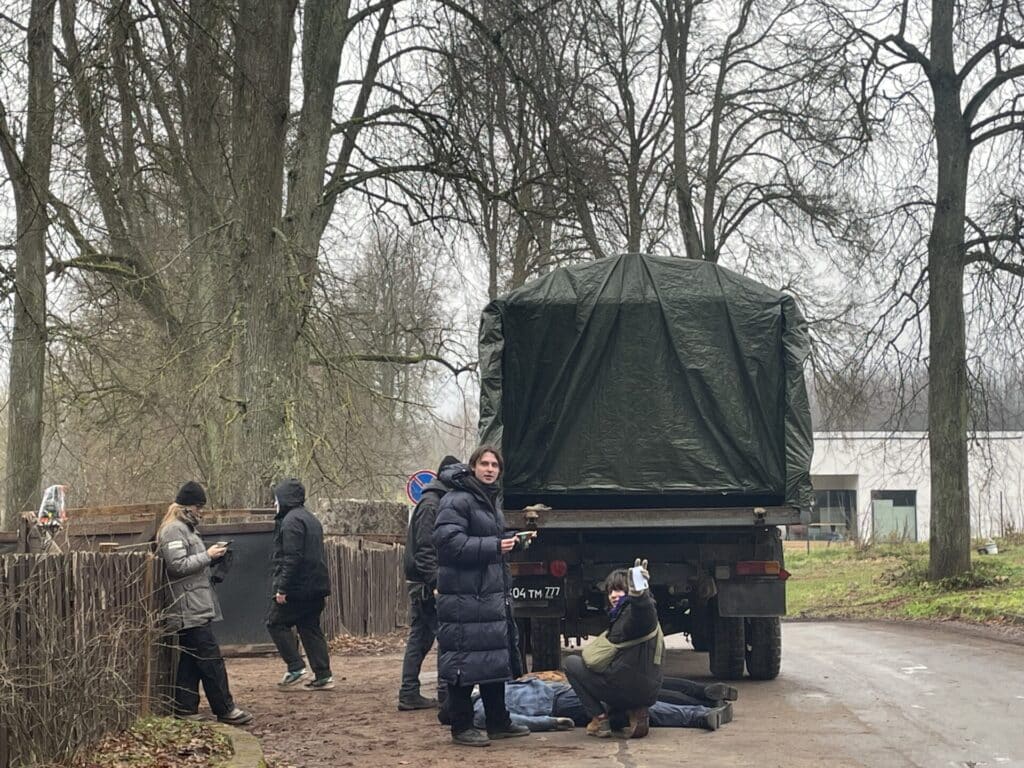
R. Lečaitė: – Reality, which in cinema always arrives uninvited. With “Ulya,” everything started very quickly and rather chaotically. At that time, I was still working on a French project, and suddenly there was a phone call: we need to go now because we have to catch the snow of Latgale, the cold, and that whole January depression. So I was living between Vilnius and Riga – shifts in Lithuania, weekend flights for fittings and meetings, then back again. A very romantic side of the film industry. And what’s funny is that during the first meeting with Viesturs, we discussed logistics, deadlines, how to transform a man into a woman in a believable cinematic way, but we barely talked about style at all. And only when leaving, I casually asked: “So… is the film going to be black and white?” No one really answered me properly until filming began, but my intuition had already decided for me. You start seeing textures, colors, and the whole costume construction differently because black-and-white cinema functions completely differently. “Vesna” was the opposite process. Preparation there started maybe eight or nine months before filming, and that time was extremely important to me. There was room not to rush, to think, to slowly enter that world. And it’s not an easy world. Cold, night shoots, humidity, mud, harsh exterior locations, and the constant feeling that somewhere nearby, there is war. But for me, the film itself is not directly about war. It’s more about people’s inner struggles, relationships, trauma, absurdity, and that strange human ability to keep living even amid tragedy. And then the entire practical side becomes almost invisible – thermal layers, protection, all the tricks to keep people from freezing on set. On screen, only the feeling should remain that these characters simply exist within that cold, chaotic world. But I think, over time, you also develop an intuition for choosing films where, despite all the chaos, you still genuinely enjoy the process of working. I’ve been incredibly lucky to meet such talented directors and to have the opportunity to learn so much from every project – not only professionally, but also personally. Probably the most beautiful part of this work is the moment when you no longer feel like you’re simply doing your function, but actually creating together with people. When a shared vision of the world emerges, trust follows, and everyone feels they are moving in the same direction. And when that creative connection is also recognized – that’s a truly special feeling. I’m very grateful that everything unfolded the way it did.
– Thank you for the conversation.
Stills from the film “Ulya”, photographer .