Exciting news: director Andrius Blaževičius’ film “How to Divorce During the War” has been selected for the program of one of the most significant cinema world events – the “Sundance” film festival. The film is a co-production of Lithuanian, Irish, Czech, and Luxembourgish teams. The project was partially funded by the Vilnius Film Fund.
At the end of January, Blaževičius’ latest film, along with 10 other motion pictures from around the world, will appear in the “World Cinema Dramatic Competition” of the “Sundance” festival’s full-length feature film competition program.
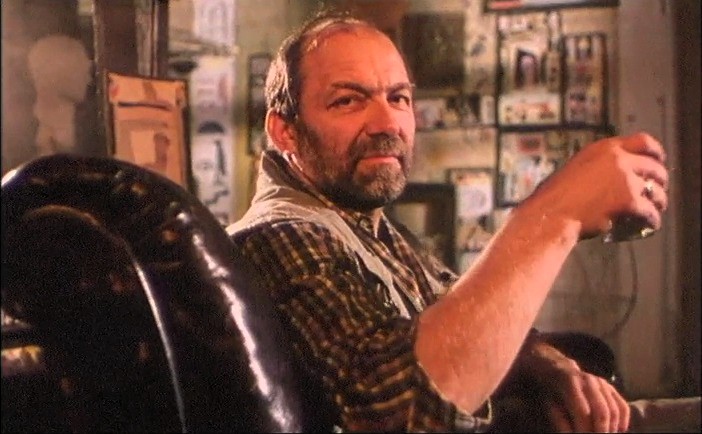
“How to Divorce During the War” takes us to Vilnius in 2022. Marija, a successful, ambitious manager, chooses the worst possible time for a candid conversation with her husband regarding their divorce – the day before Russia’s large-scale invasion into Ukraine. We watch the couple trying to make it through the divorce proceedings while maneuvering between two predicaments, namely, the refugee crisis and midlife crises.
The co-production was supported by the Lithuanian Film Centre and LRT. In early December, the team also learned that the project had been allocated additional funding from the Vilnius Film Fund.
The fund, established in the autumn, supports co-productions for a reason – it aims to strengthen the city’s cultural identity through film production and contribute to Vilnius’ economic growth and promote the Lithuanian capital internationally. The fund finances only co-productions – joint documentary, animated and feature-length film projects by Lithuanian and foreign filmmakers. The expert evaluation also takes into account the involvement of local film professionals, Vilnius’ role in the script, and sustainable environmental solutions.
“The films made in the Lithuanian capital and their successful journey in the international context prove once again that Vilnius is ready to accept high-level productions. We hope that the support of the Vilnius Film Fund will continue to contribute to the city’s promotion, and our capital city will deservedly become a regional co-production center,” says Simona Bieliūnė, Vice-Mayor of Vilnius.
Talent Collaboration in Co-productions
In the case of “How to Divorce During the War”, part of the shooting took place in Luxembourg, a local actress starred in several scenes, and the audio post-production was carried out. The film also featured 4 actors from Ireland, where the video post-production was done. Talented professionals from the Czech Republic – a composer, a film editing director, a costume designer, and a make-up artist – joined the project as well.
“Co-productions can often be stressful because you don’t know the team well, I feel that I was lucky: everyone was top-notch professionals,” says director Blaževičius.
According to the film’s producer Marija Razgutė (“M–Films”), the opportunity to have a co-production with other European countries was a valuable experience.
“They are our partners who contribute to the script and talent sourcing. Foreign professionals bring their own cultural, political, and artistic context, they are our film’s first global audience, helping to measure its relevance. Of course, an international team helps to reach a wider audience, moreover, international sales agents feel more confident purchasing such a film: they know that if a certain project is a co-production, it moves beyond the borders of the producer and director’s countries. After all, someone has invested their talents, money, and time – which means the film is relevant,” Razgutė explains.
Vilnius’ Role in the Film
The city of Vilnius had an equally important role in the film. The capital of Lithiuania is the story unfolds. The director says that most of the shooting took place in the Old Town, as well as in the suburb of Antaviliai.
“There will be a lot of Vilnius in the film and it will be important. The story is about a couple living in Vilnius and their socio-economic circle,” says Blaževičius.
Lithuanian viewers will have the opportunity to watch “How to Divorce During the War” next year.