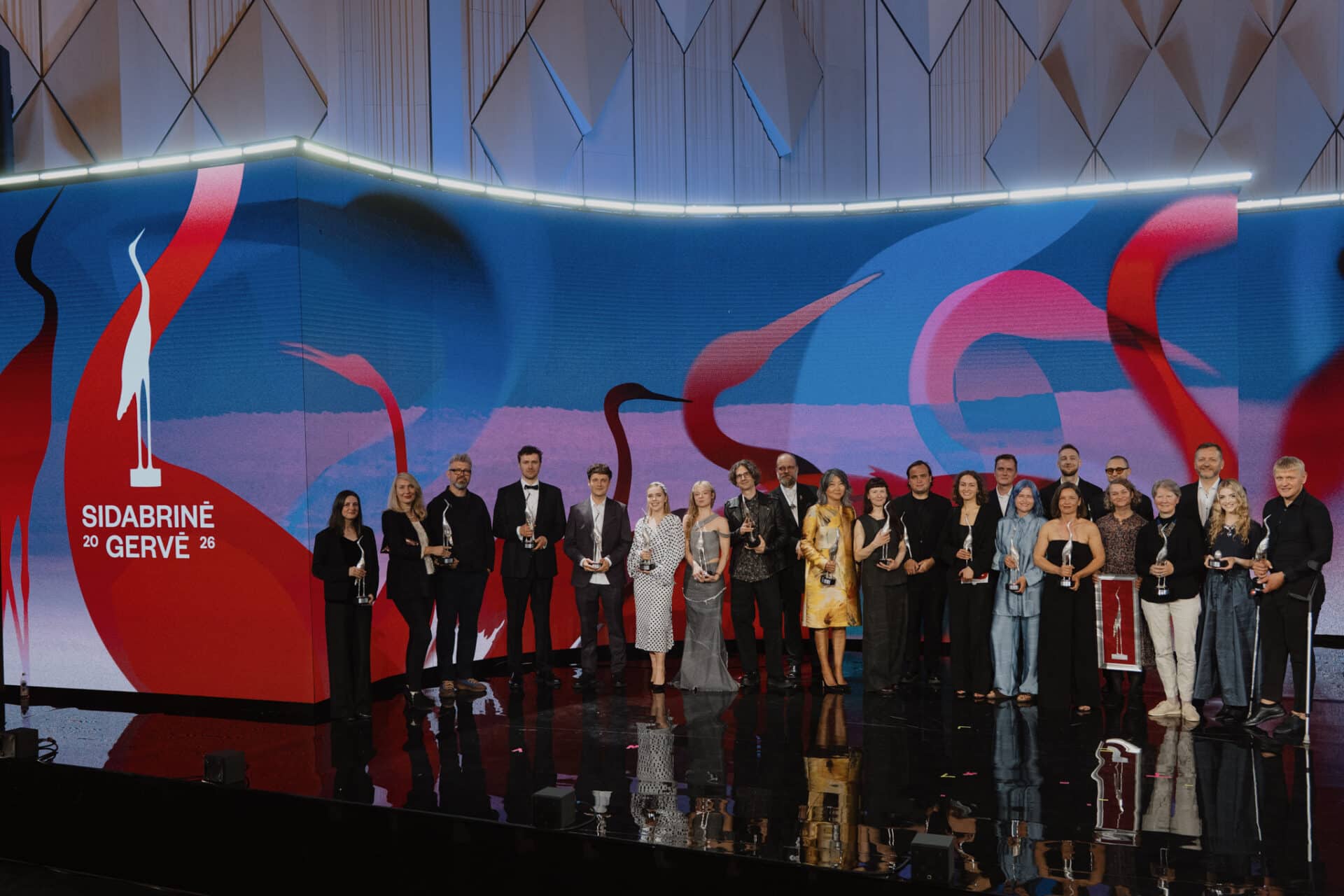
With this year’s Silver Crane Awards winners now announced, the broader picture of recent Lithuanian cinema is becoming clearer as well. This year’s awards revealed not only the standout films and creators, but also wider industry trends – a growing diversity of genres, strengthening international co-productions, and the increasing visibility of Lithuanian cinema abroad.
We spoke about the changing Lithuanian film industry, the role of national film awards today, and the direction Lithuanian cinema is heading with the organizers of the Silver Crane Awards – Director of the Lithuanian Film Centre Laimonas Ubavičius and Head of AVAKA Darius Vaitiekūnas.
– How do you see the balance between auteur cinema and commercial projects today – are they competing with each other or complementing one another?
D. Vaitiekūnas: – I believe they should complement one another rather than compete. A healthy industry needs both auteur cinema and audience-oriented projects. Auteur cinema often brings a new cinematic language, risk-taking, depth, and themes that may not become instantly popular with mass audiences, but it helps cultivate film culture. Meanwhile, commercial or broader audience films perform another very important function – they create the habit of watching Lithuanian cinema.
They bring people into theaters, build trust in local productions, create jobs within the industry, and allow professionals to grow. That is why the Silver Crane Awards also include the Audience Award nomination, given to the Lithuanian film that attracted the highest number of cinema viewers during the previous year.
Yes, in many cases the results of this category are already clear beforehand, since cinema attendance statistics are publicly available, but I still believe this nomination is extremely important within the awards ceremony. We should not pit these two directions against each other. We need good auteur cinema and good audience cinema. The real question should not be “auteur or commercial,” but whether the film was made with quality, honesty, and respect for the viewer.

– How can awards like these genuinely contribute to the growth of the industry rather than remain purely symbolic recognition?
D. Vaitiekūnas: – Awards can contribute in a very real way if they do not end on the night the statuettes are handed out. The beautiful Crane statuette itself, created by sculptor Audrius Liaudanskas, is only a symbol, but a great deal of value can be built around it.
For example, nominations can help films return to the public spotlight through additional screenings, discussions, regional events, television broadcasts, or streaming platforms. This is very important because Lithuanian films often have quite a short visibility window.
Another important aspect is professional prestige. When we recognize not only directors or actors, but also sound designers, editors, production designers, costume designers, makeup artists, and composers, we help audiences understand that cinema is a complex professional system.
And, of course, awards also add professional value to the winners themselves – more than one filmmaker has admitted that winning a National Film Award changes the numbers in the fee section of future contracts.
– What is the most important thing when organizing an event of this scale?
L. Ubavičius: – The most important thing is maintaining trust in the awards. A good ceremony alone is not enough – the entire process must be transparent, consistent, and professional.
National film awards are also recognition of the work of the film community, so it is essential that decisions are based on expert opinions and clear criteria. That is why films and creators are evaluated by film professionals from different fields – directors, producers, screenwriters, cinematographers, and representatives of many other professions.
This model allows works to be viewed from different perspectives and helps recognize not only the final result, but also the work of the entire creative team. It ensures a broader perspective, objectivity, and proper attention to all film professions contributing to the creation of a film.

– What would a “healthy” Lithuanian film industry look like in 5–10 years? What needs to change for us to get there?
D. Vaitiekūnas: – In my understanding, a healthy industry is one where creators can plan ahead instead of constantly living from project to project in complete uncertainty. One with more stability, clearer rules, greater respect for professions, and more trust in Lithuanian content.
In 5–10 years, I would like to see an industry where not only the final film is strong, but the entire chain: idea development, scriptwriting, production, post-production, distribution, marketing, international collaboration, and copyright management.
We often talk about creativity, but forget that creativity cannot function sustainably without a system behind it. And this is not only a matter of awards – it is a matter of the entire ecosystem developing together. It is crucial that all parts of the industry move at the same pace and in the same direction.
I would also like to see a stronger relationship with audiences. Lithuanian cinema should not consist of only a few major events each year, but become a constant part of cultural life – not only in Vilnius, but throughout Lithuania.
I believe our potential is enormous. But a healthy industry does not emerge from talent alone. It requires sustainable funding, professional infrastructure, good working conditions, and a clear understanding that cinema is not only culture, but also economy, jobs, and national visibility.
– How would you define the significance of the “Silver Crane” awards for national cinema today?
L. Ubavičius: – The awards are an opportunity for both the film community and audiences to look back at Lithuanian cinema from the previous year – to remember the most remarkable works, appreciate the achievements of filmmakers, and see what themes and ideas shaped our cinematic landscape.
It is, in a way, a cross-section of the cinematic year, allowing us to see how diverse and vibrant the Lithuanian film industry truly is.
At the same time, the awards help films reach wider audiences. Quite often, viewers discover films they had not yet seen through the nominations or winners’ lists, and become interested in new directors or other filmmakers.
That is why the Silver Crane Awards become not only professional recognition, but also a bridge between the film community and audiences.
I also believe one of the greatest values of these awards lies in the fact that attention is given not only to directors or actors. Cinematographers, editors, composers, sound designers, costume designers, production designers, and many other specialists whose work is less visible to wider audiences are also recognized here.
It reminds us that films are born from the talent, experience, and collective work of many people, and that every profession’s contribution is inseparable from the final result.
– How are nominations and decisions formed – to what extent is it professional evaluation, and to what extent does it reflect the broader pulse of the industry?
D. Vaitiekūnas: – First and foremost, it is professional evaluation. Otherwise, the awards would lose their meaning.
What is evaluated is not only whether a film was liked, but how it was made: directing, screenplay, acting performances, cinematography, sound, editing, and the overall artistic vision. It is colleagues evaluating the work of colleagues.
This year, the nominations were formed by a 9-member Selection Committee consisting of film industry professionals who either applied independently or were delegated by various film organizations, such as the Lithuanian Filmmakers Union, the Independent Producers Association, the Lithuanian Animation Association, the Lithuanian Association of Cinematographers, the Auteur Cinema Alliance, and others.
The committee begins its work at the start of the year – in January and February – and is responsible for evaluating all films submitted for the awards that meet the criteria. By the end of April, all nominations are finalized and nominees are announced.
At that point, the Voting Committee begins its work. It consists of all previous Silver Crane Awards winners, delegates from film organizations, and active film professionals who meet the established criteria.
The Voting Committee includes more than 4,300 film industry professionals, who select the winners in each category.
But of course, awards never exist in a complete vacuum. They inevitably reflect broader yearly trends, industry directions, and themes that become important at a certain moment.
Sometimes the nominations themselves reveal the arrival of a new generation, the strengthening diversity of genres and themes, or the growing number of genre films and international collaborations.
– What does “Silver Crane” need today in order to become an even stronger national film event?
L. Ubavičius: – I believe the greatest potential lies in the continued growth of audiences for Lithuanian cinema.
In recent years, we have seen a very encouraging trend – Lithuanian films are attracting increasing audience attention, and alongside that, interest in filmmakers, their work, and Lithuanian cinema processes is also growing. This shows that national cinema is becoming an increasingly important part of our cultural life.
The more often people choose to watch Lithuanian films, the closer filmmakers’ achievements become to them. Then the Silver Crane Awards become not only recognition within the professional community, but also an event whose results are anticipated by wider society.
I would also like to see Lithuanian cinema discussed not only during premieres, but throughout the entire year – in schools, the media, cultural events, and on social networks.
The more space we create for conversations about films and filmmakers, the stronger the relationship between audiences and national cinema becomes. And a strong, curious, and engaged audience is the foundation for the Silver Crane Awards to continue growing and remaining relevant.
– Thank you for the conversation!
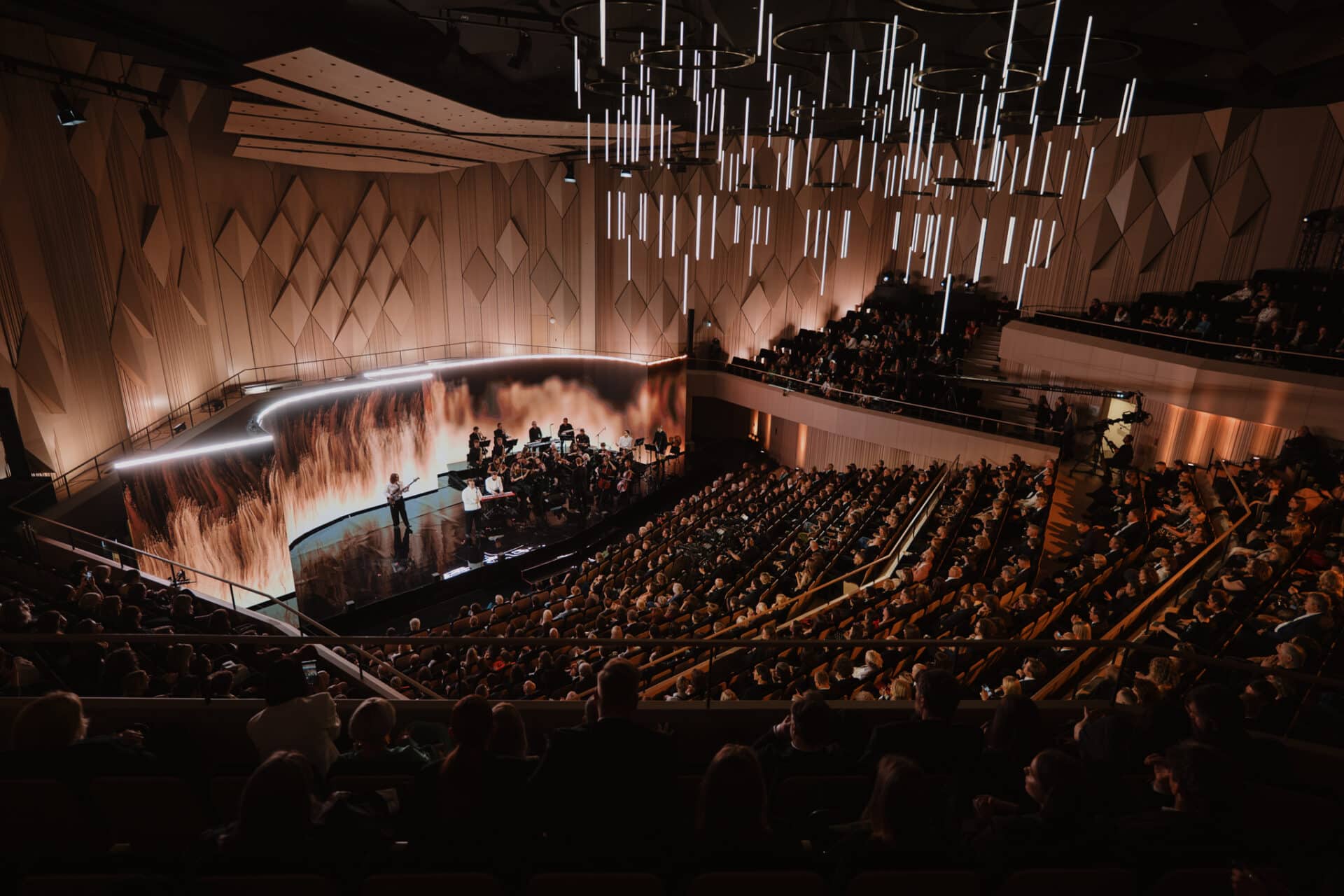
2026 Winners
AWARD FOR THE DISSEMINATION OF FILM CULTURE
RENATA MIŠKINIENĖ
Best Student Film
AMORPHOPHALLUS (dir. Džiuginta Radavičiūtė, prod. Džiuginta Radavičiūtė, Samanta Molevičiūtė, LMTA National Film School (KIMO))
GLITTER KISS (dir. Augustė Gerikaitė, prod. Lineta Lasiauskaitė, Plopsas, LMTA National Film School (KIMO))
THE LAST SNOW (dir. Sotera Kupinaitė, prod. Gustė Girdvainytė, Džiuginta Radavičiūtė, LMTA National Film School (KIMO))
THE SIGNAL PATH (dir. Eglė Razumaitė, prod. Lineta Lasiauskaitė, Plopsas, LMTA National Film School (KIMO))
WHIRLPOOL (dir. Linas Žiūra, prod. Linas Žiūra, LMTA National Film School (KIMO))
Best Animated Film
BFF. TURBO ADVENTURE MARATHON (dir. Urtė Oettinger, Ignas Meilūnas, prod. Agnė Adomėnė)
CREATION OF WORLDS (dir. Kristina Buožytė, Vitalijus Žukas, prod. Kristina Buožytė, Vitalijus Žukas, Natrix Natrix)
THE PENGUIN AND THE PIGEON (dir. Gertrūda Nemčauskaitė, prod. Justė Beniušytė, Ignas Meilūnas)
TEN (dir. Šarūnas Vyštartas, prod. Akvilė Bliujūtė-Janušė, Meinardas Valkevičius, Meinart)
Best Short Film
CONCRETE KIDS (dir. Saulius Baradinskas, prod. Viktorija Seniut-Strolienė)
LOVING (dir. Vesta Tučkutė, prod. Milda Buškevičiūtė)
SIMILAR (dir. Adas Burkšaitis, prod. Greta Akcijonaitė, Kotryna Ramanauskaitė, Ramojus Petrauskas, Aurimas Pukevičius, Magic Film)
AFTER FENTANYL (dir. Rinaldas Tomaševičius, prod. Lineta Lasiauskaitė, Plopsas)
PRA/RASTI PASAULIAI (dir. Aušra Lukošiūnienė, prod. Aušra Lukošiūnienė)
Best Make-Up Artist
DALIA BALTUŠKIENĖ (Back to the Family)
GIEDRĖ JAROCKAITĖ, RŪTA PADVELSKYTĖ (Renovation)
JURGITA GLOBYTĖ (Hunger Strike Breakfast)
MILDA PETRUŽYTĖ-GUCEVIČIENĖ (Danka)
TOMASZ SIELECKI, MIRA WOJTCZAK (China Sea)
Best Costume Design
JAWARA ALLEYNE, JUOZAS VALENTA (China Sea)
JUOZAS VALENTA, MORTA JONYNAITĖ, DOVILĖ BALČIŪNAITĖ (The Wall)
MONIKA VĖBRAITĖ (Hunger Strike Breakfast)
MORTA JONYNAITĖ (The Visitor)
RASA TAUJANSKIENĖ (Danka)
Best Production Design
DONATAS PIRŠTELIS (Danka)
IEVA ROJŪTĖ, LISANNE FRANSEN (The Visitor)
JURIJ GRIGOROVIČ, ALDIS MEINERTS (Two Prosecutors)
NERIJUS NARMONTAS (China Sea)
SIGITA ŠIMKŪNAITĖ (Hunger Strike Breakfast)
Best Minority Co-Production
TWO PROSECUTORS (dir. Sergei Loznitsa, Lithuanian prod. Uljana Kim)
UNTIL VICTORY! (dir. Valentyn Vasyanovych, Lithuanian prod. Marija Razgutė, M-Films)
SANDBAG DAM (dir. Čejen Černić Čanak, Lithuanian prod. Ieva Norvilienė)
POCIĄGI (dir. Maciej J. Drygas, Lithuanian prod. Rasa Miškinytė, prod. Vita Želakevičiūtė)
SOLOMAMMA (dir. Janicke Askevold, Lithuanian prod. Gabija Siurbytė, Viktorija Rimkutė, Dansu Films)
Best Sound Design
JULIUS GRIGELIONIS (The Visitor)
KEN YASUMOTO (Holy Destructors)
LUKÁŠ MOUDRÝ (China Sea)
SAULIUS URBANAVIČIUS (Pociągi)
VLADIMIR GOLOVNITSKI (Two Prosecutors)
Best Composer
DOMAS STRUPINSKAS (Sandbag Dam)
DOMINYKAS DIGIMAS (The Wall)
EDVARDS BRODERS (Renovation)
GEDIMINAS JAKUBKA (Holy Destructors)
PAULIUS KILBAUSKAS, VYGINTAS KISEVIČIUS (Solomamma)
Best Cinematography
AUDRIUS BUDRYS (The Wall)
BARTOSZ ŚWINIARSKI (China Sea)
LUKAS KARALIUS, ALINA LU (Laguna)
VYTAUTAS KATKUS (Holy Destructors)
ZBIGNIEV BARTOŠEVIČ (Danka)
Best Editing
ARMANDS ZAČS (Renovation)
DANIELIUS KOKANAUSKIS (Holy Destructors)
EIMANTAS BELICKAS (BIX Almost Nirvana)
IGNĖ NARBUTAITĖ (China Sea)
KOSTAS RADLINSKAS (Danka)
Best Supporting Actress
AISTĖ DIRŽIŪTĖ-RIMKĖ (Renovation)
JELENA KIREJEVA (Hunger Strike Breakfast)
LINA RASTOKAITĖ (Danka)
SAULĖ BLIUVAITĖ (The Visitor)
URTĖ POVILAUSKAITĖ (The Wall)
Best Supporting Actor
ALBINAS KĖLERIS (Hunger Strike Breakfast)
JIAN HUANG (黃健瑋) (China Sea)
JUOZAS BUDRAITIS (Sand in Your Hair)
ROMAN LUTSKYI (Renovation)
SALVIJUS TREPULIS (Danka)
Best Actress
DANGUOLĖ BEINARYTĖ (The Wall)
INETA STASIULYTĖ (Hunger Strike Breakfast)
JŪRATĖ ONAITYTĖ (Sand in Your Hair)
ULA LIAGAITĖ (Danka)
ŽYGIMANTĖ ELENA JAKŠTAITĖ (Renovation)
Best Actor
ARVYDAS DAPŠYS (Hunger Strike Breakfast)
MARIUS REPŠYS (China Sea)
PAULIUS PINIGIS (Hunger Strike Breakfast)
ROBERTAS PETRAITIS (The Activist)
ŠARŪNAS ZENKEVIČIUS (The Wall)
Audience Award
HORSE DOMINYKAS’ JOURNEY TO THE STARS (dir. Vytautas V. Landsbergis, prod. Žilvinas Naujokas)
WHEN YOU DON’T EXPECT IT (dir. Vytautas Adomaitis, prod. Julius Balašaitis, Baltas filmas)
LUCKY STARS (dir. Justinas Krisiūnas, prod. Matas Valiulis, Justinas Krisiūnas)
MILLIONAIRE’S ANNIVERSARY (dir. Tadas Vidmantas, prod. Vabalo filmai)
FAMILY IN NATURE (dir. Marius Rimkus, prod. Dagnė Puodžiūnaitė, Rokas Vabalas, Lukas Karpovičius)
Best Screenplay
GABRIELĖ URBONAITĖ (Renovation)
IGNAS JONYNAS (The Wall)
KAROLIS KAUPINIS (Hunger Strike Breakfast)
SAULĖ BLIUVAITĖ (China Sea)
VYTAUTAS KATKUS, MARIJA KAVTARADZE (The Visitor)
Best Feature Documentary
BIX ALMOST NIRVANA (dir. Emilis Vėlyvis, prod. Uljana Kim)
HOLY DESTRUCTORS (dir. Aistė Žegulytė, prod. Uljana Kim, Migla Butkutė, Christophe Audeguis, Dominique Marzotto, Lionel Ariel Guedj, Roberts Vinovskis, Dominiks Jarmakovičs)
IRENA (dir. Giedrė Žickytė, prod. Giedrė Žickytė, Ilma Nausėdaitė, Andrius Korvel, Pille Rünk, Martichka Bozhilova)
LAGUNA (dir. Šarūnas Bartas, prod. Šarūno Barto studija Kinema, KinoElektron)
A VILLAGE IN AMERICA (dir. Ramunė Rakauskaitė, prod. Ramunė Rakauskaitė)
Best Director
AISTĖ ŽEGULYTĖ (Holy Destructors)
GABRIELĖ URBONAITĖ (Renovation)
JURGIS MATULEVIČIUS (China Sea)
KAROLIS KAUPINIS (Hunger Strike Breakfast)
VYTAUTAS KATKUS (The Visitor)
LIFETIME AWARD “GOLDEN CRANE”
GYTIS LUKŠAS
Best Feature Film
HUNGER STIKE BREAKFAST (dir. Karolis Kaupinis, prod. Marija Razgutė, M-Films)
CHINA SEA (dir. Jurgis Matulevičius, prod. Ieva Černiauskaitė, Stasys Baltakis)
RENOVATION (dir. Gabrielė Urbonaitė, prod. Uljana Kim, Alise Rogule, Dominiks Jarmakovičs, Kristian Van der Heyden)
THE WALL (dir. Ignas Jonynas, prod. Rūta Jekentaitė, Martynas Mickėnas)
THE VISITOR (dir. Vytautas Katkus, prod. Marija Razgutė, Brigita Beniušytė, M-Films)
Photos by AHOY, Audrius Solominas.