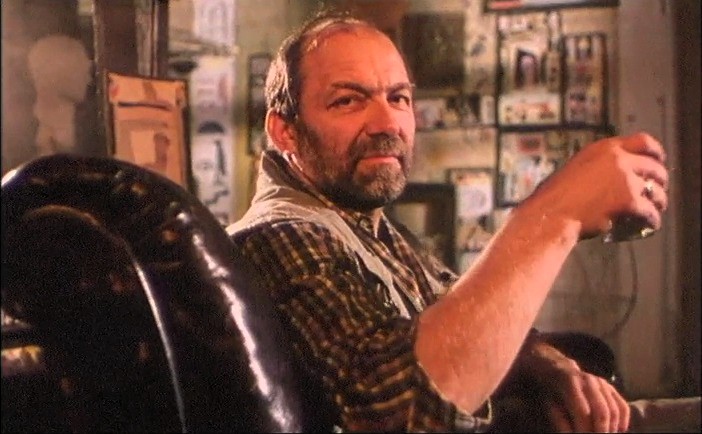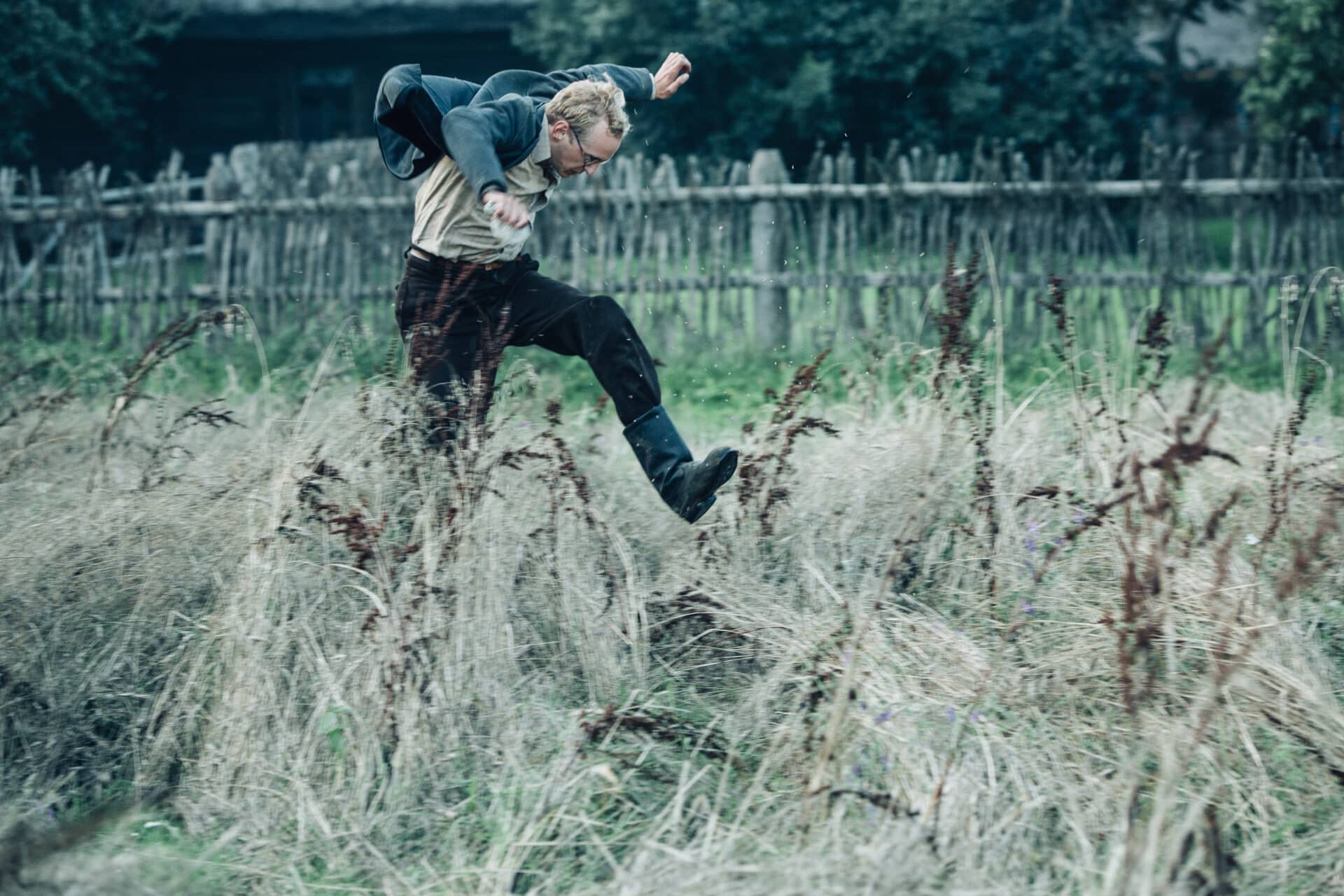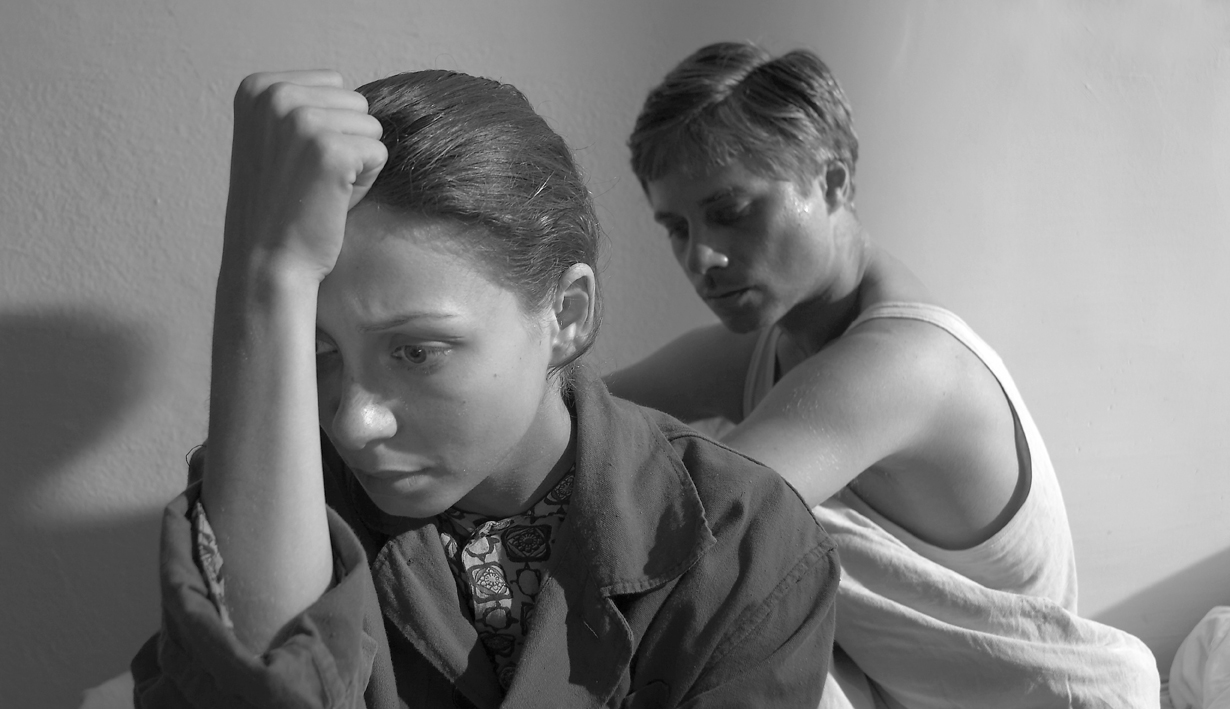
When Gytis Lukšas adapted Romualdas Granauskas’ novel Vortex (Duburys) for the screen in 2009, the leading role of Juozapas marked Giedrius Kiela’s feature film debut. The young actor not only had to embody a character already familiar to readers of the novel, but also found himself working alongside acclaimed actors such as Jūratė Onaitytė, Valentinas Masalskis and Vladimiras Jefremovas.
The film was made at a time when the era of shooting on film stock was already drawing to a close. With only one or two takes available for many scenes, extensive rehearsals took place before filming. Even the sound recorded on set could not be used – the actors’ voices and ambient sounds had to be recreated later in the studio. Kiela also became involved in the film’s post-production, which means that more than fifteen years later, he knows Vortex, as he puts it, almost “scene by scene”.
On 8 October, Vortex will return to the big screen, opening the Book + Cinema: Autumn Film Evenings series at Vilnius Town Hall. Following the screening, audiences will also have a chance to meet Giedrius Kiela, who played the film’s leading role.
Ahead of the event, we spoke with the actor about creating Juozapas, Gytis Lukšas’ working methods, the story of a man crushed by the Soviet era, and why sometimes the most important thing in cinema is to “act without acting”.
– Romualdas Granauskas’ Vortex already had a very distinct world and its own Juozapas long before the film existed. When creating the role, how much did you want to remain faithful to the character from the novel, and how much did you want to move away from him and create your own version?
G. Kiela: – I probably focused mostly on the screenplay, on the director’s interpretation of the character and the logic he had already proposed. Little by little, the character was shaped from all of these different versions.
– Before filming, were you the kind of actor who would read the novel and fill its margins with notes, or did you deliberately try to “forget” the book for a while so that you wouldn’t simply become an illustration of it in front of the camera?
G. Kiela: – I read the novel a couple of times, and it always remained the foundation – the basis for both the character and the world we were creating in the film. I worked much more extensively with the screenplay, trying to find the perspective on my character that the film specifically required.
– Juozapas is not someone who explains his feelings out loud – much of his life seems to take place somewhere inside him. How do you portray someone who leaves so much unsaid while still allowing the audience to understand what is happening to him?
G. Kiela: – You understand that you are acting for cinema, and that a film frame can say far more than anything you could perform. You have to sketch out the outlines and allow the film as a whole to guide the viewer in the right direction. Cinema is perfect for a character like this, for this kind of “acting without acting”.
– In Vortex, we follow almost the entire trajectory of one person’s life – from youth and his first years of independence to much darker experiences. Which period of Juozapas’ life was the most difficult for you to make your own?
G. Kiela: – The entire process was difficult in its own way. There were many firsts, attempts, discoveries and challenges, so I couldn’t really single out one particular part.
– In Granauskas’ world, people are deeply shaped by their surroundings, the period they live in and those around them. When creating Juozapas, did you think of him as someone shaped specifically by the Soviet era, or first and foremost as a person who could have lived in any period?
G. Kiela: – Of course, I thought of him as someone traumatised by the Soviet era. That theme felt very prominent to me in the novel. A man leaving the countryside and finding himself in the city, trying to survive according to the rules of the deeply Soviet reality around him. To me, both the novel and the film are about a person crushed by the Soviet era.
– Gytis Lukšas was a director for whom literature played an important role in cinema. Do you remember any particular sentence, note or conversation about Juozapas that suddenly “unlocked” the character for you?
G. Kiela: – I don’t remember one particular sentence, but of course we talked a great deal, especially about the screenplay itself. The director also told me a lot about the process of getting the screenplay approved by the author – everything was discussed, coordinated and, in a sense, “blessed” by him.
Those sudden moments of “unlocking” a character don’t really happen to me in cinema. Everything happens slowly, over time, collecting small details and bringing them together. So for me, it is always more about insights that gradually reveal themselves almost unnoticed than sudden breakthroughs.
– You worked alongside Jūratė Onaitytė, Valentinas Masalskis, Vladimiras Jefremovas and other highly accomplished actors. Was there a scene or a scene partner who made you perform differently from what you had originally planned?
G. Kiela: – Everything was shot on film stock, so we usually had only one or two takes, which is very little by today’s standards. Because of that, we rehearsed extensively, and for me, as a young actor at the time, that was an enormous help and source of support. It helped me perform in a way that best served the film as a whole.
– When an actor takes the leading role in an adaptation of a literary work, readers already have their own image of that person somewhere in their minds. Did you feel a sense of responsibility towards people who had already “seen” Granauskas’ Juozapas in their imagination?
G. Kiela: – I think any anxiety I might have felt about that was overshadowed by the anxiety of working in cinema itself. Making my feature film debut straight away in a leading role, with a team like that, was already a considerable personal and professional challenge.
I was more concerned about my lack of experience on set. Besides, I know that readers will always imagine a character in a way that feels far more convincing to them personally than anything an actor can portray.
– More than fifteen years have passed since the premiere of Vortex. When you see yourself in the film today, do you still see Juozapas, or do you sometimes catch yourself watching a young Giedrius Kiela and thinking, “What are you doing?”
G. Kiela: – There is an interesting aspect to this. When shooting on film stock, the camera itself was very loud, which meant that none of the sound recorded on set could actually be used. Everything had to be recorded separately in the studio. All of the voices were dubbed afterwards, and the background sounds were recreated later as well.
I was quite heavily involved in the film’s post-production, including creating synchronised sound effects, so I know this film not only through my character’s storyline but in great detail – almost by heart, even scene by scene. Because of that, I watch it from a completely different perspective, one in which I and my performance are only a small part of the whole.
– Would you play Juozapas differently today? Not because there was anything wrong with what you did then, but simply because you have become a different person since.
G. Kiela: – Probably, yes. Times have changed, and so have I. The story is about the tragedy of a young man, and today this role would no longer be meant for me.
– The title Vortex works as more than just a place – it can easily be read as a state of mind. What did that “Vortex” mean to you while making the film, and has its meaning changed over the years?
G. Kiela: – For me, that “pit” is first and foremost, as I said, the Soviet era and its destructive effect on people. Today, perhaps, it survives only in some people’s strange attempts to feel nostalgic for it.
– In a book, a reader can stop, return to a sentence, create their own silence and imagine the character’s inner voice. Cinema doesn’t have that same luxury. What do you think the screen inevitably took away from Granauskas’ Vortex, and what did it give the story in return?
G. Kiela: – I think it would be unfair to compare different art forms in that way. Every new work of art first and foremost reveals its own perspective on the subject it explores. In this case, cinema offered a way of looking not only at the novel, but also at our shared experiences.
Every new form and every new interpretation of a work has a twofold effect: it revives the significance of the original work while also conveying its essence in the language of a new generation.
– Today, Vortex has itself become a kind of document of its time. We are looking not only at the Soviet era depicted in the story, but also at Lithuanian cinema in 2009 and the filmmakers working at the time. What looks completely different to you about the film today compared with when it was first released?
G. Kiela: – Shooting on film stock was not fashionable at the time. This is a film that looks very “old-fashioned”, and that was a conscious choice – almost as if it were saying goodbye to an earlier period of Lithuanian cinema, including the cinema made during the Soviet era. Using film stock was actually an unusual choice by then, which can be difficult to understand today.
I remember they specifically had to find a man who had worked in the old film studios and still knew how to load the film into the camera – that kind of work, and the people who knew how to do it, had become so rare. Today, film has returned in a completely different, trendy form, with the technology adapted to a new era.
– Some of the people coming to the Autumn Film Evenings screening may have neither read Granauskas’ novel nor seen the film before. If you could tell them just one thing before the lights go down – not what to look for, but how to watch Vortex – what would you say?
G. Kiela: – Sit down, lean back, relax and enjoy the cinema.
– Thank you for the conversation!
The Book + Cinema: Autumn Film Evenings screenings will take place on 8, 13 and 21 October at 6 PM at Vilnius Town Hall. Tickets for the events are available via Bilietai.lt.
Photography may take place during the event.
The project is organised by Fralita Films, Vilnius Film Office and Vilnius Town Hall. It is supported by the AVAKA association, the Lithuanian Publishers Association and the Creative Europe Desk Lithuania, and is partially funded by the Lithuanian Film Centre.
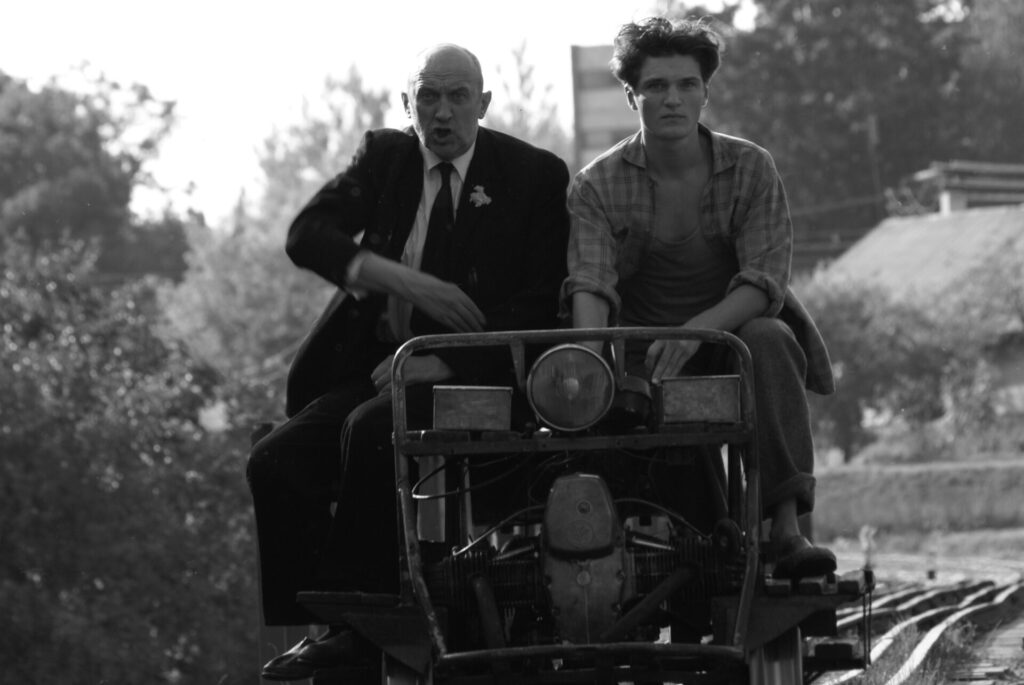
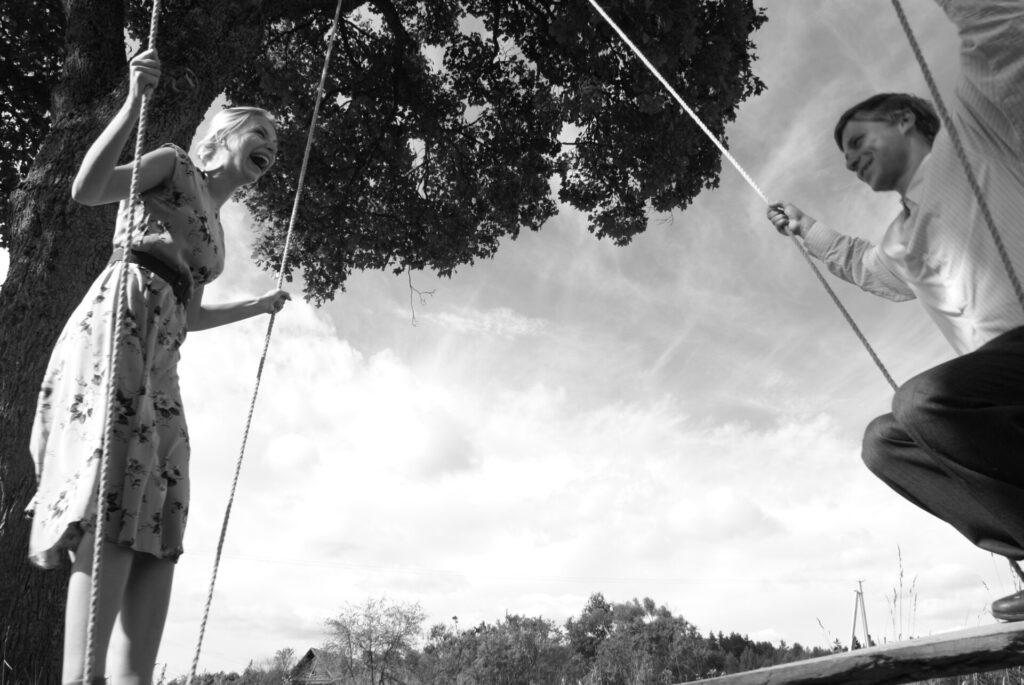
Still from the movie Vortex